Corteza Amarilla
Handroanthus ochraceus
Quick facts
Native Region
Mexico to northern South America
Max Height
15-25 meters (50-80 feet)
Family
Bignoniaceae
Conservation
LC — Least Concern
Uses
Safety Information
Toxicity Details
Handroanthus ochraceus (Corteza Amarilla) is NON-TOXIC to humans, dogs, cats, and other pets. Not listed on any major toxic plant databases. All parts of the tree (leaves, bark, flowers, seed pods) are safe if touched or accidentally ingested. The tree is completely safe for planting in residential areas, parks, schools, and playgrounds where children and pets are present. No poisoning concerns.
Skin Contact Risks
No skin irritation risk from contact with any part of the living tree. Leaves, bark, flowers, and sap do not cause dermatitis or allergic reactions. Safe to touch and handle without protective equipment. No documented cases of contact sensitivity.
Allergenic Properties
Very low allergen risk overall. Flowers are pollinated by bees, not wind, so no significant airborne pollen concerns. Wood dust from this species is not documented as a notable respiratory sensitizer or allergen compared to other tropical hardwoods. Standard woodworking dust precautions are sufficient (basic dust mask, ventilation). Overall allergen risk is minimal for both the living tree and finished wood products.
Season
Flowering
Mar-Apr
Fruiting
May-Jul
How to identify
Corteza Amarilla
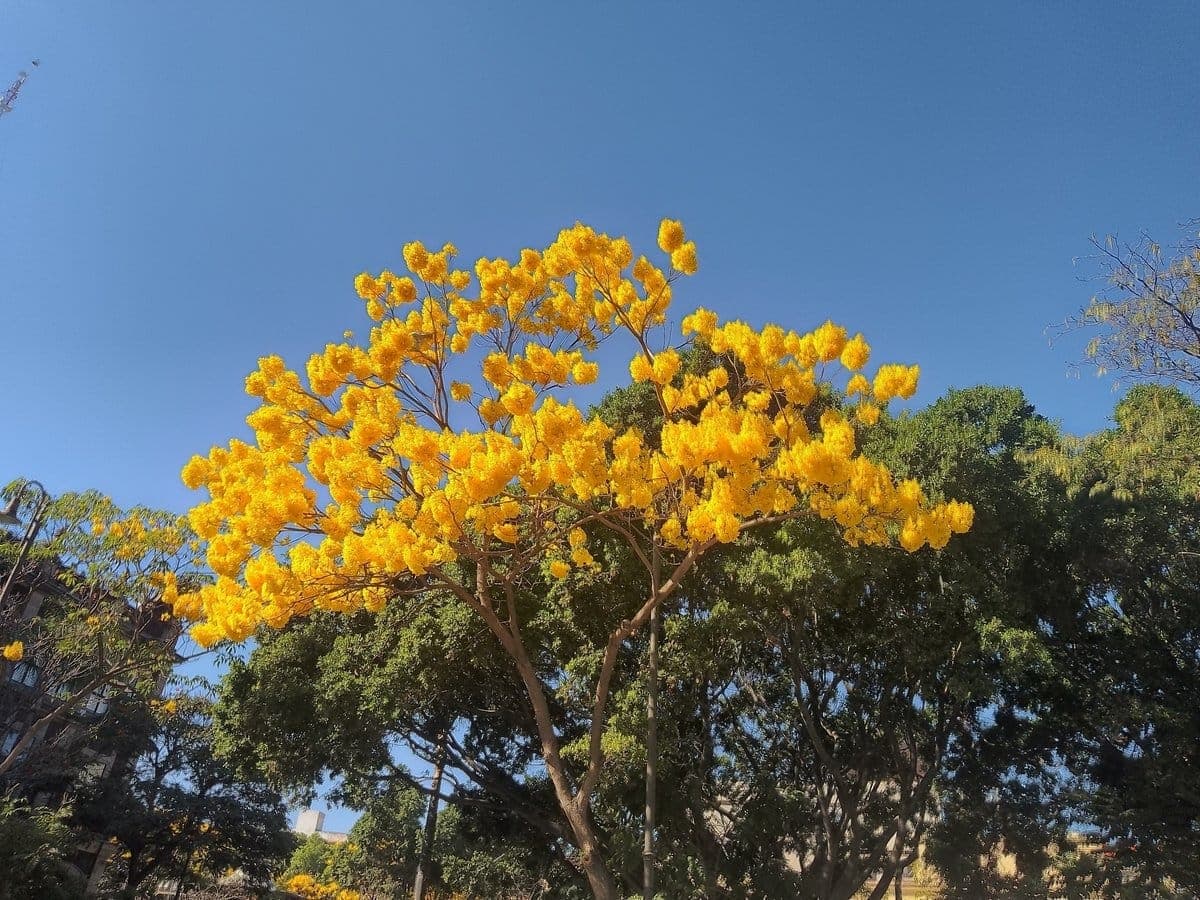
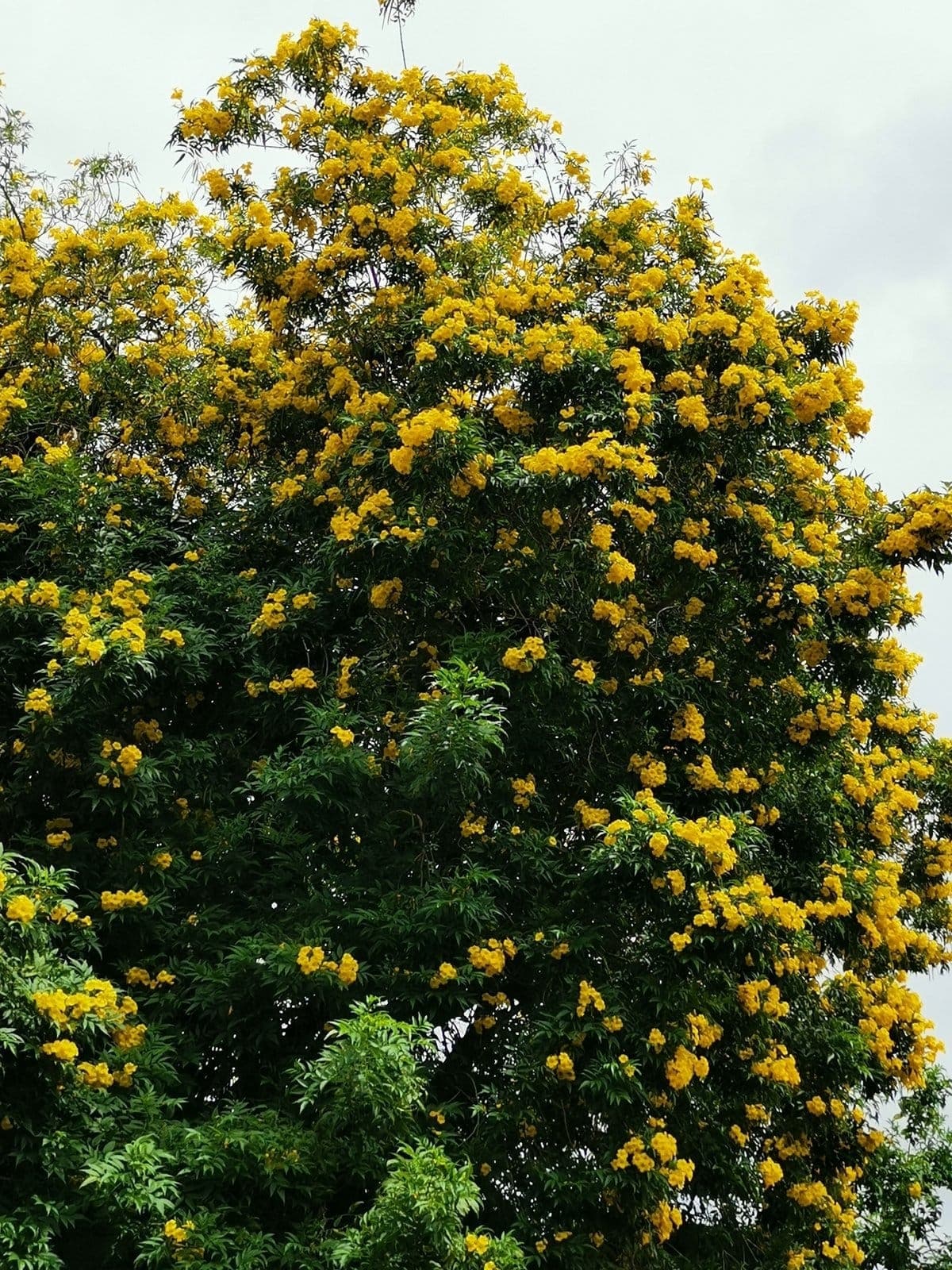
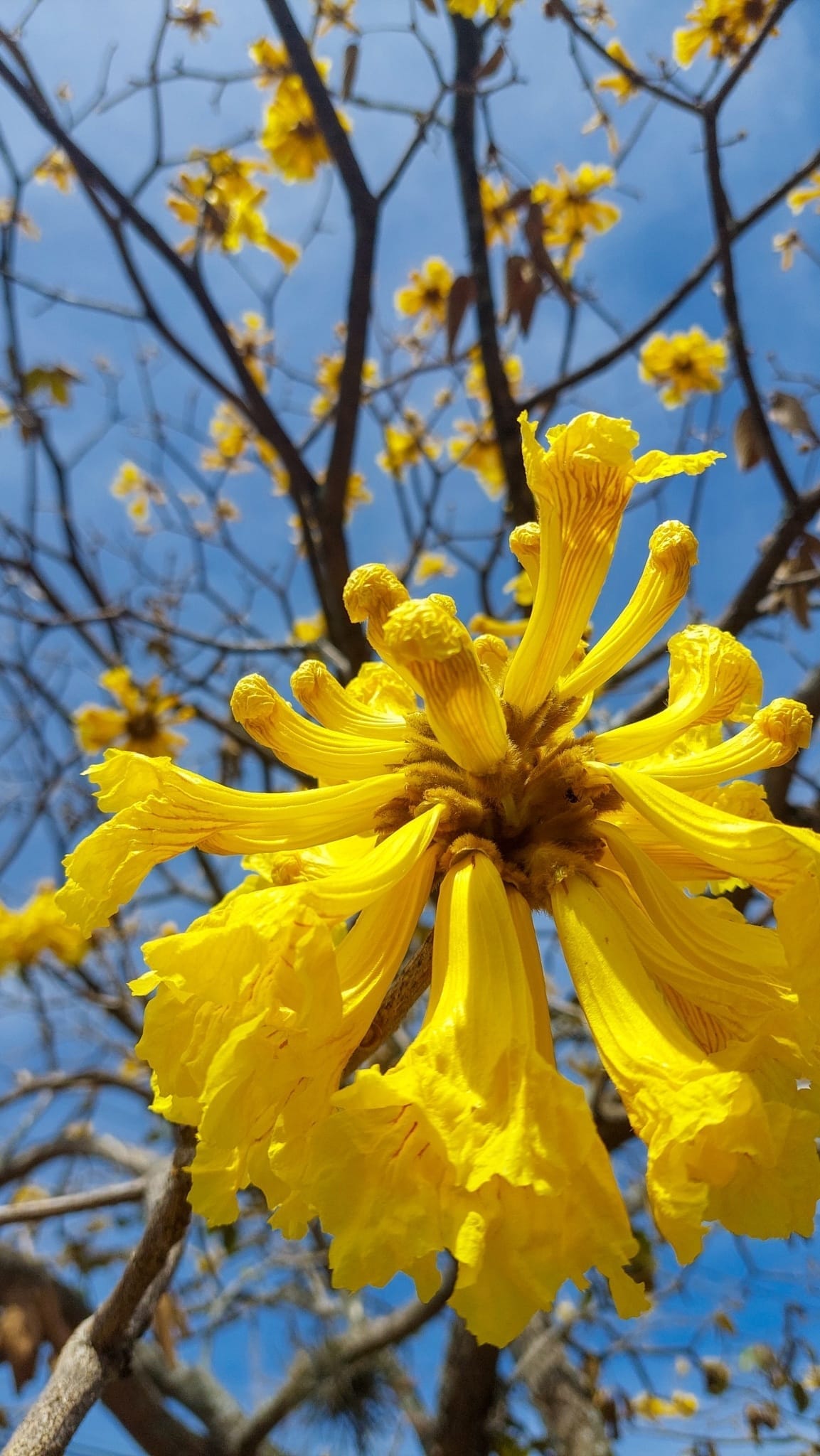
Corteza Amarilla (Handroanthus ochraceus), also known as Yellow Cortez or Golden Trumpet Tree, transforms Costa Rica's dry season landscapes into seas of brilliant yellow. When most trees are dormant and leafless, this species erupts in spectacular bloom, making it one of the country's most beloved and recognizable native trees.
Quick Reference
iNaturalist Observations
Community-powered species data
📸 Photo Gallery
Whole tree
📷 (c) David Garrigues, some rights reserved (CC BY-NC)(CC BY-NC)
View source ↗Leaves
📷 (c) David Garrigues, some rights reserved (CC BY-NC)(CC BY-NC)
View source ↗Whole tree
📷 (c) Annette Flottwell, some rights reserved (CC BY-NC-ND)(CC BY-NC-ND)
View source ↗Leaves
📷 (c) David Garrigues, some rights reserved (CC BY-NC)(CC BY-NC)
View source ↗Whole tree
📷 (c) Suzanne Dingwell, some rights reserved (CC BY-NC)(CC BY-NC)
View source ↗Photos sourced from iNaturalist's community science database. Browse all 3,800+ observations →↗
Taxonomy & Classification
This species was formerly classified as Tabebuia ochracea and is still commonly referred to by that name. The genus Handroanthus was separated from Tabebuia based on molecular phylogenetic studies, though the change remains debated. Both names refer to the same spectacular yellow-flowering tree.
Common Names
Physical Description
Overall Form
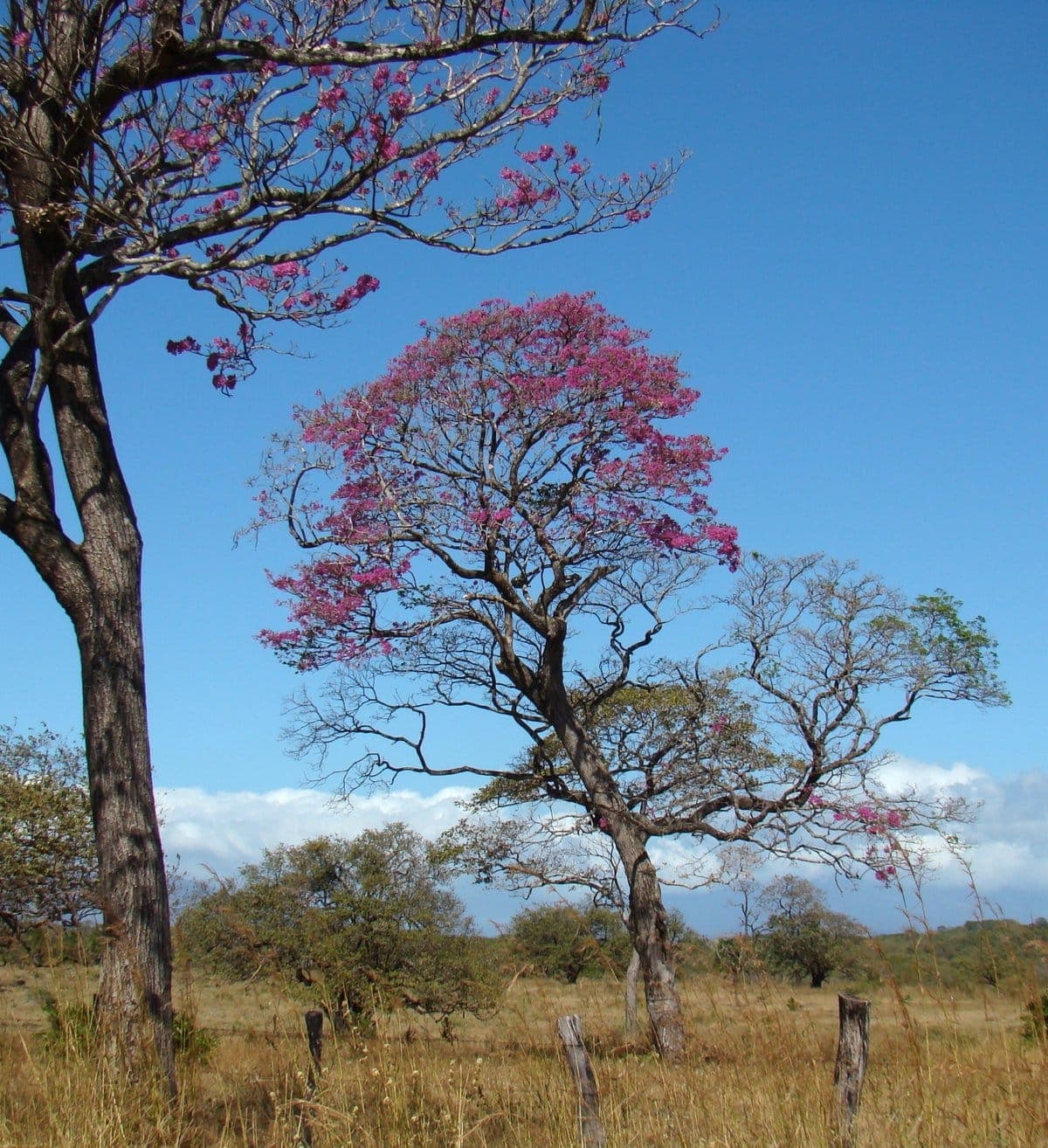
The Corteza Amarilla is a medium-sized deciduous tree with a rounded, spreading crown. During the dry season, it drops its leaves and produces one of nature's most spectacular floral displays.
Distinctive Features
Trunk & Bark
- Bark: Gray to light brown, deeply fissured in mature trees
- Wood: Hard, heavy, and durable (specific gravity 0.9-1.1)
- Color: Yellowish-brown heartwood with darker streaks
- Texture: Fine-grained, takes excellent polish
Leaves
- Type: Compound, palmately arranged (5-7 leaflets)
- Leaflet Shape: Elliptic to obovate, serrated margins
- Size: Leaflets 5-15 cm long
- Texture: Rough upper surface, hairy beneath
- Timing: Deciduous, falling before flowering
Flowers
- Color: Bright golden-yellow with red-orange throat markings
- Shape: Tubular-campanulate (trumpet-shaped)
- Size: 5-8 cm long, 3-5 cm wide
- Arrangement: Terminal clusters of 5-15 flowers
- Season: Peak February to April (dry season)
- Fragrance: Delicate, sweet honey scent
Fruits & Seeds
- Type: Linear capsule (pod)
- Size: 15-35 cm long, 1-2 cm wide
- Color: Brown when mature
- Seeds: Winged, wind-dispersed
- Timing: Mature 6-8 weeks after flowering
The spectacular mass flowering is triggered by the first heavy rains following a prolonged dry period, or by a sharp drop in temperature. This synchronous blooming ensures effective cross-pollination and creates the breathtaking golden displays Costa Rica is famous for.
Distribution & Habitat
Native Range
Geographic Distribution
Distribution in Costa Rica
Corteza Amarilla is found throughout Costa Rica's Pacific slope and Central Valley, from sea level to about 1,200 meters elevation. It is most abundant in the dry forests of Guanacaste and the seasonal forests of the Central Valley.
Preferred Habitat
Ecological Significance
Dry Season Resource
The Corteza Amarilla blooms during the driest months when few other trees flower, making it a critical nectar and pollen source for bees, butterflies, and hummingbirds. A single tree can support thousands of pollinator visits during its peak bloom period.
Wildlife Interactions
Pollinators
The flowers attract diverse pollinators:
- Native Bees: Carpenter bees, stingless bees (Meliponini)
- Honeybees: Important managed and feral populations
- Hummingbirds: Cinnamon, Rufous-tailed, and others
- Butterflies: Sulfurs, swallowtails, and skippers
- Moths: Nocturnal visitors for late-blooming flowers
Other Wildlife
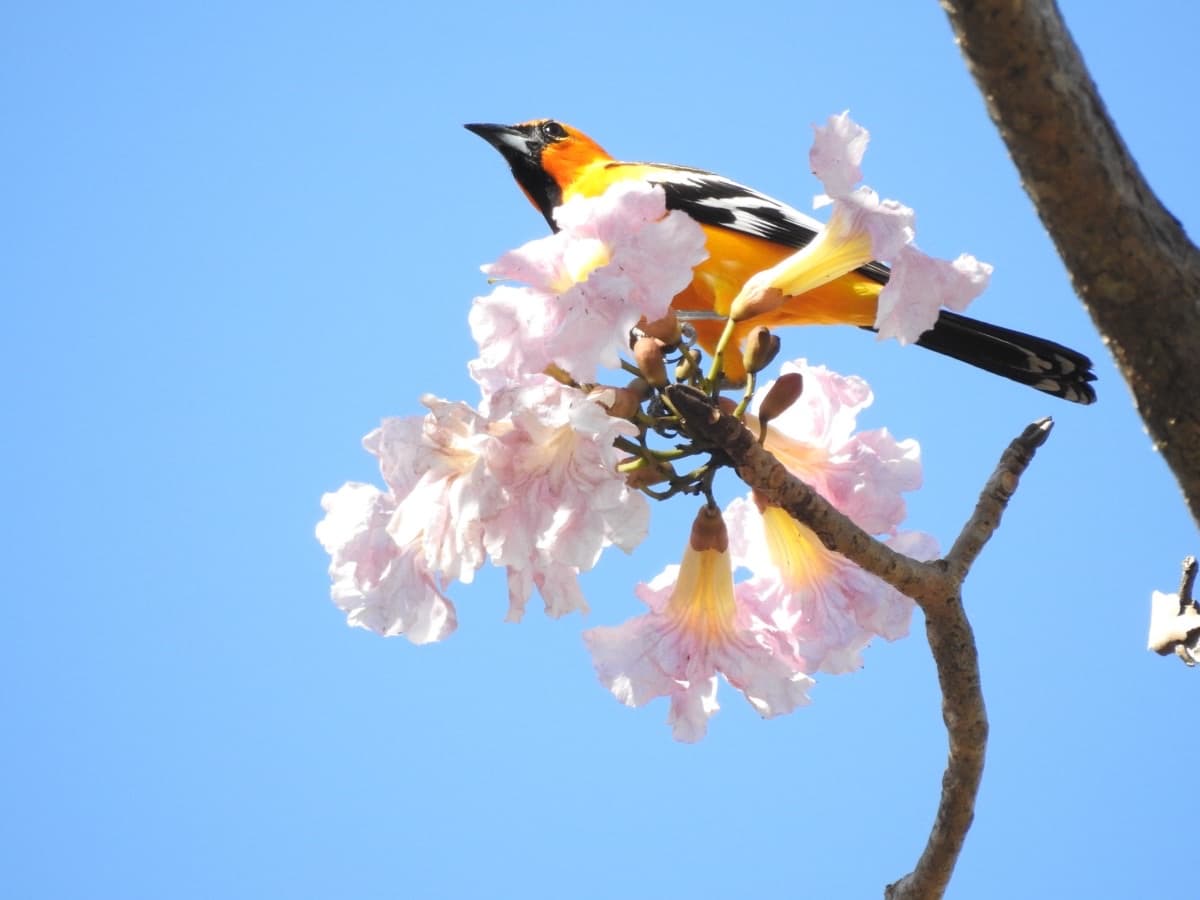
- Orioles: Baltimore and other species visit flowers
- Parakeets: Feed on developing seeds
- Iguanas: Rest in branches, occasional flower consumption
- Epiphytes: Branches support orchids and bromeliads
- Insects: Host to various beetle and caterpillar species
Ecosystem Services
Cultural & Economic Importance
The Golden Season
Costa Rica's Golden Spectacle
Each year between February and April, the blooming of Corteza Amarilla trees transforms the Costa Rican landscape. Entire hillsides turn golden, roadsides become tunnels of yellow, and the event is celebrated as one of nature's great seasonal displays—rivaling cherry blossoms in Japan or fall foliage in New England.
Timber Value
Wood Properties
- Density: Very heavy (900-1,100 kg/m³)
- Durability: Extremely rot-resistant
- Hardness: Janka rating ~2,500 lbf
- Workability: Difficult but takes fine finish
- Natural oils: Resistant to insects and fungi
Traditional Uses
- Construction: Posts, beams, railroad ties
- Furniture: High-end cabinetry and flooring
- Tool Handles: Axes, hammers, agricultural implements
- Outdoor Use: Decking, fencing (highly durable)
- Musical Instruments: Bodies and necks of guitars
Cultural Significance
Apiculture
Corteza Amarilla is one of the most important honey-producing trees in Central America. The abundant nectar during the dry season produces a light-colored, delicately flavored honey prized by beekeepers. In Costa Rica, this "miel de corteza" commands premium prices.
Traditional & Medicinal Uses
Ethnobotanical Applications
The following information is provided for educational purposes only. Traditional uses should not replace professional medical advice.
Conservation Status
Current Assessment
Conservation Status
Threats & Challenges
Historical Pressures
- Selective Logging: High timber value led to overharvesting
- Agricultural Expansion: Dry forest conversion to pasture
- Firewood Collection: Pressure on rural populations
- Urbanization: Loss of urban trees to development
Recovery Factors
- Ornamental Popularity: Widely planted in urban areas
- Protected Areas: Common in Guanacaste national parks
- Reforestation: Included in many restoration projects
- Cultural Value: Community appreciation ensures protection
Conservation Opportunities
Cultivation & Propagation
Growing Corteza Amarilla
Propagation Methods
From Seeds (Primary Method)
- Collect seeds from mature pods (April-June)
- Sow fresh—viability decreases rapidly
- Plant in well-draining nursery mix
- Light coverage (seeds need some light)
- Keep moist; germination in 10-20 days
- Transplant when 20-30 cm tall
From Cuttings
- Semi-hardwood cuttings in rainy season
- Rooting hormone recommended
- Success rate lower than seeds (40-60%)
- Takes 2-3 months to establish
Growing Conditions
Care Tips
- Pruning: Minimal; shape when young if desired
- Fertilizer: Low nitrogen to promote flowering
- Watering: Deep, infrequent once established
- Pests: Generally pest-resistant
- Site Selection: Avoid waterlogged areas
Advanced Care Guidance
Identification Guide
How to Identify Corteza Amarilla
Related Species
The Corteza Family
Costa Rica hosts several related Handroanthus (formerly Tabebuia) species:
During the dry season in Guanacaste, you can often see multiple Handroanthus species blooming simultaneously, creating a rainbow of yellow and pink across the landscape. The pink Roble de Sabana and yellow Corteza Amarilla blooming together is one of Costa Rica's most spectacular natural sights.
External Resources
Community observations and photos from Costa Rica
Taxonomic information and specimen records
Central American forestry research
Costa Rican biodiversity institute
Global biodiversity occurrence data and distribution maps
Conservation status and species assessment
References
📚 Scientific References & Further Reading
Gentry, A.H. (1992). Bignoniaceae: Part II (Tribe Tecomeae). Flora Neotropica Monograph
Grose, S.O. & Olmstead, R.G. (2007). Taxonomic revisions in the polyphyletic genus Tabebuia s.l.. Systematic Botany
Jiménez-Madrigal, Q. (1999). Árboles maderables en peligro de extinción en Costa Rica
Holdridge, L.R. & Poveda, L.J. (1975). Árboles de Costa Rica Vol. 1
For the most spectacular displays of blooming Corteza Amarilla, visit Guanacaste Province between February and April. Santa Rosa National Park, Rincón de la Vieja, and the roads around Liberia offer stunning views. In the Central Valley, look for them along the road to Atenas and throughout the western suburbs of San José. Timing varies by a few weeks depending on rainfall patterns, so check local reports for peak bloom.
Safety Information Disclaimer
Safety information is provided for educational purposes only. Individual reactions may vary significantly based on age, health status, amount of exposure, and individual sensitivity. Always supervise children around plants. Consult a medical professional or certified arborist for specific concerns. The Costa Rica Tree Atlas is not liable for injuries or damages resulting from interaction with trees described in this guide.
• Always supervise children around plants
• Consult medical professional if unsure
• Seek immediate medical attention if poisoning occurs
Information compiled from authoritative toxicology sources, scientific literature, and medical case reports.
Help improve this page
Know something about this tree? Share local knowledge, suggest a correction, or submit a photo to improve this guide for everyone.
Comparison Guides
Compare with Cortez Negro
Corteza Amarilla has golden-yellow flowers (Mar-Apr); Cortez Negro has pink-purple flowers (Feb-Mar). Both bloom spectacularly when leafless, but flower color is unmistakable!
Compare with Roble de Sabana
Corteza Amarilla explodes in brilliant golden-yellow flowers, while Roble de Sabana blooms in delicate pink - both deciduous Bignoniaceae trees flowering in dry season.