Ciprés
Cupressus lusitanica
Quick facts
Native Region
Mexico to Guatemala (introduced to Costa Rica highlands)
Max Height
25-35 meters
Family
Cupressaceae
Conservation
LC — Least Concern
Uses
Safety Information
Toxicity Details
LOW toxicity. Generally safe. Essential oil from leaves has traditional uses but should not be ingested or applied undiluted. Wood and foliage safe for normal contact.
Skin Contact Risks
Wood dust may cause mild respiratory/skin irritation in sensitive individuals. Use standard PPE when woodworking.
Season
Flowering
Feb-Mar
Fruiting
Sep-Nov
How to identify
Ciprés (Mexican Cypress)
The Ciprés (Cupressus lusitanica), known in English as Mexican Cypress or Cedar of Goa, may not be native to Costa Rica, but it has become one of the country's most ecologically and economically important trees. Introduced from the highlands of Mexico and Guatemala, this fast-growing conifer thrives in Costa Rica's Central Valley and mountain regions, where it is extensively planted for timber production, windbreaks, and living fences. Its aromatic, durable wood has become a staple of Costa Rican construction. The neat rows of dark columnar Ciprés trees lining coffee farms and mountain roads are now as much a part of the highland landscape as the volcanos themselves.
Quick Reference
iNaturalist Observations
Community-powered species data
📸 Photo Gallery
Whole tree
📷 (c) nazgomez, some rights reserved (CC BY-NC)(CC BY-NC)
View source ↗Leaves
📷 (c) Rea Orthner, some rights reserved (CC BY-NC)(CC BY-NC)
View source ↗Whole tree
📷 (c) Rea Orthner, some rights reserved (CC BY-NC)(CC BY-NC)
View source ↗Leaves
📷 (c) Rea Orthner, some rights reserved (CC BY-NC)(CC BY-NC)
View source ↗Whole tree
📷 no rights reserved(CC0)
View source ↗Photos sourced from the iNaturalist citizen science database. View all observations →↗
Taxonomy and Classification
- Cupressus: Latin name for cypress - lusitanica: "Of Lusitania" (Portugal) - where it was first scientifically described - The Portuguese name is misleading - the tree is native to Mexico/Guatemala! - Also called "Cedar of Goa" from Portuguese colonial introduction to India
Common Names
Related Species in Costa Rica
Physical Description
General Form
The Ciprés is a medium to tall conifer with a distinctively narrow, columnar to pyramidal crown. Its dense, dark green foliage and straight trunk make it instantly recognizable. In plantations, trees are often grown close together, creating characteristic dark walls of green.
Identification Features
Bark and Trunk
- Bark color: Gray to reddish-brown
- Texture: Fissured, peeling in strips when mature
- Pattern: Vertical ridges and furrows
- Trunk: Straight, single main stem
- Aromatic: Distinct cypress scent when cut
Foliage
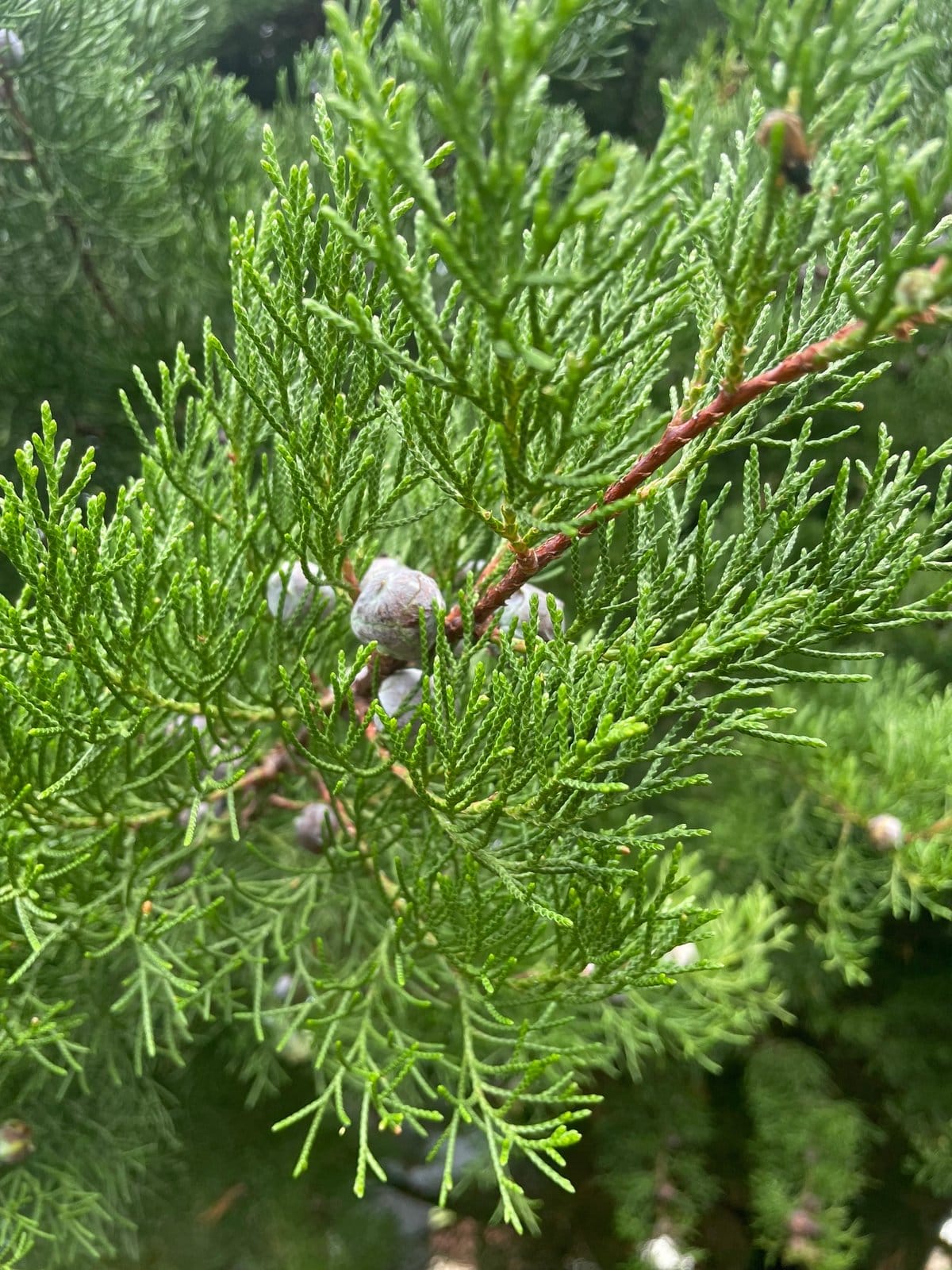
- Type: Scale-like leaves (not needles)
- Arrangement: Overlapping, pressed to twigs
- Color: Dark green to blue-green
- Texture: Soft to touch (vs. prickly juniper)
- Aromatic: Crush for cypress scent
Reproductive Structures
Seed Cones:
- Woody, spherical
- Size: 1-2 cm diameter
- 6-8 scales per cone
- Gray-brown when mature
- Persist on tree
Pollen Cones:
- Small, at branch tips
- Yellow when releasing pollen
- Late dry season
Crown Shape
- Young trees: Narrow pyramidal
- Mature: Columnar to conical
- Dense: Light-blocking foliage
- Single leader: Central trunk dominant
Distinguishing Ciprés from pines (which also grow in Costa Rica highlands):
Once you know what to look for, these two common highland conifers are easy to tell apart!
Distribution and Habitat
Global Distribution
Geographic Distribution
Distribution in Costa Rica
Habitat Preferences
Economic Importance
Costa Rica's Plantation Conifer
Ciprés has become economically essential in highland Costa Rica: Why Ciprés Dominates: - Fast growth (15-20 years to harvest) - Excellent wood quality - Thrives in cool highlands - Easy to propagate - Few pest problems Plantation Statistics: - Among top 5 planted species - Thousands of hectares in Central Valley - Major reforestation species - Supports rural livelihoods Products: - Construction lumber - Furniture - Interior trim - Posts and poles - Fencing material - Essential oil Economic Benefits: - Income for highland farmers - Local processing industry - Reduces hardwood pressure - Carbon sequestration payments
Wood Properties
Ecological Role
Environmental Services
Benefits
- Windbreaks: Protect crops, livestock
- Erosion control: Stabilize slopes
- Carbon storage: Fast-growing sequestration
- Watershed protection: Highland areas
- Living fences: Sustainable boundaries
Considerations
- Non-native: Not part of original ecosystem
- Limited wildlife value: Few native species use it
- Monocultures: Reduce biodiversity
- Shading: Dense canopy limits understory
- Spread: Can naturalize in some areas
While Ciprés provides important economic and environmental services, its non-native status requires consideration: Positive Aspects: - Reduces pressure on native hardwoods - Provides timber on degraded lands - Supports reforestation goals - Creates rural employment Potential Concerns: - Replacement of native vegetation - Limited wildlife food/habitat value - Monoculture disease risks - Can spread into natural areas Best Practices:
- Plant on already-converted lands - Include native species in landscape - Manage to prevent spread - Value native forest conservation too The Ciprés exemplifies the complex balance between productive use of non-native species and conservation of native ecosystems.
Uses
Timber and Construction
Other Uses
Cultivation
Growing Ciprés
Identification Guide
How to Identify Ciprés
Where to See Ciprés in Costa Rica
Look for Ciprés throughout Costa Rica's highlands: Common Settings: - Lines of columnar trees along roads - Dense dark green windbreaks on farms - Timber plantation blocks - Living fences between properties Best Viewing:
- Drive from San José toward Cartago volcanoes - Visible from highway between elevations - Most common 1,500-2,500 m elevation Identification Tips: - Look for the distinctive columnar shape - Note dense, dark green foliage - Often planted in straight rows - Highland setting essential
Highland Management Calendar
External Resources
Community observations and photos
Central American forestry research
Global biodiversity occurrence data and distribution maps
Conservation status and species assessment
References
📚 Scientific References & Further Reading
Salazar, R. et al. (2000). Manejo de Semillas de Cupressus lusitanica. CATIE Technical Bulletin
Cornelius, J. (1994). Cupressus lusitanica in the highlands of Guatemala. Forest Ecology and Management
Drive anywhere in Costa Rica's Central Valley highlands and you'll meet the Ciprés—standing in dark columnar rows along coffee farms, climbing hillsides in dense plantations, sheltering crops from the fierce mountain winds. This tree from the Mexican highlands has found a second home in Costa Rica's cool mountains, and in doing so has become essential to the highland economy. Its aromatic wood frames thousands of homes across the country. Its living walls protect the coffee that Costa Rica is famous for. Its rapid growth provides income to rural families on lands too steep or cold for other crops. While conservationists rightfully emphasize the value of native forests, the Ciprés shows that thoughtfully managed introduced species can play a positive role—providing timber that might otherwise come from precious hardwoods, sequestering carbon, protecting soils on steep slopes. In a world seeking sustainable solutions, the Ciprés offers lessons in productive coexistence between human needs and environmental stewardship.
Safety Information Disclaimer
Safety information is provided for educational purposes only. Individual reactions may vary significantly based on age, health status, amount of exposure, and individual sensitivity. Always supervise children around plants. Consult a medical professional or certified arborist for specific concerns. The Costa Rica Tree Atlas is not liable for injuries or damages resulting from interaction with trees described in this guide.
• Always supervise children around plants
• Consult medical professional if unsure
• Seek immediate medical attention if poisoning occurs
Information compiled from authoritative toxicology sources, scientific literature, and medical case reports.
Help improve this page
Know something about this tree? Share local knowledge, suggest a correction, or submit a photo to improve this guide for everyone.