Coyol
Acrocomia aculeata
Quick facts
Native Region
Mexico to South America, Caribbean
Max Height
10-20 meters
Family
Arecaceae
Conservation
LC — Least Concern
Indigenous Names
Names used by the indigenous peoples of Costa Rica, preserving traditional ecological knowledge.
Bribri
- Koról— Coyol palm, source of wine and oil(Source: Jara & García, 2003)
Chorotega
- Coyol— Palm wine tree(Source: Pittier, 1908)
Uses
Safety Information
Toxicity Details
The fruit is safe and edible - widely consumed fresh and as beverages. The palm heart is edible. No toxic parts. All safety concerns are physical (spines), not chemical.
Skin Contact Risks
No chemical skin hazards. All safety concerns are from the extremely sharp spines - see structural risks.
Allergenic Properties
No significant allergen concerns. The fruit and products are generally well tolerated.
Structural Hazards
EXTREME SPINE HAZARD. Coyol is one of the most formidably armed palms. The trunk, leaf stems, and even leaf surfaces are covered in extremely sharp, black spines up to 20 cm (8 inches) long. These spines are needle-sharp and can cause deep, painful puncture wounds that easily become infected. VERY DANGEROUS for children - they should never play near coyol palms. The spines can pierce through clothing and even thin gloves. Harvesting fruit is hazardous and traditionally done with long poles. Fallen fronds retain dangerous spines for years. This palm should NEVER be planted near paths, homes, or public areas.
Season
Flowering
Mar-May
Fruiting
Jun-Sep
How to identify
Coyol
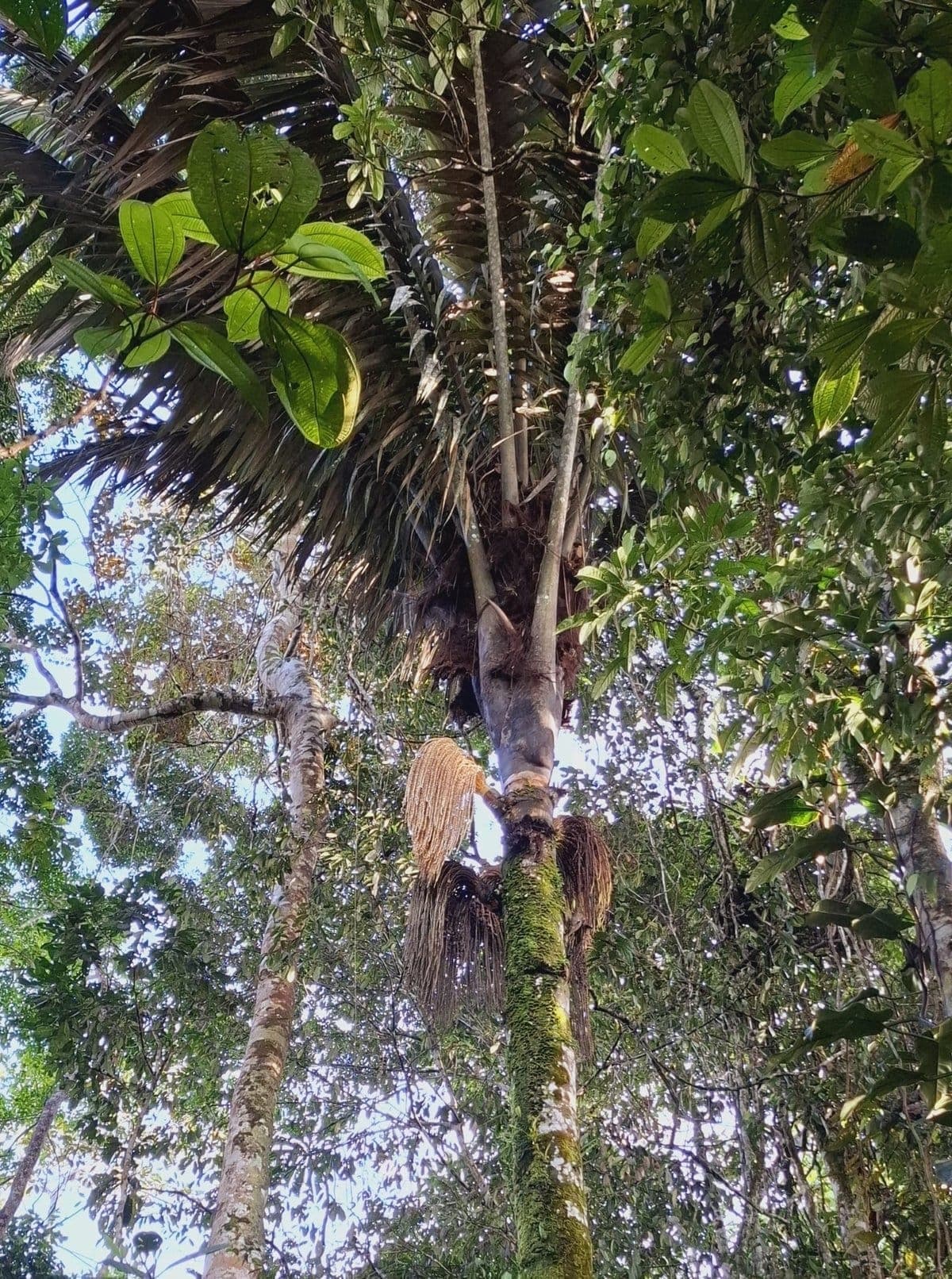
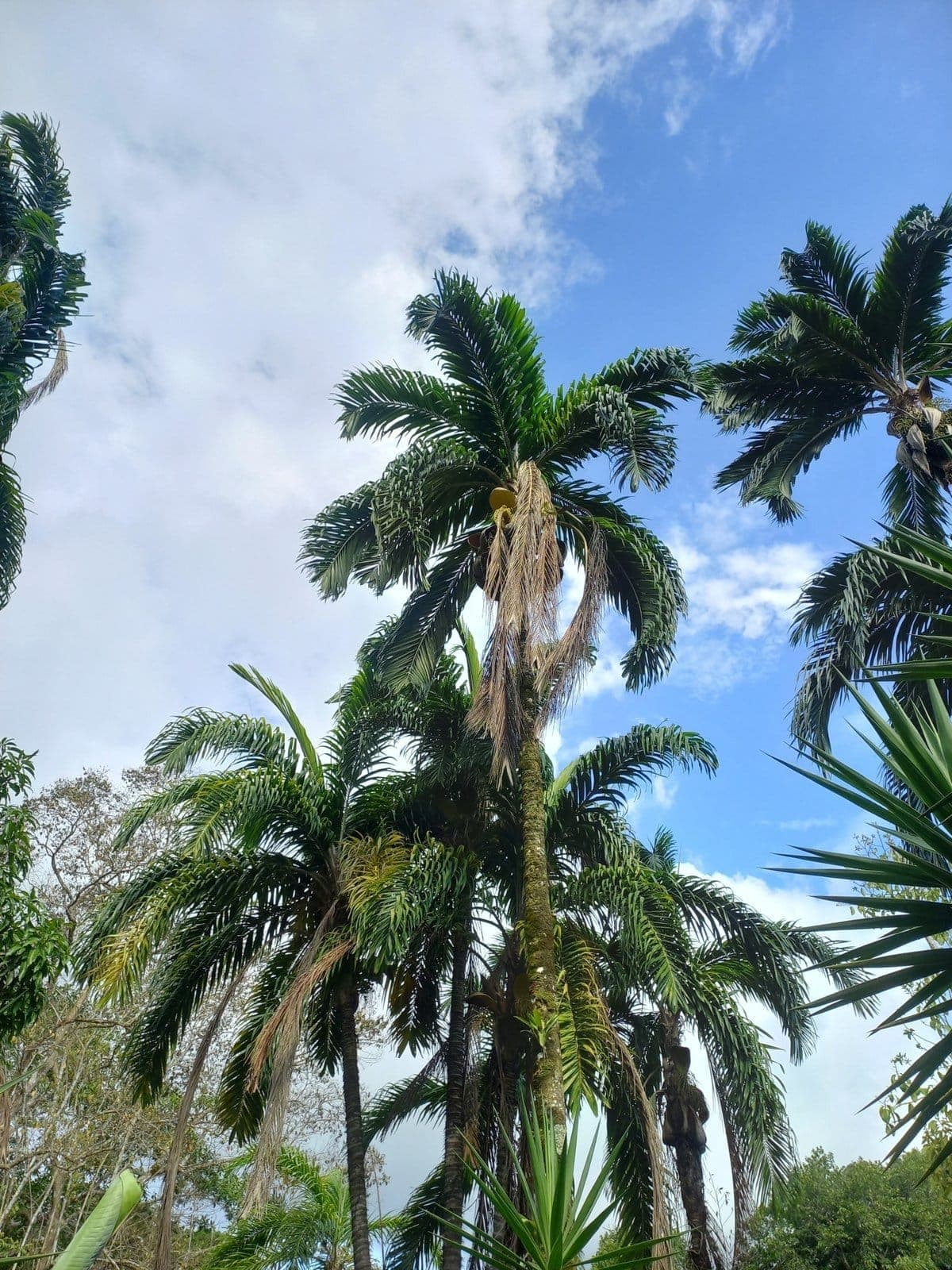
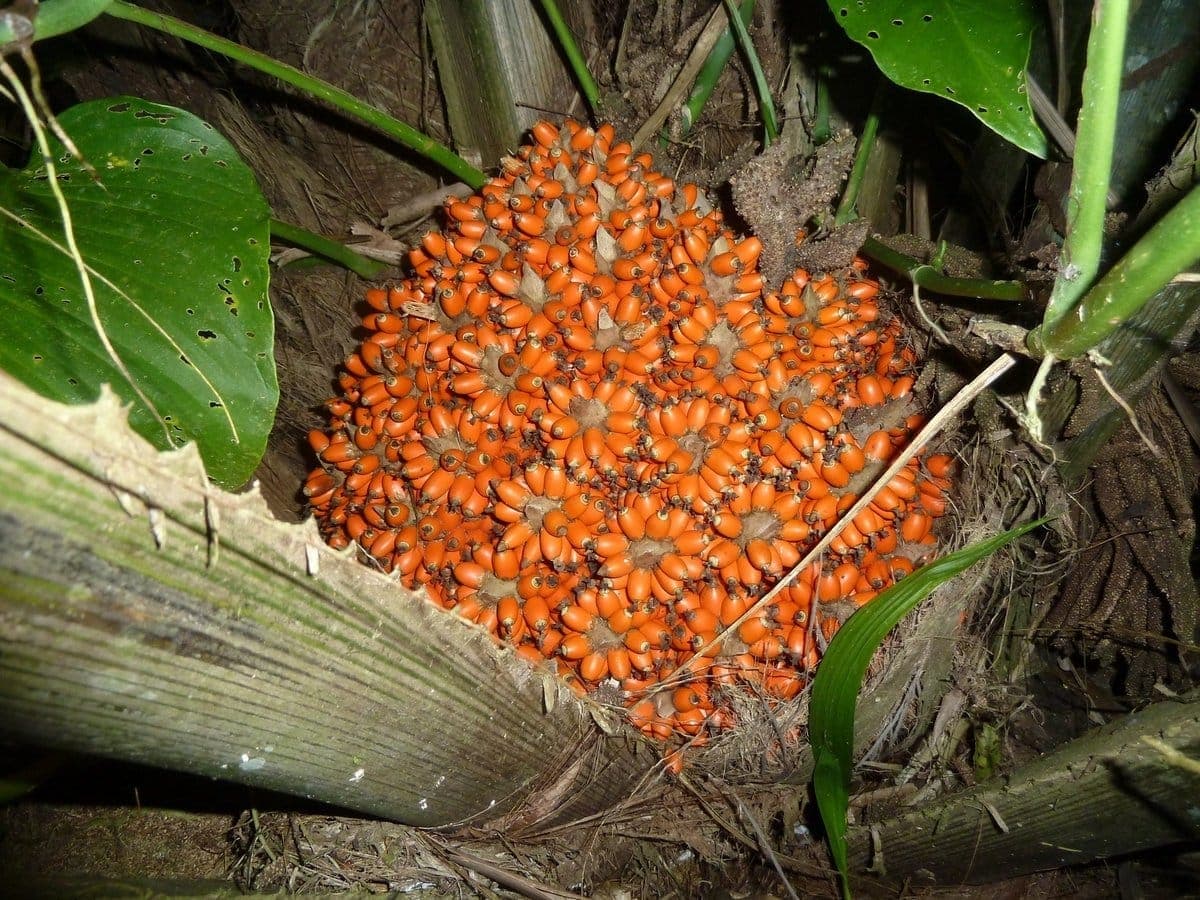
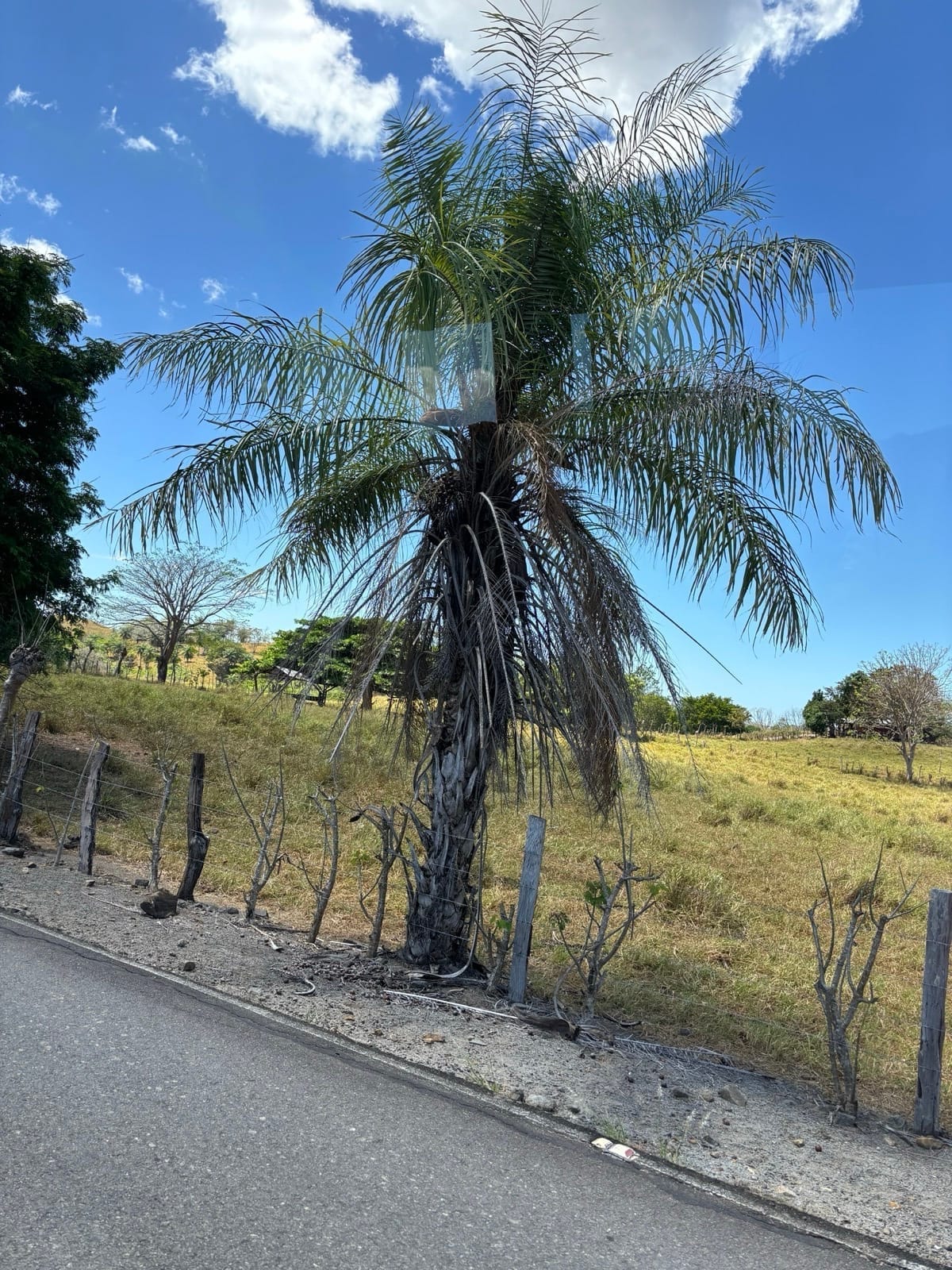
The Coyol (Acrocomia aculeata), known as the Coyol Palm or Macaúba in South America, is one of Costa Rica's most culturally significant palms. Instantly recognizable by its trunk covered in fearsome black spines and its clusters of round, hard-shelled fruits, this palm has sustained rural communities for centuries. Most famously, the Coyol is the source of vino de coyol—a traditional fermented drink made from the palm's sap that remains an important part of Guanacastecan culture. But the palm offers much more: edible fruit kernels rich in oil, food for countless wildlife species, and a resilience that allows it to thrive in the harsh conditions of Costa Rica's dry Pacific lowlands.
Quick Reference
iNaturalist Observations
Community-powered species data
📸 Photo Gallery
Whole tree
📷 (c) gmatting, some rights reserved (CC BY-NC)(CC BY-NC)
View source ↗Leaves
📷 (c) Phoebe Barnes, some rights reserved (CC BY-NC)(CC BY-NC)
View source ↗Habitat
📷 (c) Matthew Caruana Galizia, some rights reserved (CC BY)(CC BY)
View source ↗Whole tree
📷 (c) ajack2, some rights reserved (CC BY-NC)(CC BY-NC)
View source ↗Leaves
📷 (c) Phoebe Barnes, some rights reserved (CC BY-NC)(CC BY-NC)
View source ↗Photos sourced from the iNaturalist citizen science database. View all observations →↗
Taxonomy and Classification
- Acrocomia: Greek "akros" (tip) + "kome" (hair) - hairy tips - aculeata: Latin for "prickly" or "thorny" - the spines - Often confused with other spiny palms - Largest distribution of any American palm
Common Names
Related Species in Costa Rica
Physical Description
Overall Form
The Coyol is a medium-sized palm with a straight, columnar trunk densely armed with black spines, especially in younger portions. The crown is rounded with arching, feather-like (pinnate) fronds. It's a hardy, sun-loving palm that often stands alone in pastures and savannas.
Identifying Features
The Fearsome Spines
- Location: Trunk, leaf bases, frond midribs
- Color: Black, very sharp
- Length: Up to 10 cm
- Density: Covering trunk, especially when young
- Pattern: Ring-like arrangement
- Older trunks: May lose some spines
Trunk
- Shape: Columnar, often swollen at base
- Surface: Rough with spine bases
- Color: Gray-brown
- Fiber: Very hard, durable wood
Fronds
- Type: Pinnate (feather-like)
- Length: 3-5 meters
- Leaflets: Many, arranged along midrib
- Texture: Stiff, somewhat spiny
- Color: Green, slightly grayish
Fruit
- Shape: Round (globose)
- Size: 3-5 cm diameter
- Shell: Very hard, woody
- Pulp: Orange-yellow, oily, fibrous
- Kernel: White, edible, oil-rich
- Clusters: Large hanging bunches
The Coyol's black spines are no joke: Characteristics: - Extremely sharp and hard - Can penetrate boots and gloves - Break off easily in skin - Difficult to remove Safety: - Never climb a Coyol! - Keep distance when walking past - Wear heavy gloves if harvesting - Watch children and pets Why So Spiny? The spines evolved to protect the palm from climbing mammals that might damage the growing tip. Effective!
Distribution and Habitat
Global Distribution
Geographic Distribution
Distribution in Costa Rica
Habitat Preferences
Cultural Significance: Vino de Coyol
The Traditional Wine
The most famous use of Coyol is vino de coyol—a traditional fermented drink deeply embedded in Guanacastecan culture: How It's Made: 1. A mature palm is felled (sadly, the tree is killed) 2. The growing tip (palmito) area is excavated 3. A cavity is created that collects sap (savia) 4. The sap ferments naturally over 24-48 hours 5. Fresh vino de coyol is collected daily 6. The process continues for several weeks The Drink: - Fresh (same day): Sweet, slightly fizzy, low alcohol - Aged (2-3 days): Sour, higher alcohol, more potent - Flavor: Unique, slightly yeasty, refreshing - Alcohol: 4-8% depending on fermentation Cultural Context: - Traditional fiestas and celebrations - Associated with rural/cowboy culture - Increasingly rare as palms become scarcer - Now sometimes illegal to produce (regulations) Conservation Concern: Since making vino kills the palm, this tradition has contributed to Coyol decline in some areas.
In Guanacaste, the Coyol is more than a palm—it's a cultural symbol: Sayings and Culture: - "Bajar el coyol" (to fell the coyol) - starting a celebration
- Associated with sabanero (cowboy) traditions - Featured in traditional music and poetry - Symbol of rural Guanacaste identity Modern Tensions: - Traditional practice vs. conservation - Younger generations less connected - Efforts to promote sustainable alternatives - Palm populations recovering where protected
Sources: Janzen (1991), Historia Natural de Costa Rica↗, Área de Conservación Guanacaste↗, Henderson et al. (1995), Field Guide to the Palms of the Americas↗
Ecological Role
Wildlife Value
Fruit Consumers
- Parrots and macaws: Major fruit consumers
- White-faced monkeys: Eat fruit and kernel
- Peccaries: Eat fallen fruit
- Agoutis: Cache and eat seeds
- Coatis: Consume fruit
- Various rodents: Important dispersers
Other Ecological Roles
- Savanna structure: One of few trees in open areas
- Shade provider: Important in hot grasslands
- Fire resistance: Survives grassland burns
- Drought adaptation: Deep roots access water
- Nesting sites: Cavities used by birds, bats
In the open savannas of Guanacaste, Coyol palms serve as critical ecological islands: Functions in Grasslands: - Shade refuge: Wildlife escapes midday heat - Seed dispersal center: Animals concentrate here - Nutrient hotspot: Droppings fertilize base - Fire survival: Often only tree surviving burns - Roosting site: Birds overnight in crown A single Coyol in a pasture can support dozens of species!
Uses and Products
Beyond the Wine
Economic Potential
The Coyol is gaining attention as a potential biofuel source: Oil Content:
- Kernel: 50-70% oil - Pulp: Also oil-rich - Total yield: High compared to other palms Advantages: - Grows on marginal land - Drought tolerant - Long-lived - Native species (not invasive) Research Underway: - Brazil, Paraguay leading studies - Oil quality comparable to palm oil - Could provide sustainable biofuel Sustainable Harvest (unlike wine): - Fruits collected without killing tree - Perennial production - Could support rural economies
Cultivation
Growing Coyol
Identification Guide
How to Identify Coyol
Where to See Coyol in Costa Rica
Coyol is easy to find throughout Guanacaste: Where to Look: - Open pastures (look for solitary palms) - Roadsides in dry forest zone - Savanna edges - Around rural homesteads Best Viewing: - Year-round (evergreen) - Dry season: Fruits ripen - Rainy season: Lusher fronds Identification Distance: The spiny trunk and rounded crown are visible from considerable distance in open landscapes. Caution: Admire from a distance—those spines are serious!
Conservation and the Future
The Coyol faces a complex conservation situation: Pressures: - Vino de coyol tradition: Kills mature palms - Habitat loss: Dry forest conversion - Fire suppression paradox: Coyol needs some fire - Climate change: Uncertain impacts Positive Signs: - Abundant in pastures (tolerated for shade) - Protected in some reserves - Growing awareness of conservation need - Interest in sustainable oil production Future Balance:
- Sustainable fruit harvest (doesn't kill palm) - Oil/biofuel plantations could reduce wild harvest - Cultural tourism highlighting traditional uses - Education about sustainable alternatives The Coyol's future depends on finding ways to honor cultural traditions while ensuring palm populations persist.
External Resources
Community observations and photos
Comprehensive palm information
Conservation status
Global biodiversity occurrence data and distribution maps
References
📚 Scientific References & Further Reading
Henderson, A., Galeano, G. & Bernal, R. (1995). Field Guide to the Palms of the Americas. Princeton University Press
Janzen, D.H. (1991). Historia Natural de Costa Rica. Editorial Universidad de Costa Rica
Ciconini, G. et al. (2013). Biometry and oil contents of Acrocomia aculeata fruits. Industrial Crops and Products
Under the blazing Guanacaste sun, where grasses turn golden and cattle seek any scrap of shade, the Coyol stands sentinel—its trunk armored with wicked black spines, its crown casting a circle of precious shadow on the parched earth. This palm is a survivor, persisting through drought, through fire, through centuries of human use that has woven it into the very fabric of Costa Rican rural culture. The vino de coyol tradition, though hard on the palms, speaks to the deep connection between people and this spiny giant. Each fruit cluster feeds parrots and peccaries, each trunk provides a perch for hawks scanning the savanna, each palm standing alone in a pasture serves as a miniature ecosystem in a sea of grass. The challenge now is to honor the Coyol's cultural legacy while ensuring its ecological future—finding sustainable ways to harvest its bounty without sacrificing the palms themselves. In the meantime, those black spines guard one of Costa Rica's most iconic and resilient trees, a living symbol of the dry Pacific lowlands and the culture that grew up alongside it.
Safety Information Disclaimer
Safety information is provided for educational purposes only. Individual reactions may vary significantly based on age, health status, amount of exposure, and individual sensitivity. Always supervise children around plants. Consult a medical professional or certified arborist for specific concerns. The Costa Rica Tree Atlas is not liable for injuries or damages resulting from interaction with trees described in this guide.
• Always supervise children around plants
• Consult medical professional if unsure
• Seek immediate medical attention if poisoning occurs
Information compiled from authoritative toxicology sources, scientific literature, and medical case reports.
Help improve this page
Know something about this tree? Share local knowledge, suggest a correction, or submit a photo to improve this guide for everyone.