Pejibaye
Bactris gasipaes
Quick facts
Native Region
Amazon Basin to Central America
Max Height
12-20 meters (40-65 feet)
Family
Arecaceae
Conservation
LC — Least Concern
Indigenous Names
Names used by the indigenous peoples of Costa Rica, preserving traditional ecological knowledge.
Bribri
- Dabóu— Peach palm, staple food(Source: Jara & García, 2003)
Cabécar
- Dabú— Palm of nourishment(Source: Constenla Umaña, 1998)
Maleku
- Orí— Peach palm(Source: Constenla Umaña, 1998)
Boruca
- Ëgabá— Pejibaye palm(Source: Quesada Pacheco, 1996)
Uses
Safety Information
Toxicity Details
The fruit is safe and nutritious when cooked. Heart of palm is safe to eat. No toxic parts - all safety concerns are physical (spines), not chemical.
Skin Contact Risks
No chemical skin hazards. All safety concerns are from the sharp spines - see structural risks.
Allergenic Properties
Pejibaye allergies are extremely rare. The fruit and heart of palm are generally well tolerated. No significant allergen concerns.
Structural Hazards
EXTREME SPINE HAZARD. Pejibaye is covered in LONG, SHARP, NEEDLE-LIKE BLACK SPINES up to 15 cm (6 inches) long. These spines cover the trunk, leaf bases, and leaf stems. The spines are extremely sharp and can cause deep puncture wounds that are painful and prone to infection. DANGEROUS for children - they should not play near these palms. The spines can pierce through clothing and gloves. Injuries are common during harvesting. In plantations, workers use long poles to avoid contact. Fallen fronds retain spines and remain hazardous. Some cultivated varieties have been bred to be spineless or have reduced spines, but wild and most traditional varieties are HEAVILY armed. This palm should NOT be planted near paths, play areas, or where people might accidentally contact it.
Season
Flowering
Jan-May
Fruiting
Apr-Sep
How to identify
Pejibaye (Peach Palm)
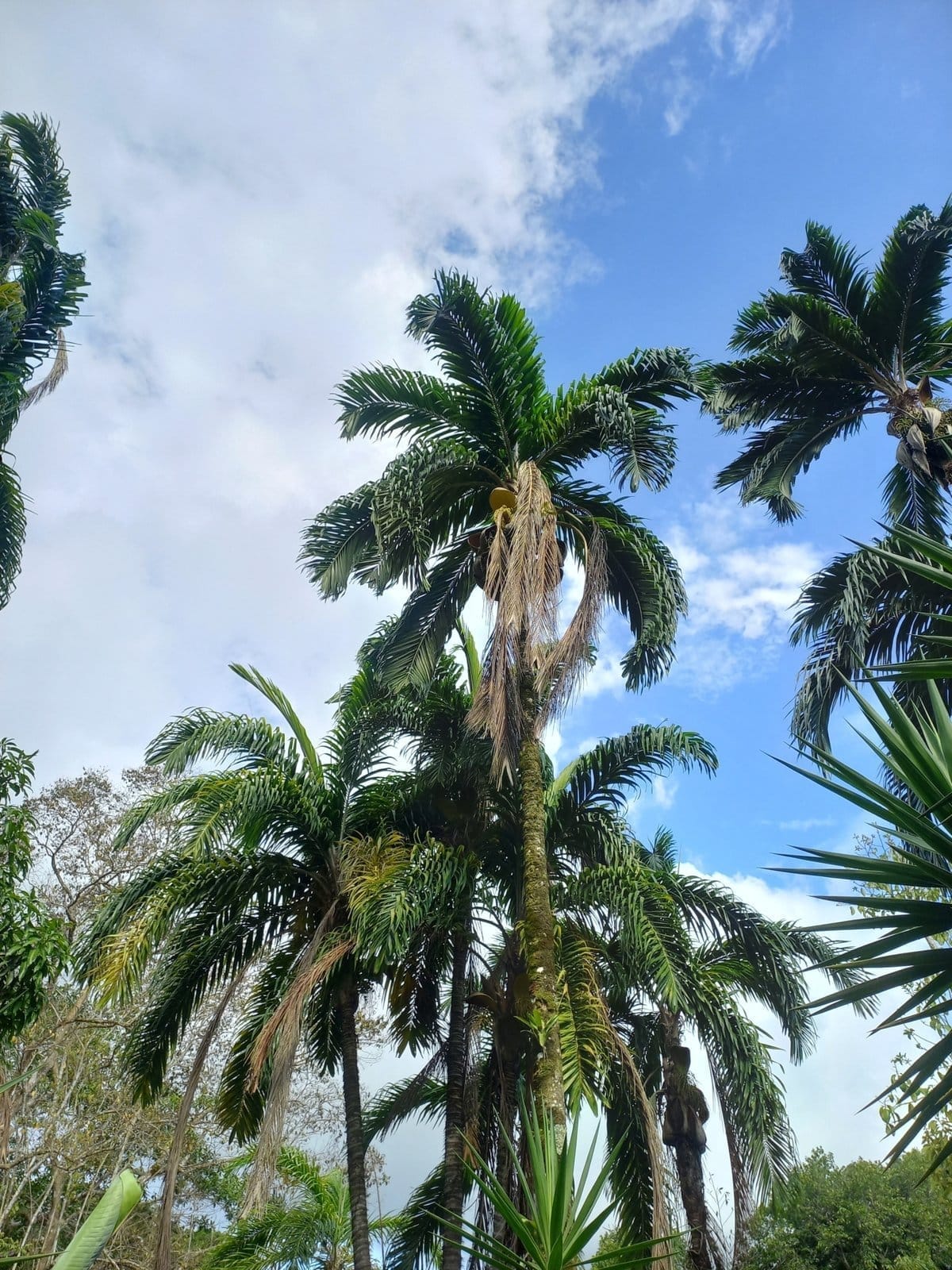
The Pejibaye or Peach Palm (Bactris gasipaes) is the only palm in the Americas domesticated for its fruit—a distinction earned over 10,000 years of cultivation. This spiny palm produces clusters of colorful, nutritious fruits that remain a beloved traditional food in Costa Rica, especially during the April-September season.
Quick Reference
iNaturalist Observations
Community-powered species data
📸 Photo Gallery
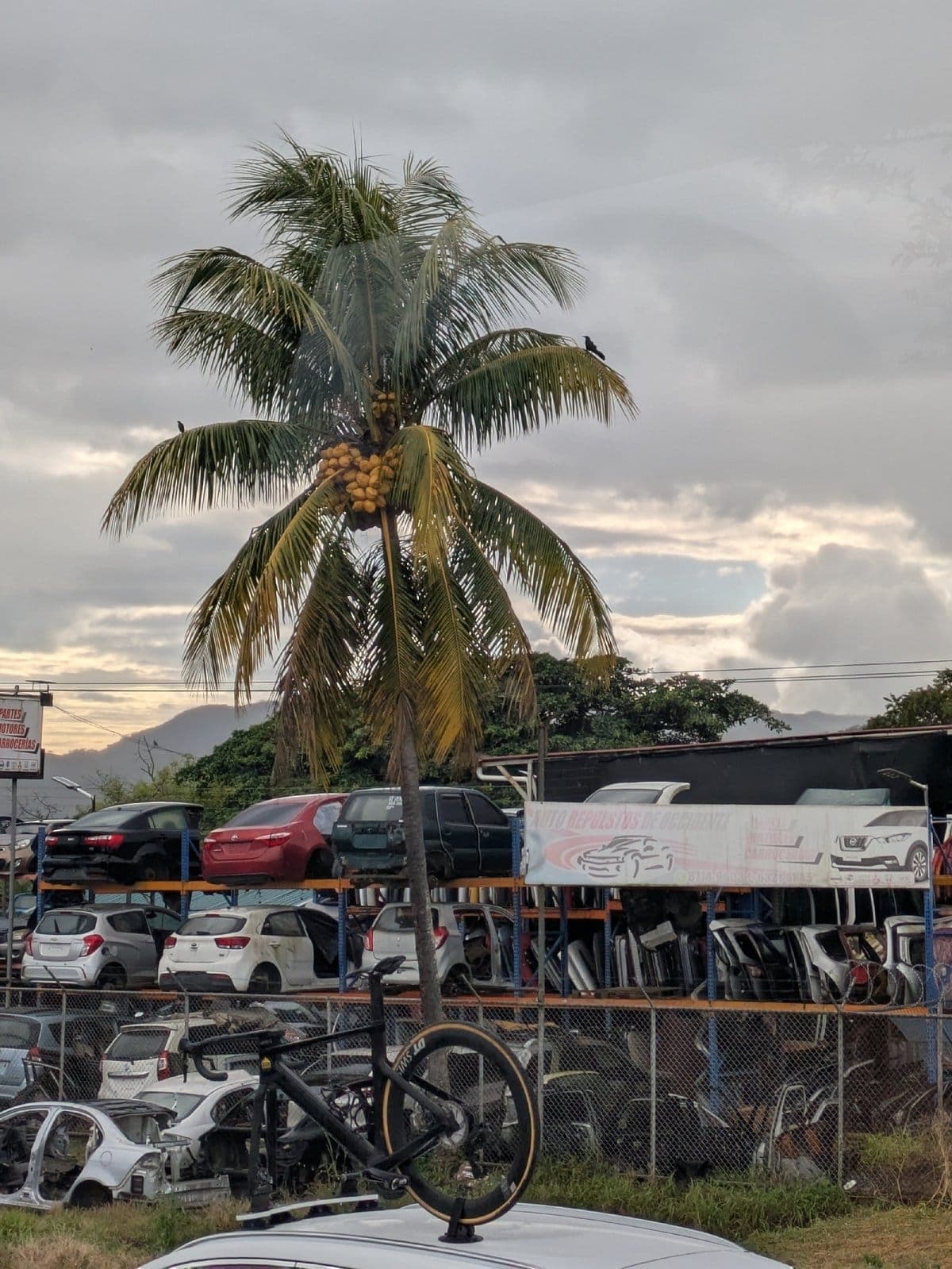
Whole tree
📷 (c) Lucía Angulo, some rights reserved (CC BY-NC)(CC BY-NC)
View source ↗Leaves
📷 (c) Pete Woodall, some rights reserved (CC BY-NC)(CC BY-NC)
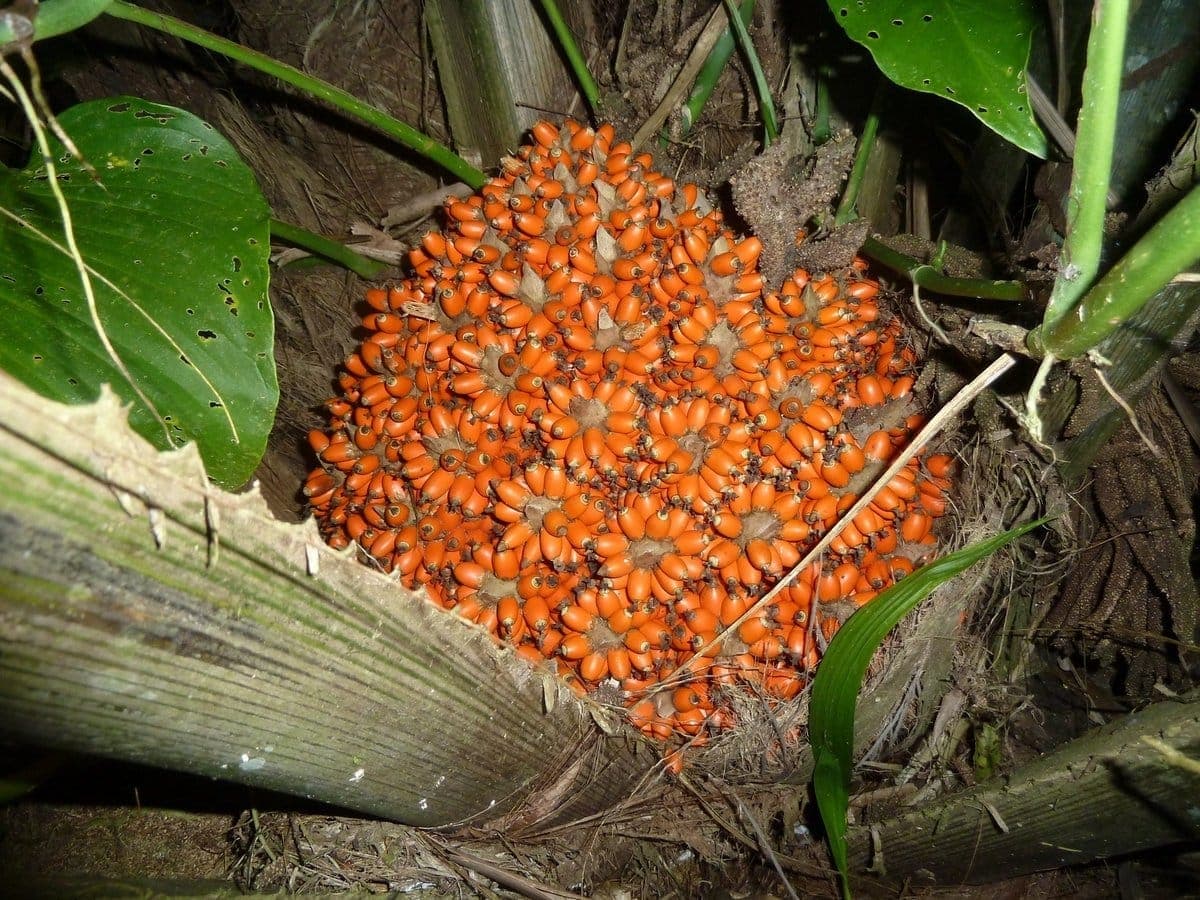
View source ↗Fruit
📷 (c) ALNelson, some rights reserved (CC BY-NC)(CC BY-NC)
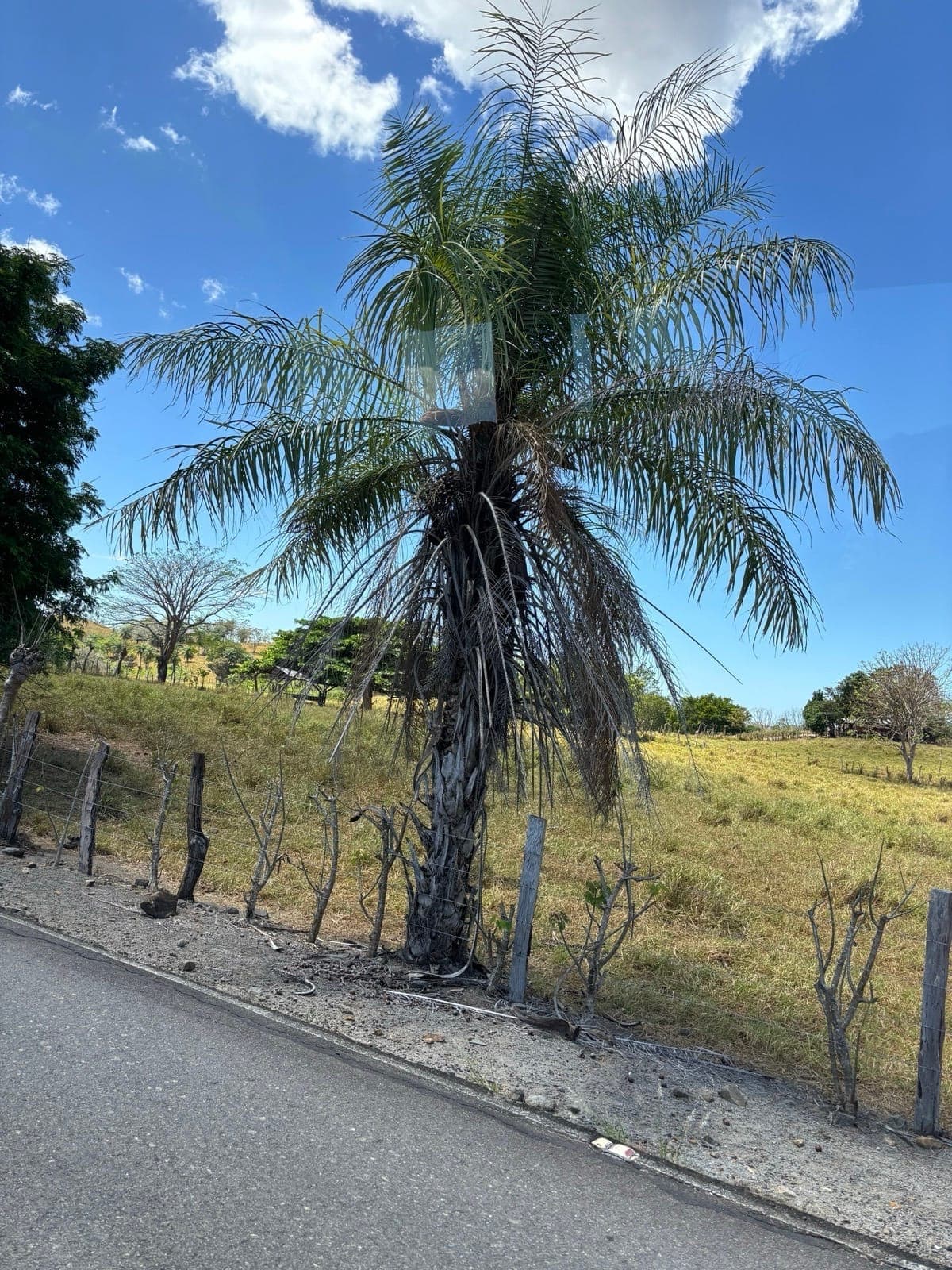
View source ↗Whole tree
📷 (c) Josue Jimenez, some rights reserved (CC BY-NC)(CC BY-NC)
View source ↗Leaves
📷 (c) Pete Woodall, some rights reserved (CC BY-NC)(CC BY-NC)
View source ↗Photos sourced from iNaturalist community science database. View all observations →↗
Taxonomy and Classification
- Bactris: From Greek "baktron" meaning staff or cane - gasipaes: From indigenous name in South America - Pejibaye: From indigenous Chibchan languages of Costa Rica - The wild ancestor is sometimes called "chontaduro" in South America
Common Names
Physical Description
Overall Form
Pejibaye is a clump-forming palm that produces multiple stems from the base. Its most distinctive feature is the densely spiny trunk—sharp black spines that ring the trunk and make harvesting challenging without long poles. The fruits grow in large, heavy clusters just below the crown of feathery fronds.
Distinctive Features
Trunk
- Type: Single or clumping (multi-stemmed)
- Height: 12-20 m tall
- Spines: Dense, black, very sharp
- Rings: Visible from fallen leaf bases
- New stems: Emerge from base
- Wood: Hard, durable
Fronds
- Type: Pinnate (feather-like)
- Length: 2-3 meters
- Leaflets: 200+ per frond
- Color: Bright green above
- Spines: On leaf rachis
Flowers
- Type: Monoecious (both sexes)
- Structure: Spadix with spathe
- Color: Cream to yellowish
- Fragrance: Light, sweet
- Pollination: Insects, especially beetles
Fruits
- Type: Drupe
- Size: 3-6 cm diameter
- Color: Yellow, orange, red
- Flesh: Starchy, oily, yellow-orange
- Seed: Single, hard
- Taste: Chestnut-like when cooked
Pejibaye Season in Costa Rica
A Cultural Tradition
Pejibaye season (April-September, peaking May-July) is eagerly anticipated in Costa Rica. Street vendors sell boiled pejibaye by the bag, often with mayonnaise for dipping—a beloved local tradition. The fruits must be cooked before eating as they contain trypsin inhibitors and calcium oxalate crystals that cause throat irritation and digestive distress when raw.
How to Eat Pejibaye
- Boil in salted water for 30-60 minutes
- Peel off the thin skin
- Remove the seed
- Dip in mayonnaise (traditional)
- Season with salt if desired
- Enjoy the starchy, nutty flavor
Nutritional Profile
- High in beta-carotene (vitamin A)
- Good source of fiber
- Contains healthy oils
- Rich in carbohydrates
- Provides vitamin C
- Contains iron and potassium
Heart of Palm (Palmito)
Premium Product
Costa Rica is a major producer of cultivated heart of palm from pejibaye. The clumping growth habit allows sustainable harvest—when one stem is cut, others continue growing and new ones emerge. This makes pejibaye palmito more environmentally friendly than heart of palm from single-stemmed palms that must be killed for harvest.
Cultural Significance
Deep Indigenous Roots
Historical Importance
- Cultivated 10,000+ years
- Pre-Columbian staple food
- Fermented for chicha beverage
- Wood for hunting weapons
- Spiritual significance
- Trade commodity
Modern Costa Rica
- National cultural food
- Seasonal celebration
- Street food tradition
- School nutrition programs
- Export crop (palmito)
- Agroforestry systems
Traditional Chicha
Indigenous peoples traditionally made "chicha de pejibaye"—a fermented beverage from the fruits. The fruits were cooked, mashed, mixed with water, and left to ferment. This tradition continues in some indigenous communities and has been revived by craft beverage makers interested in ancestral recipes.
Distribution in Costa Rica
Pejibaye grows throughout Costa Rica's lowlands and middle elevations, both cultivated and semi-wild. The largest commercial plantations are in the Caribbean lowlands near San Carlos and Sarapiquí, but backyard palms are found nationwide. During season, vendors sell cooked fruits everywhere.
Regional Distribution
Ecological Role
Wildlife Interactions
Ecosystem Services
Direct Benefits
- Food source: Feeds 25+ vertebrate species during fruiting season
- Nesting habitat: Dense frond bases shelter bats, insects, and small birds
- Shade provision: Critical understory shade in agroforestry systems
- Soil enrichment: Fallen fruits and fronds decompose into rich organic matter
- Carbon storage: Fast-growing palm sequesters atmospheric carbon
Agroecological Role
- Living fence material: Dense spiny clumps serve as natural barriers
- Companion planting: Grows well with cacao, coffee, and banana
- Erosion control: Extensive root system stabilizes slopes
- Microclimate regulation: Canopy reduces wind and temperature extremes
- Biodiversity corridors: Plantations maintain wildlife connectivity
Wood Properties
Although pejibaye is primarily grown for its fruit and heart of palm, its wood has remarkable characteristics:
Pejibaye wood is one of the hardest and most durable natural materials available in the tropics:
- Construction: Traditional house posts, floor planks, roof beams — naturally resistant to termites and rot
- Weapons & Tools: Indigenous peoples made bows, arrows, spears, and digging sticks — still prized by traditional communities
- Musical instruments: Hollowed sections used for drums and percussion
- Crafts & furniture: Polished pejibaye wood has striking dark color and grain patterns — used for decorative items and walking sticks
- Fencing: Split trunks used for durable fence posts in rural areas
Because pejibaye forms clumps of multiple stems, individual trunks can be harvested without killing the plant. This makes it one of the most sustainable sources of tropical hardwood. Some agroforestry projects now integrate pejibaye specifically for its dual timber-food value.
Growing Information
Cultivation Requirements
Propagation Guide
Varieties
Thousands of years of cultivation have produced great diversity in pejibaye. Varieties differ in fruit color (yellow to red), size, oil content, and seedlessness. Some "spineless" varieties have been developed for easier harvest, though these are less common. The CATIE research center in Turrialba, Costa Rica maintains one of the world's largest pejibaye germplasm collections.
Interesting Facts
Similar Species
Identification Guide
How to Identify Pejibaye in the Field
Quick Checklist:
Key Differences from Look-alikes
Where to See Pejibaye
Best Locations to See Pejibaye in Costa Rica
The best time to experience pejibaye culture is May through August when fruits are abundant. Look for vendors selling bags of boiled pejibaye (usually ₡1,000-2,000 per bag) at roadsides, bus stops, and farmer's markets across the country. Always try them with mayonnaise — the traditional Costa Rican way!
References and Resources
Community observations and photo gallery
Global distribution records and taxonomic data
Tropical Agricultural Research and Higher Education Center — major pejibaye research
Accepted taxonomy and global distribution from Kew Gardens
Conservation status and species assessment
References
📚 Scientific References & Further Reading
Mora-Urpí, J., Weber, J.C. & Clement, C.R. (). Peach Palm (Bactris gasipaes Kunth): Promoting the conservation and use of underutilized and neglected crops — Institute of Plant Genetics and Crop Plant Research / International Plant Genetic Resources Institute[Link ↗]
Clement, C.R. (). Domestication of the pejibaye palm: past and present. Advances in Economic Botany, 6: 155–174[Link ↗]
Zamora, N. et al. (). Árboles de Costa Rica, Vol. III — INBio[Link ↗]
Henderson, A. (). Bactris (Palmae). Flora Neotropica Monograph, 79: 1–181[Link ↗]
Safety Information Disclaimer
Safety information is provided for educational purposes only. Individual reactions may vary significantly based on age, health status, amount of exposure, and individual sensitivity. Always supervise children around plants. Consult a medical professional or certified arborist for specific concerns. The Costa Rica Tree Atlas is not liable for injuries or damages resulting from interaction with trees described in this guide.
• Always supervise children around plants
• Consult medical professional if unsure
• Seek immediate medical attention if poisoning occurs
Information compiled from authoritative toxicology sources, scientific literature, and medical case reports.
Help improve this page
Know something about this tree? Share local knowledge, suggest a correction, or submit a photo to improve this guide for everyone.