Jacaranda
Jacaranda mimosifolia
Quick facts
Native Region
South America (Argentina, Bolivia)
Max Height
10-20 meters
Family
Bignoniaceae
Conservation
VU — Vulnerable
Uses
Safety Information
Toxicity Details
Jacaranda has low toxicity. The seeds and pods are mildly toxic if ingested in quantity - contain compounds that can cause stomach upset, nausea, vomiting, and diarrhea. However, the seeds are not palatable and rarely consumed. The flowers and leaves are essentially non-toxic. There are scattered reports of mild toxicity from seed ingestion but no severe poisonings documented. The tree is widely planted in urban areas globally without significant safety concerns.
Skin Contact Risks
No skin irritation. Safe to handle flowers, leaves, and branches. The wood can cause minor sawdust irritation during woodworking (wear dust mask).
Allergenic Properties
LOW allergen risk. Pollen production is minimal. Some individuals may have mild respiratory sensitivity to fallen flowers or pollen. Wood dust may cause respiratory irritation in woodworkers.
Wildlife & Pet Risks
Safe for pets including dogs and cats. While listed as mildly toxic to pets by some sources, actual poisonings are rare. Pets may eat fallen flowers without issue. Wildlife including birds and bees visit the flowers safely. Nectar is valuable for pollinators.
Season
Flowering
Feb-Apr
Fruiting
May-Jun
How to identify
Jacaranda (Blue Jacaranda)
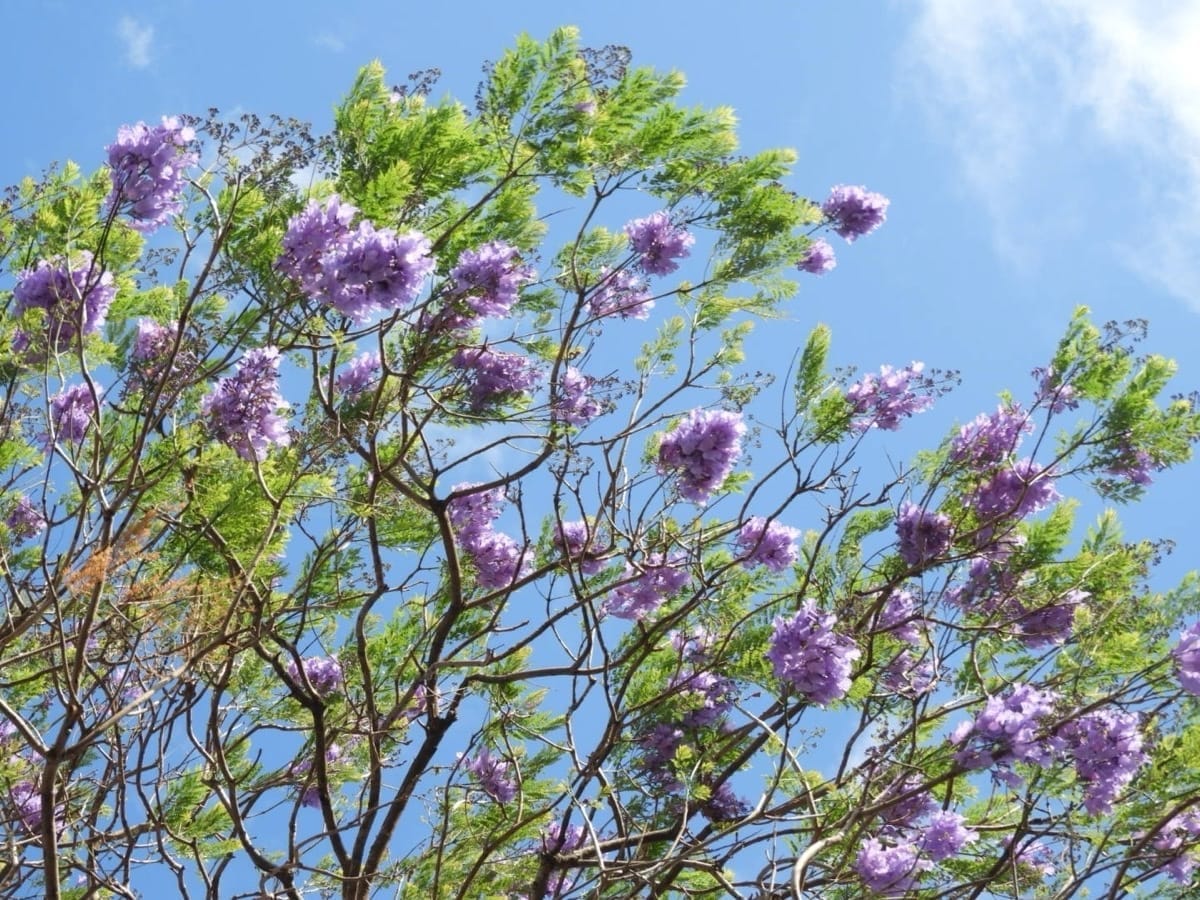
The Jacaranda (Jacaranda mimosifolia) creates one of nature's most breathtaking spectacles—entire trees engulfed in clouds of blue-purple flowers that carpet the ground beneath in a violet haze. Though native to South America, this beloved tree has been planted worldwide for its extraordinary beauty, and in Costa Rica it signals the transition from dry to wet season with its magnificent blooms. Few trees can rival the Jacaranda when it's in full flower—a vision that stops traffic and captures hearts.
Quick Reference
iNaturalist Observations
Community-powered species data
📸 Photo Gallery
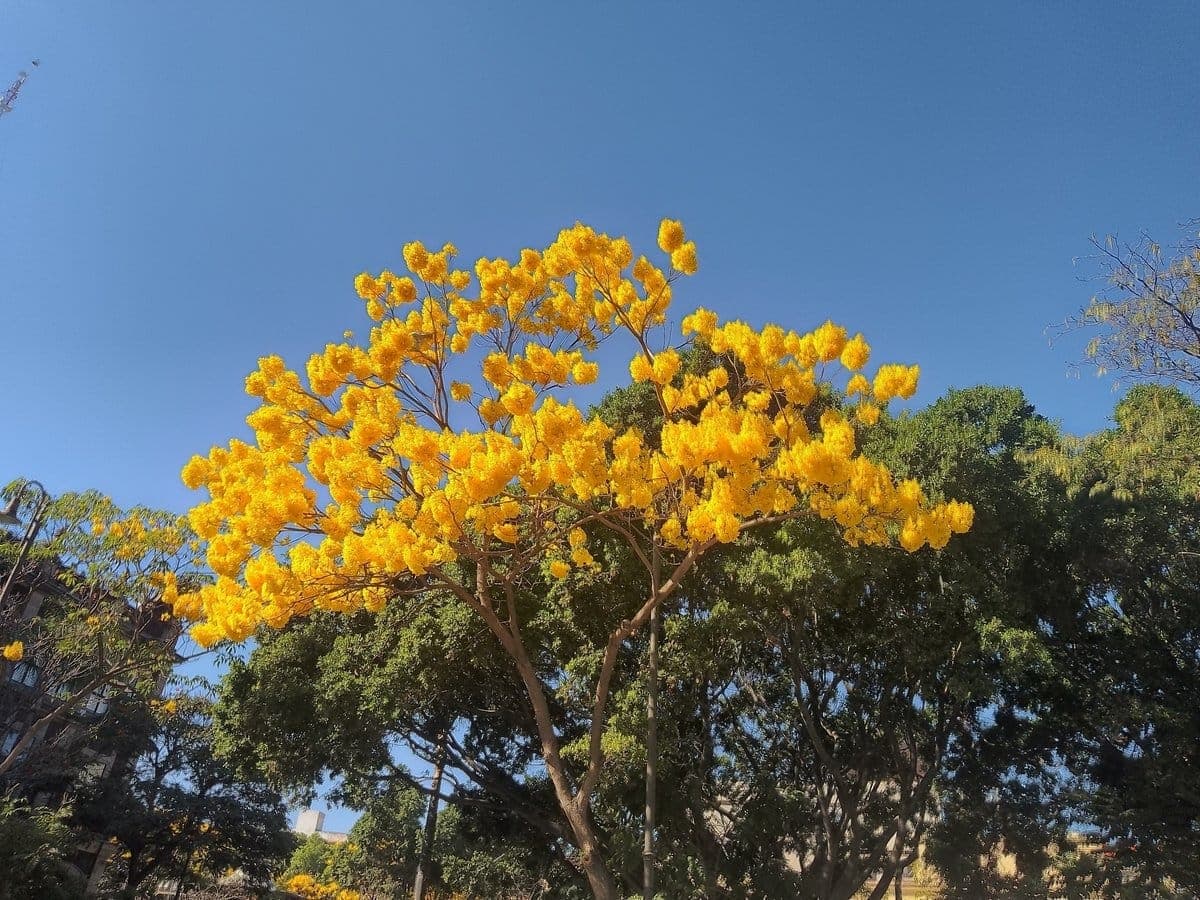
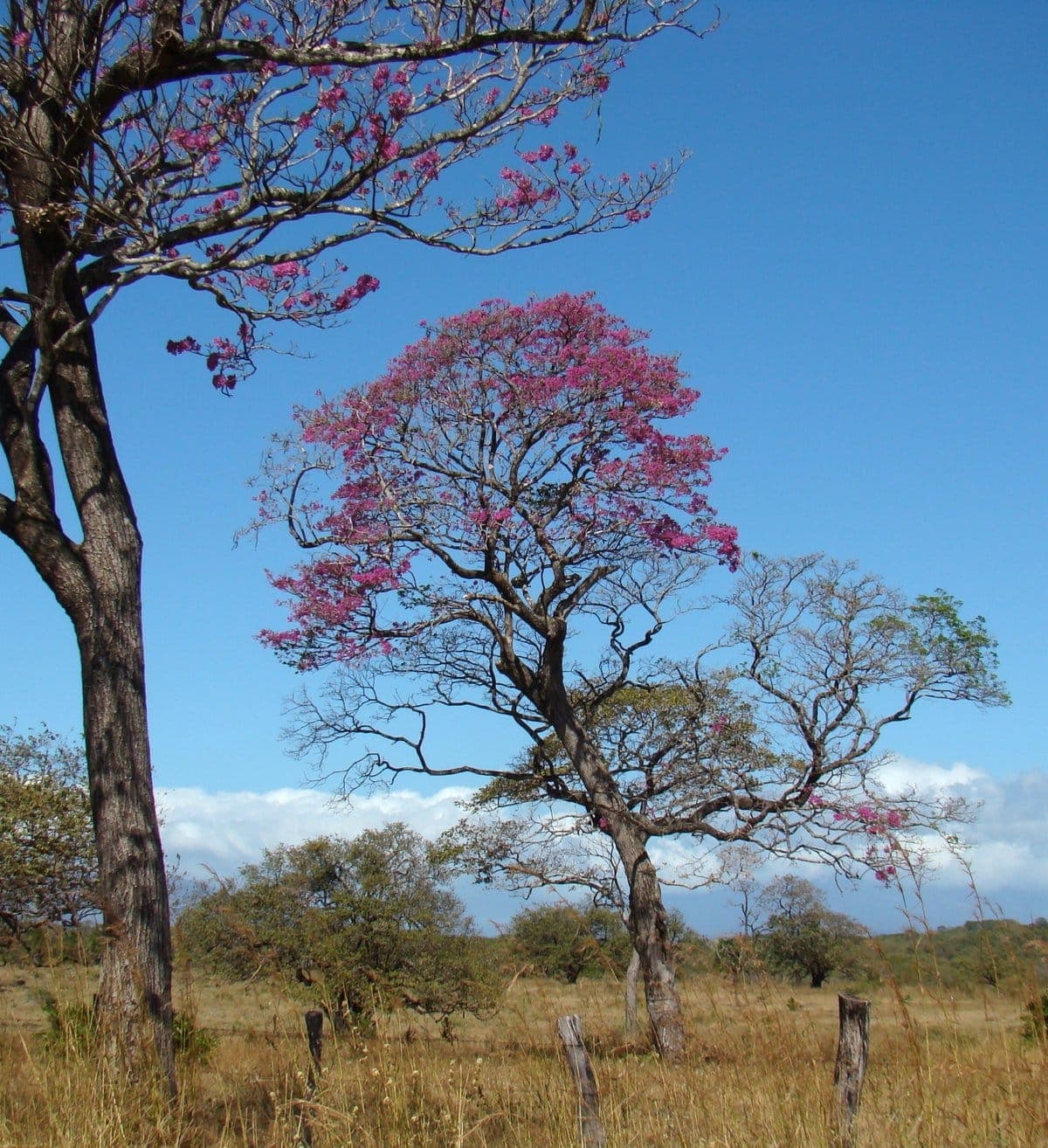
Whole tree
📷 (c) Franklin Charles Graham IV, some rights reserved (CC BY-NC)(CC BY-NC)
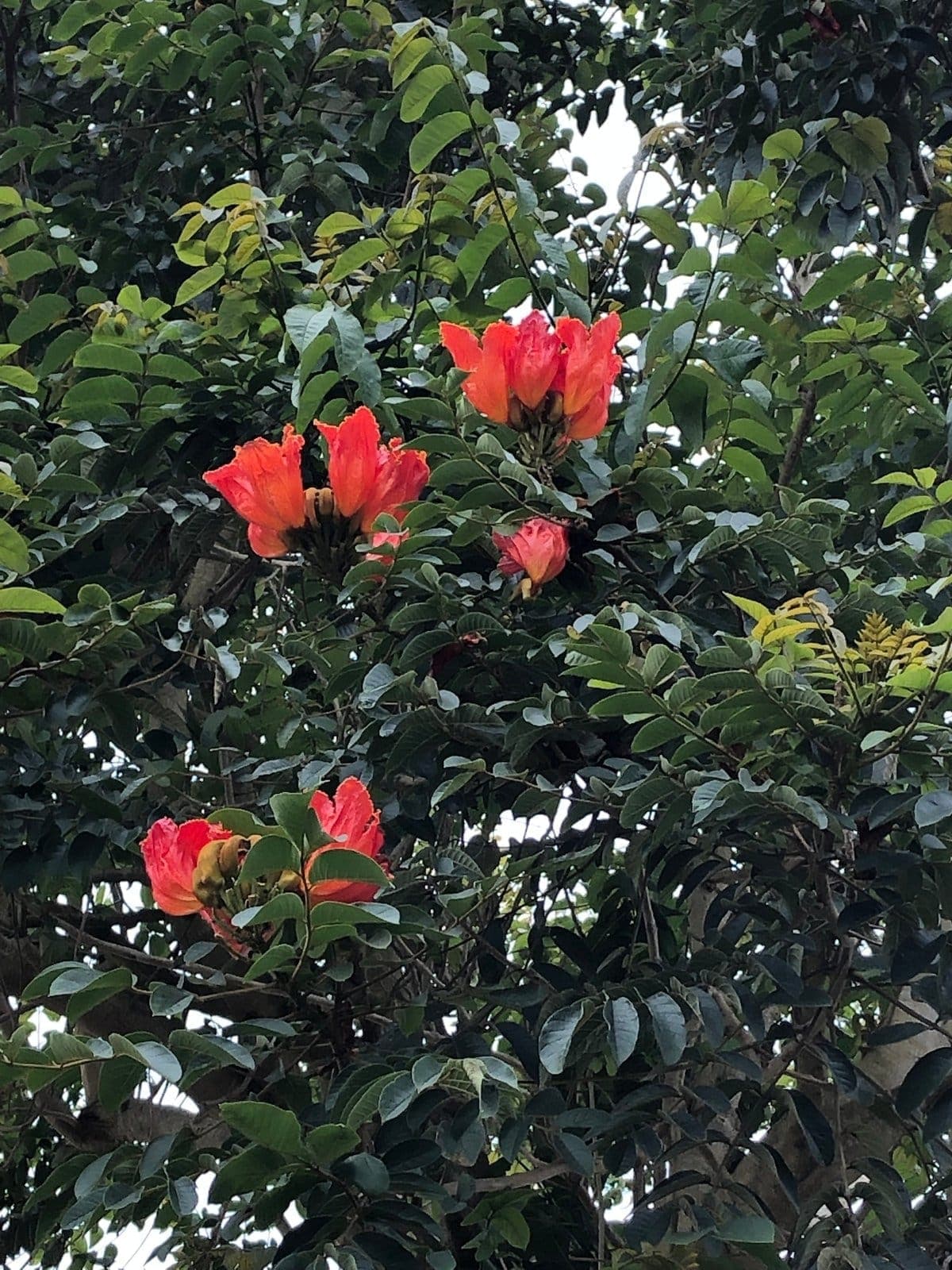
View source ↗Leaves
📷 (c) fede2cr, some rights reserved (CC BY)(CC BY)
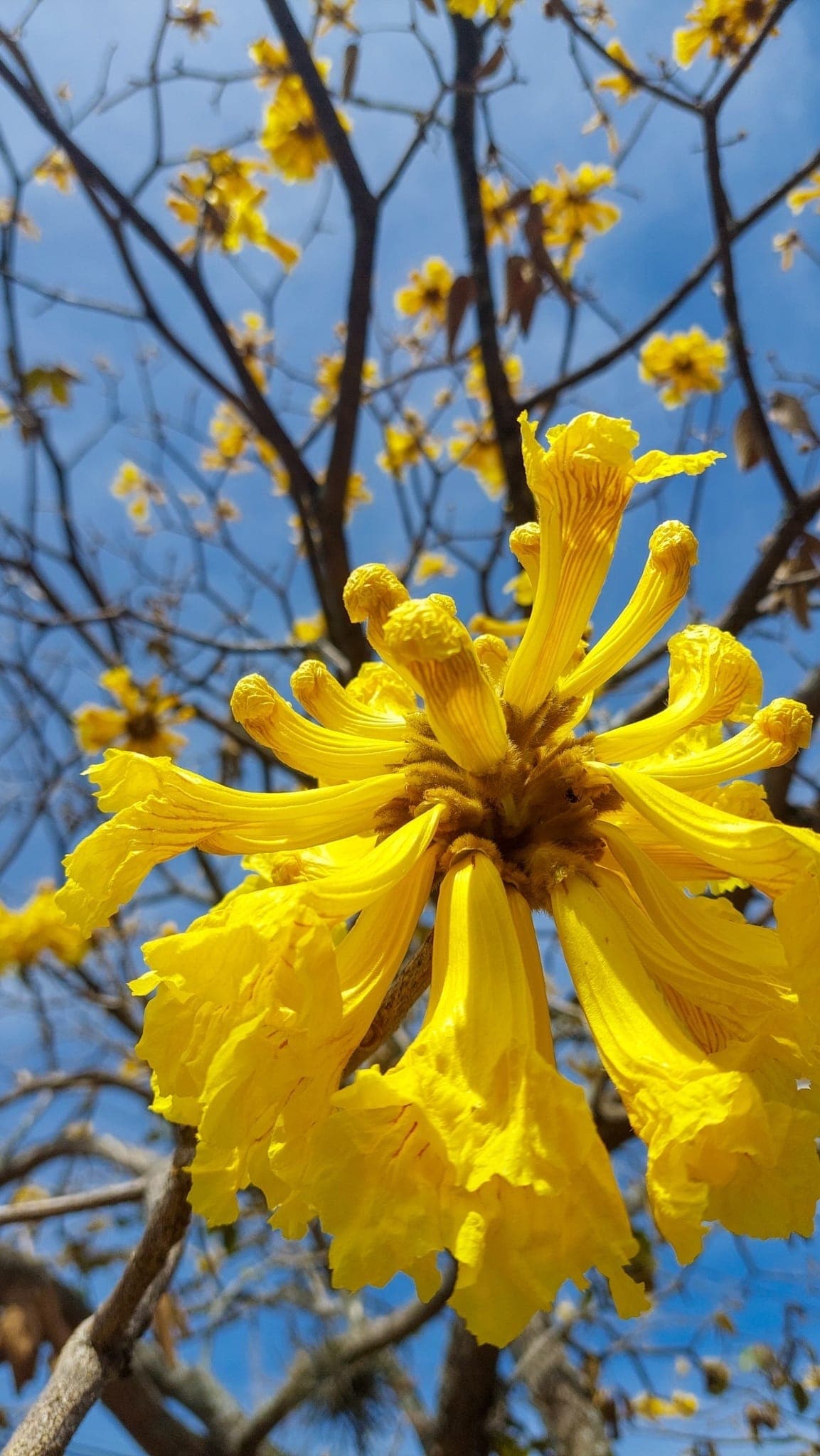
View source ↗Flowers
📷 (c) Erik Daniel Erikson, some rights reserved (CC BY-NC)(CC BY-NC)
View source ↗Whole tree
📷 (c) fede2cr, some rights reserved (CC BY)(CC BY)
View source ↗Leaves
📷 (c) nikkidule, some rights reserved (CC BY-NC)(CC BY-NC)
View source ↗Photos sourced from iNaturalist's community science database. View all observations →↗
Taxonomy and Classification
The Bignoniaceae family includes many spectacular flowering trees: - Tabebuia species (Corteza Amarilla, Roble de Sabana) - Catalpa (North American catalpas) - Kigelia (Sausage Tree of Africa) Jacaranda is related to Costa Rica's native yellow and pink flowering trumpet trees, sharing the characteristic tubular flowers.
Common Names
Physical Description
General Form
Jacaranda is a medium-sized deciduous tree with an open, spreading crown that becomes rounded with age. The tree is deciduous, dropping its feathery foliage before flowering, which showcases the blooms spectacularly against the bare branches. The delicate, lacy appearance of its bipinnate leaves adds year-round elegance.
Distinctive Features
The Famous Flowers
- Color: Blue-purple to violet-blue
- Shape: Tubular, trumpet-shaped
- Size: 4-5 cm long
- Arrangement: Large terminal panicles
- Timing: Late dry season (March-May in Costa Rica)
- Duration: 4-8 weeks of bloom
- Ground Cover: Fallen flowers carpet ground in purple
Foliage
- Type: Bipinnate compound (fern-like)
- Leaflets: Tiny, numerous
- Overall Size: 30-45 cm long
- Texture: Delicate, lacy
- Color: Bright green
- Deciduous: Drops before flowering
Trunk & Bark
- Trunk: Often twisting, characterful
- Bark: Gray-brown, slightly scaly
- Branching: Spreading, irregular
Fruits
- Type: Flat, woody capsules
- Shape: Circular, disc-like
- Size: 5-7 cm diameter
- Color: Brown when mature
- Seeds: Winged, wind-dispersed
- Persistence: May hang on tree for months
Growth Habit
- Crown: Open, rounded with age
- Root System: Not aggressive
- Urban Tolerance: Good; popular street tree
In Costa Rica, Jacarandas typically bloom at the end of dry season (late March through May), just before the first rains arrive. The trees are often leafless during flowering, making the purple display even more dramatic. A light rain after peak bloom creates a magical scene as petals carpet the ground. Mark your calendar—Jacaranda season is one of Costa Rica's most beautiful natural events!
Distribution and Habitat
Native Range
Geographic Distribution
Global Distribution (Cultivated)
Now planted worldwide in suitable climates:
- Americas: Mexico through South America
- Africa: South Africa (famous in Pretoria)
- Australia: Major ornamental
- Mediterranean: Spain, Portugal, Italy
- Asia: India, parts of China
- Caribbean: Throughout the region
Distribution in Costa Rica
Widely planted as an ornamental in urban and suburban areas:
Growing Requirements
Flowering Phenomenon
The Purple Spectacle
Why Jacaranda Blooms Are So Special
Several factors combine to make Jacaranda flowering extraordinary: - Mass Flowering: Entire canopy blooms simultaneously - Leafless Display: Flowers appear before leaves, maximizing visibility - Color Rarity: Blue-purple is unusual in flowering trees - Duration: Weeks of continuous bloom - Fallen Flowers: Create purple carpets on ground - Timing: End of dry season = perfect photo weather Cities like Pretoria (South Africa) and Grafton (Australia) are famous for their Jacaranda-lined streets. Costa Rica's Central Valley has its own spectacular displays.
Flowering Requirements
Jacarandas need specific conditions for their best flowering: - Dry Period: A distinct dry season triggers flowering - Full Sun: Shade reduces bloom intensity - Age: Trees typically begin flowering at 5-7 years - Cool Period: Some cool weather helps trigger buds - Avoid Over-Watering: Too much water = fewer flowers In Costa Rica's humid lowlands, Jacarandas often grow well but flower poorly. The Central Valley's climate is ideal.
Ecological Value
Wildlife Interactions
Pollinators
- Bees: Major pollinators; important nectar source
- Butterflies: Visit flowers frequently
- Hummingbirds: Occasional visitors
- Native Pollinators: Support local species
Other Wildlife
- Parrots: Sometimes eat flowers
- Seed-Eating Birds: Consume seeds from capsules
- Insects: Various species on foliage
- Nesting: Open structure used by some birds
Ecosystem Considerations
While not native to Costa Rica, Jacaranda is generally considered benign: - Not Invasive: Doesn't spread aggressively in Costa Rica - Pollinator Support: Valuable nectar for bees - Urban Wildlife: Provides food and shelter in cities - Climate Fit: Grows well in appropriate zones However, planting native species should be prioritized for ecosystem restoration and biodiversity conservation.
Cultural Significance
Global Icon
A Tree of Celebration
Jacaranda has become culturally significant across the world: - South Africa: Pretoria is called "Jacaranda City"; blooms mark exam season - Australia: Grafton has an annual Jacaranda Festival - Mexico: Featured in art, literature, and gardens - Los Angeles: Lines many streets; beloved urban tree - Argentina: National symbol; "Jacarandá" is a popular name The tree's beauty transcends borders—a true global ambassador of nature's artistry.
In Costa Rica
Uses
Ornamental Value
Wood and Other Uses
Timber
- Characteristics: Medium density, workable
- Color: Light brown
- Uses: Carvings, furniture components
- Quality: Moderate; not primary timber tree
Other Uses
- Traditional Medicine: Bark and leaves used
- Honey: Important bee forage plant
- Shade: Light, filtered shade
- Craft Wood: Suitable for small projects
Cultivation
Growing Jacaranda
Propagation
Seeds (Common Method)
- Collect mature seed pods
- Extract winged seeds
- Sow in well-drained mix
- Germination in 2-3 weeks
- Grow in full sun
- Transplant at 30-50 cm
Cuttings
- Semi-hardwood cuttings possible
- Less common than seed propagation
Grafting
- Used for selected cultivars
- Ensures consistent flowering
Site Selection
Maintenance
- Water: Regular when young; drought tolerant mature
- Fertilizer: Light feeding in growing season
- Pruning: Shape when young; minimal pruning mature
- Pests: Few serious problems
- Diseases: Root rot in waterlogged soil
Identification Guide
How to Identify Jacaranda
Where to See Jacaranda in Costa Rica
Visit the Central Valley in late March through April for peak Jacaranda bloom. The purple displays are most spectacular in Heredia, San José parks, and highland towns. After a brief dry-season rain, the fallen petals create magical purple carpets. Early morning light makes the purple glow ethereal.
External Resources
Community observations and photos
Plant database and cultivation info
Tree selection and care information
Global biodiversity occurrence data and distribution maps
Conservation status and species assessment
References
📚 Scientific References & Further Reading
Gentry, A.H. (1992). Bignoniaceae Part II (Tribe Tecomeae). Flora Neotropica Monograph 25
Gilman, E.F. & Watson, D.G. (1994). Jacaranda mimosifolia Fact Sheet. USDA Forest Service
Various (2020). World Flora Online: Jacaranda mimosifolia. World Flora Online Consortium
Few trees capture human imagination quite like the Jacaranda in full bloom. That ethereal blue-purple haze, the way fallen petals create rivers of color on sidewalks, the contrast of purple against a blue sky—it's nature at its most theatrical. While not native to Costa Rica, the Jacaranda has earned its place in the country's urban landscapes, bringing joy and wonder to millions every dry season. When you see a Jacaranda in bloom, take a moment to stand beneath it, look up through the purple canopy, and appreciate one of the world's most beautiful trees doing what it does best—being utterly, extravagantly gorgeous.
Safety Information Disclaimer
Safety information is provided for educational purposes only. Individual reactions may vary significantly based on age, health status, amount of exposure, and individual sensitivity. Always supervise children around plants. Consult a medical professional or certified arborist for specific concerns. The Costa Rica Tree Atlas is not liable for injuries or damages resulting from interaction with trees described in this guide.
• Always supervise children around plants
• Consult medical professional if unsure
• Seek immediate medical attention if poisoning occurs
Information compiled from authoritative toxicology sources, scientific literature, and medical case reports.
Help improve this page
Know something about this tree? Share local knowledge, suggest a correction, or submit a photo to improve this guide for everyone.