Caimito
Chrysophyllum cainito
Quick facts
Native Region
Caribbean and Central America
Max Height
15-25 meters
Family
Sapotaceae
Conservation
LC — Least Concern
Uses
Safety Information
Toxicity Details
The RIPE FRUIT PULP is SAFE and EDIBLE for humans including children when properly prepared - it is sweet, hydrating, nutritious (vitamins, fiber). However, SEEDS contain cyanogenic glucosides that release TOXIC CYANIDE when metabolized. NEVER eat or chew seeds - swallowing seeds whole is also dangerous. SKIN/RIND contains bitter, sticky WHITE LATEX that is mildly toxic in quantity and not edible. Must remove ALL skin and seeds before consuming. UNRIPE FRUIT contains more latex and can be astringent or mildly irritating - only eat fully ripe fruit. CHILDREN: Safe as a treat with proper preparation (pulp only, no seeds/skin), but accidental ingestion of latex from skin or seeds with cyanide is dangerous. PETS: Limited evidence but seeds (cyanogenic compounds) and latex-containing skin/rind should be kept away from dogs, cats, and other pets. Even the pulp should only be offered in small amounts with veterinary approval, avoiding ALL seeds and skin.
Skin Contact Risks
Cutting the fruit releases sticky white LATEX from the skin/rind - minimize contact between latex and edible pulp. The latex may cause MILD IRRITATION in sensitive individuals and should not be consumed. Individuals with LATEX ALLERGIES should exercise caution as contact with rind may trigger allergic reactions. Most people can handle the fruit without issues if they avoid prolonged contact with the latex.
Allergenic Properties
LOW allergen risk overall but LATEX ALLERGY is a specific concern. Those allergic to latex should handle the fruit with care or avoid it entirely. Some people may experience mild allergic symptoms or digestive issues from the fruit's latex or skin. Most people tolerate the properly prepared fruit pulp without problems.
Season
Flowering
Aug-Oct
Fruiting
Jan-Apr
How to identify
Caimito (Star Apple)
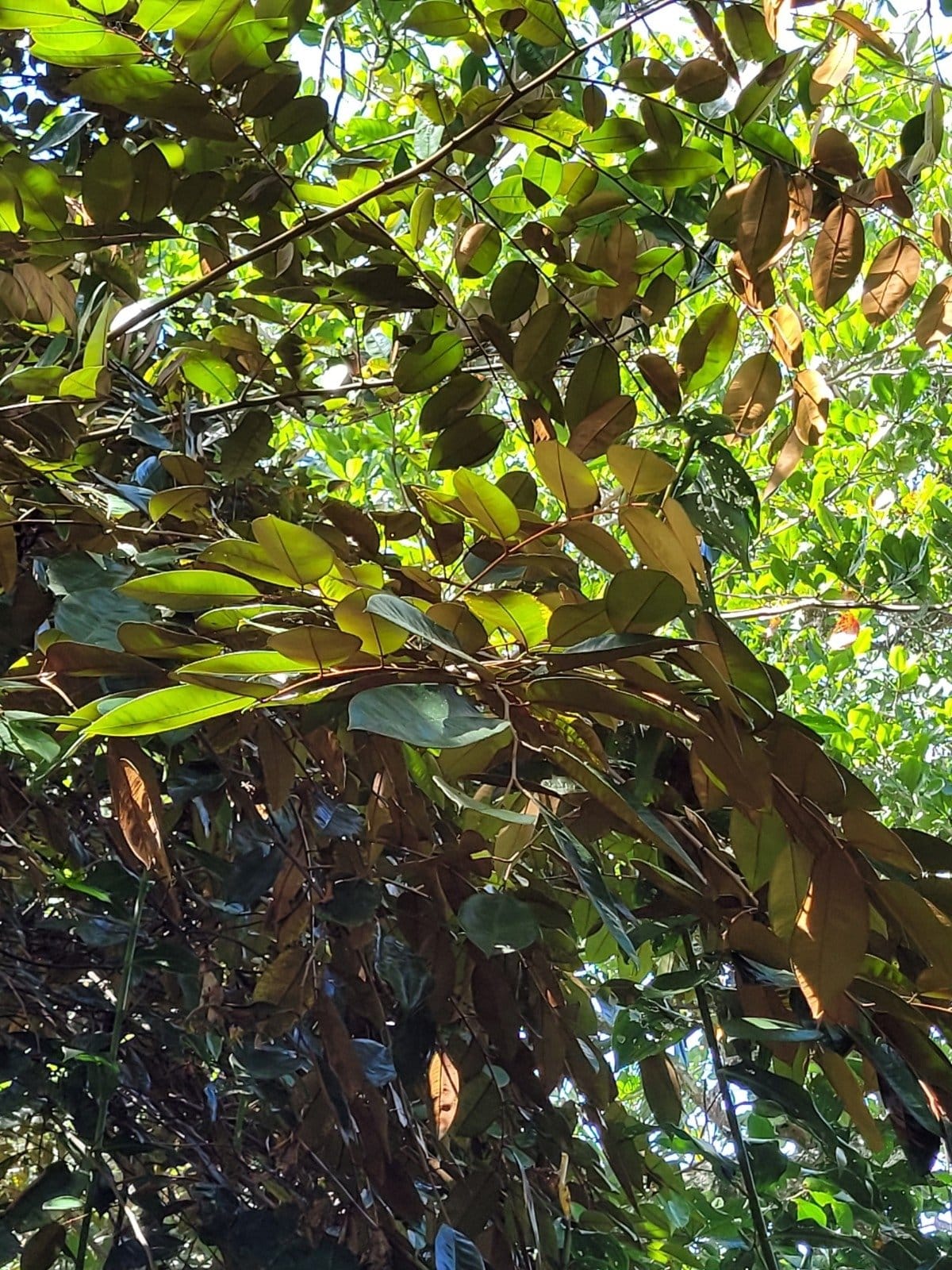
The Caimito or Star Apple (Chrysophyllum cainito) is one of the most beautiful fruit trees in the tropics. Its leaves shimmer with golden-bronze undersides that flash in the breeze, while its round fruits—purple or green depending on variety—reveal a stunning star pattern when cut crosswise. The flesh is creamy, sweet, and slightly gelatinous, unlike any other fruit. Native to the Caribbean, this tree has spread throughout the tropics as both an ornamental and a beloved fruit tree.
Quick Reference
iNaturalist Observations
Community-powered species data
📸 Photo Gallery
Whole tree
📷 (c) J.W.Baker, some rights reserved (CC BY-NC)(CC BY-NC)
View source ↗Leaves
📷 (c) J.W.Baker, some rights reserved (CC BY-NC)(CC BY-NC)
View source ↗Flowers
📷 (c) Mario Montero-Guzmán, some rights reserved (CC BY-NC)(CC BY-NC)
View source ↗Whole tree
📷 (c) joaquin_arrascaeta, some rights reserved (CC BY-NC)(CC BY-NC)
View source ↗Leaves
📷 (c) J.W.Baker, some rights reserved (CC BY-NC)(CC BY-NC)
View source ↗Photos sourced from iNaturalist community science database. View all observations →↗
Taxonomy and Classification
- Chrysophyllum: Greek "chrysos" (gold) + "phyllon" (leaf) - cainito: From Carib/Taino indigenous languages - Star Apple: The star pattern when fruit is cut crosswise - Caimito: Spanish adaptation of indigenous name
Common Names
Physical Description
Overall Form
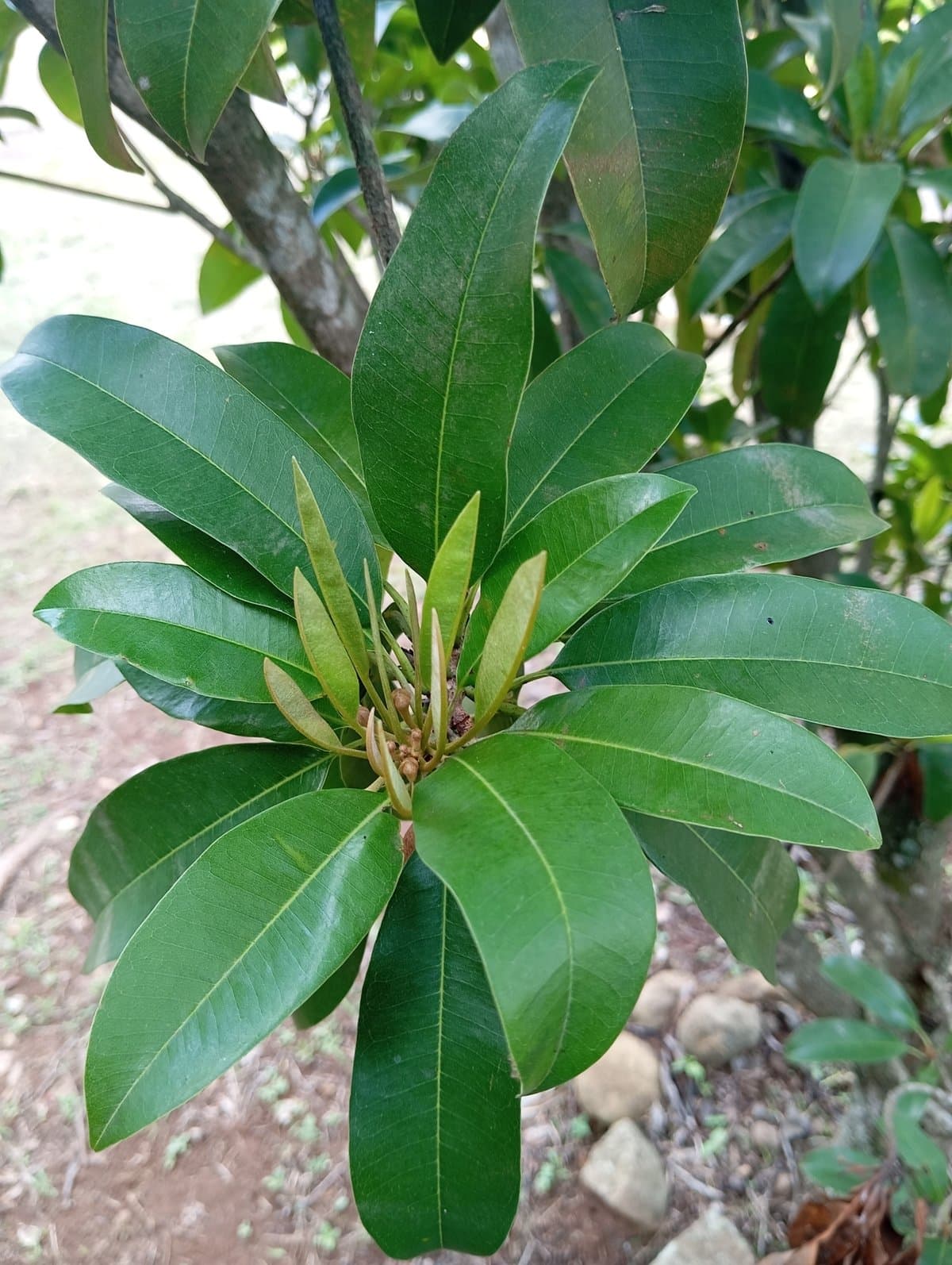
The Caimito is a handsome evergreen tree with a dense, spreading crown. Its most distinctive feature is the leaves: dark glossy green above but covered with satiny golden-bronze pubescence below. When the wind moves through the canopy, the leaves flash gold and green—a truly stunning sight. The tree produces abundant round fruits and provides excellent shade.
Distinctive Features
The Magical Leaves
- Shape: Elliptic to oval
- Size: 8-15 cm long
- Upper Surface: Dark glossy green
- Lower Surface: Golden-bronze silky pubescence
- Texture: Leathery
- Arrangement: Alternate
- Key Feature: Two-toned flash in breeze
Bark
- Color: Brown to grayish
- Texture: Rough, fissured
- Latex: White, sticky when cut
- Inner Bark: Pinkish
The Star Apple Fruit
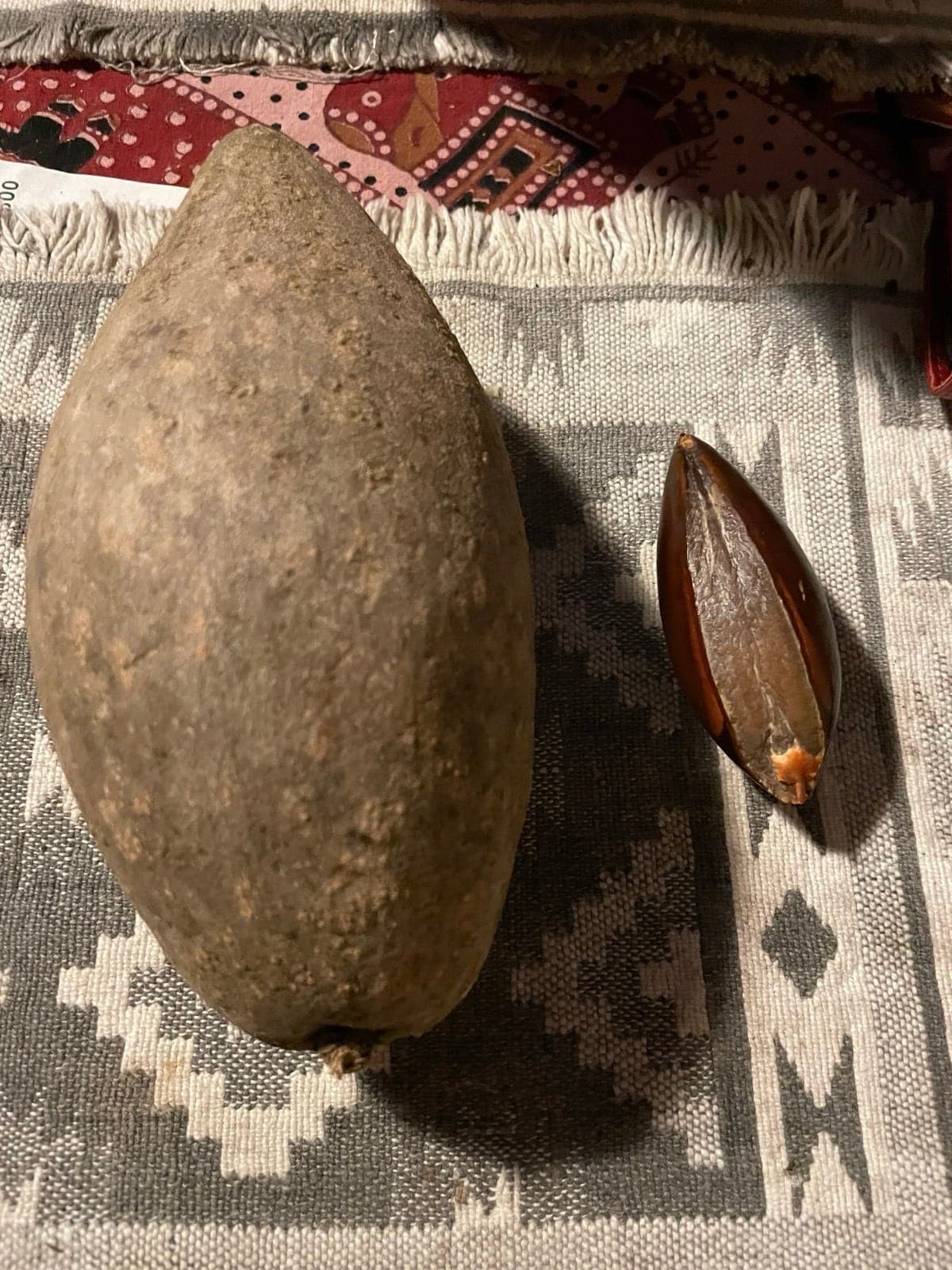
- Shape: Round, apple-sized
- Size: 5-10 cm diameter
- Color: Purple or green varieties
- Skin: Smooth, slightly rubbery
- Flesh: White/purple, creamy, sweet
- Star Pattern: Seeds form star when cut crosswise
- Seeds: 3-10, flat, shiny black
- Season: Late dry season to early wet
Flowers
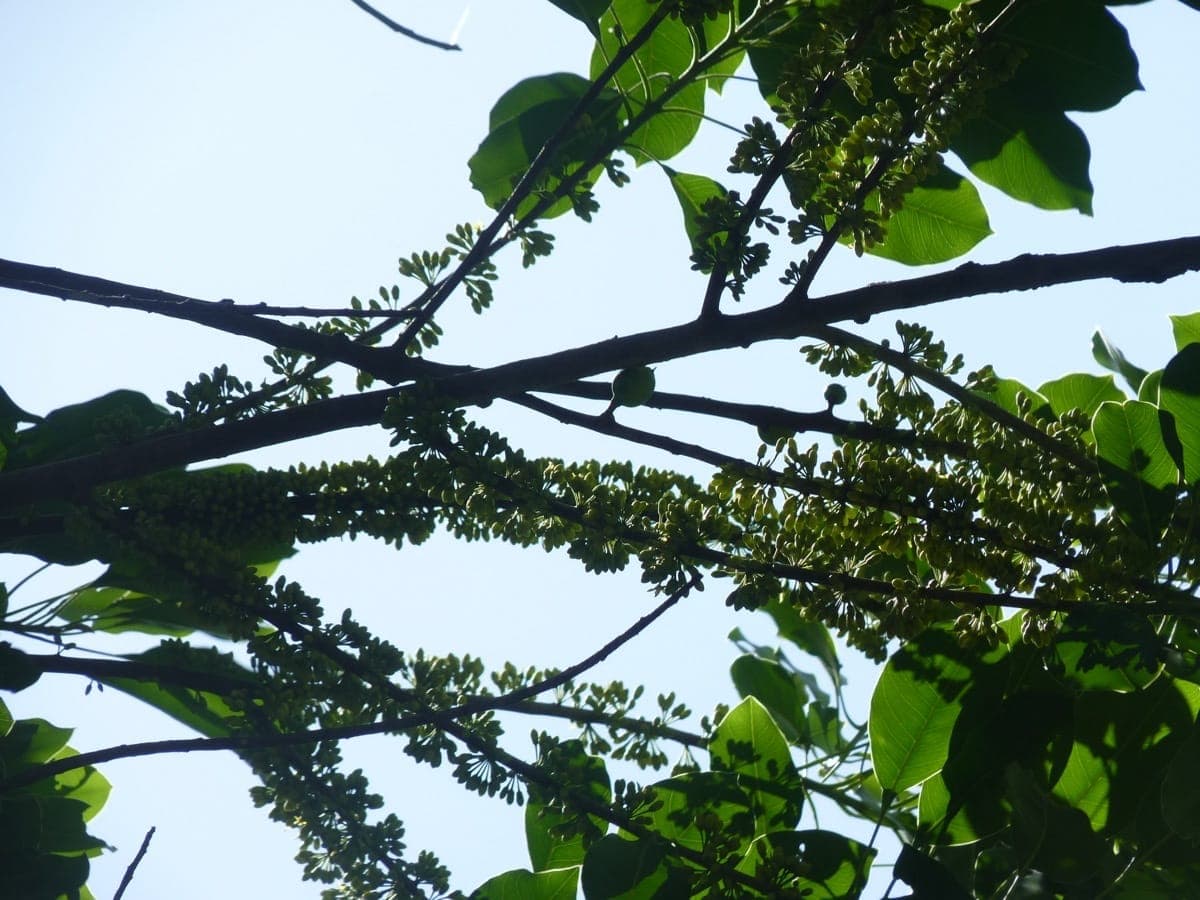
- Type: Small, inconspicuous
- Color: Purplish-white
- Size: About 5 mm
- Position: Clustered in leaf axils
- Fragrance: Very faint
The Caimito fruit has unique characteristics: When Ripe: - Skin gives slightly to pressure - Purple varieties deeply colored - Green varieties yellowish-green - May show slight wrinkling How to Eat: - Cut in half crosswise (reveals star pattern!) - Scoop creamy flesh with spoon - Avoid the bitter skin and latex - Don't eat unripe—astringent and gummy - Chill for best flavor Flavor Profile: Sweet, mild, slightly gelatinous texture—like a cross between condensed milk and custard apple!
The Star Pattern
Why It's Called Star Apple
The Secret Star Inside
When you cut a ripe Caimito fruit horizontally (crosswise), you reveal a beautiful natural star: What You See: - The seeds are arranged around the center - Translucent pulp segments radiate outward - The pattern forms a 5-8 pointed star - Purple varieties: star shows purple and white - Green varieties: star shows greenish and white Perfect for Instagram: The cross-section makes for stunning food photography! Cultural Significance: In many cultures, the star is considered auspicious, and Caimitos are associated with good fortune.
Purple vs. Green Varieties
Distribution and Habitat
Native Range
Geographic Distribution
Cultivated Worldwide
Caimito has been planted throughout tropical regions: - Southeast Asia: Vietnam, Philippines, Thailand (very popular) - South America: Brazil, Colombia, Ecuador - Africa: Tropical regions - Pacific Islands: Hawaii, Polynesia - Florida: Southern regions Vietnam has adopted it enthusiastically—"vú sữa" (milk breast) is a beloved fruit and the tree is widely cultivated.
Distribution in Costa Rica
Habitat Preferences
Ecological Importance
Wildlife Interactions
Fruit Consumers
- Birds: Many species eat ripe fruit
- Bats: Major consumers, seed dispersers
- Monkeys: Love the sweet fruit
- Squirrels: Frequent visitors
- Opossums: Nocturnal feeders
Other Roles
- Pollinators: Small insects, bees
- Shade Provider: Dense canopy
- Cavity Sites: Old trees provide nesting
- Epiphyte Host: Large trees support orchids, bromeliads
Urban Wildlife Value
Caimito is excellent for urban wildlife: - Produces abundant fruit over extended season - Attracts birds to urban gardens - Dense foliage provides nesting sites - Evergreen—provides year-round shelter - Tolerates urban conditions well A mature Caimito in a backyard can support dozens of bird species!
Uses and Products
The Fruit
A Tropical Delicacy
Star apple fruit is enjoyed in many ways: Fresh Consumption: - The most common way to enjoy - Cut in half, scoop with spoon - Chill before eating for best flavor - Avoid the skin (bitter latex) Preparations: - Fruit salads (pairs well with citrus) - Smoothies and milkshakes - Ice cream flavoring - Preserves (less common) Nutritional Benefits: - Good source of Vitamin C - Contains calcium and phosphorus - Low in fat - Natural sugars for energy Commercial Value: Popular in markets throughout Southeast Asia and the Caribbean.
Ornamental Value
Caimito is planted for beauty as much as fruit: Landscape Uses: - Specimen tree: Stunning alone on lawn - Shade tree: Dense, spreading crown - Avenue tree: Line of Caimitos spectacular - Garden highlight: The golden leaves! Visual Appeal: - Two-toned leaves flash in wind - Purple fruits against dark green foliage - Dense, symmetrical crown - Evergreen—looks good year-round Few tropical trees combine beauty and utility so well!
Traditional Medicine
Traditional uses only. Consult healthcare professionals for medical advice.
Cultivation
Growing Star Apple
Identification Guide
How to Identify Caimito
Where to See Caimito in Costa Rica
To taste Caimito in Costa Rica: - Season: Peak February-May, but variable
- Markets: Look in Caribbean markets (Limón) - Farms: Many rural homes have trees - Ask: "Caimito" is well-known name Look for the distinctive trees even out of season—the golden leaf undersides make them identifiable from a distance when wind moves the leaves!
Cultural Significance
Caribbean Heritage
A Caribbean Classic
Caimito is deeply rooted in Caribbean culture: Historical Presence: - Cultivated before European contact - Featured in Caribbean cuisine - Symbolic of tropical abundance - Featured in folk songs and stories Jamaica Connection: Jamaica has a saying: "Caimito season is heaven's season"— reflecting the joy when these sweet fruits ripen. Vietnamese Adoption: Vietnam embraced this Caribbean fruit so thoroughly that "vú sữa" is now a quintessential Vietnamese fruit, featured in celebrations and valued for its sweetness.
External Resources
Community observations and photos
California Rare Fruit Growers
Plant Resources information
Global biodiversity occurrence data and distribution maps
Conservation status and species assessment
References
📚 Scientific References & Further Reading
Morton, J.F. (1987). Fruits of Warm Climates. Julia F. Morton, Miami
Pennington, T.D. (1990). Sapotaceae. Flora Neotropica. New York Botanical Garden
Crane, J.H. & Balerdi, C.F. (2016). Star Apple Growing in the Florida Home Landscape. University of Florida IFAS Extension
The Caimito is proof that nature can be both beautiful and delicious. Those shimmering golden leaf undersides make it one of the most distinctive trees in the tropical landscape—you can spot a Caimito from far away just by watching the leaves flash in the wind. And when you cut one of those purple fruits in half, revealing the perfect star pattern inside, it's like nature designed it specifically to delight us. From Caribbean backyards to Vietnamese orchards, from Costa Rican farms to Filipino gardens, the Caimito brings sweetness and beauty wherever it grows. It's a reminder that the best tropical trees don't just feed us—they inspire us with their elegance.
Safety Information Disclaimer
Safety information is provided for educational purposes only. Individual reactions may vary significantly based on age, health status, amount of exposure, and individual sensitivity. Always supervise children around plants. Consult a medical professional or certified arborist for specific concerns. The Costa Rica Tree Atlas is not liable for injuries or damages resulting from interaction with trees described in this guide.
• Always supervise children around plants
• Consult medical professional if unsure
• Seek immediate medical attention if poisoning occurs
Information compiled from authoritative toxicology sources, scientific literature, and medical case reports.
Help improve this page
Know something about this tree? Share local knowledge, suggest a correction, or submit a photo to improve this guide for everyone.