Manú
Minquartia guianensis
Quick facts
Native Region
Central America to Amazon Basin
Max Height
30-45 meters (100-150 feet)
Family
Olacaceae
Conservation
VU — Vulnerable
Uses
Safety Information
Toxicity Details
No toxic parts. The tree is completely safe. Animal studies of leaf extracts showed no acute toxicity. The bark exudes white latex when cut but this is not hazardous. No documented toxicity to humans or animals.
Skin Contact Risks
No skin contact risk. Safe to touch and handle. The white latex from cut bark is not irritating or toxic.
Allergenic Properties
LOW allergen risk. Wood dust may cause standard respiratory irritation during sanding (use dust mask), but the species is not reported among allergenic tropical hardwoods. Generally safe to work with.
Season
Flowering
Feb-Apr
Fruiting
Jun-Aug
How to identify
Manú (Black Manwood)
The Manú (Minquartia guianensis) is one of the most valuable and increasingly rare hardwood trees in Costa Rica's lowland rainforests. Its wood is so dense that it sinks in water — one of only a handful of timbers on Earth with specific gravity exceeding 1.0. For millennia, indigenous peoples of the Caribbean lowlands have used Manú for construction that lasts generations, but centuries of selective logging have made large specimens critically scarce. Today, encountering a fully mature Manú — a cathedral of buttress roots rising 45 meters into the canopy — is a genuinely rare privilege in tropical ecology.
Quick Reference
iNaturalist Observations
Community-powered species data
📸 Photo Gallery
Whole tree with buttresses
📷 (c) capepolly, some rights reserved (CC BY-NC)(CC BY-NC)
View source ↗Leaves
📷 (c) capepolly, some rights reserved (CC BY-NC)(CC BY-NC)
View source ↗Trunk detail
📷 (c) Fondo de Biodiversidad Sostenible, some rights reserved (CC BY-NC)(CC BY-NC)
View source ↗Leaf detail
📷 (c) Fondo de Biodiversidad Sostenible, some rights reserved (CC BY-NC)(CC BY-NC)
View source ↗Mature specimen
📷 (c) Pedro Blanco, some rights reserved (CC BY-NC)(CC BY-NC)
View source ↗Photos sourced from iNaturalist community science database. View all observations →↗
Taxonomy and Classification
A Monotypic Genus in a Parasitic Order
Minquartia guianensis is the sole species in its genus — a monotypic lineage within the order Santalales. This order is remarkable for containing numerous hemiparasitic and parasitic plants (including mistletoes and sandalwoods), and while Manú is not parasitic itself, its roots form haustorial connections with neighboring trees' root systems, tapping into their vascular tissue for supplemental water and nutrients. This facultative hemiparasitism is subtle — Manú is fully photosynthetic and can grow independently — but the haustorial connections may partly explain why transplanting seedlings from the forest is often unsuccessful [1].
The family placement has been debated. Traditional taxonomy placed Manú in Olacaceae sensu lato, but modern molecular phylogenetics (APG IV, 2016) has split this family, and some authors now assign Minquartia to Coulaceae. Regardless of family circumscription, the genus remains monotypic — there is only one species of Manú on Earth, making its conservation particularly important from a phylogenetic diversity perspective [2].
The genus name Minquartia has uncertain etymology — it may derive from the indigenous name "minquart" used in French Guiana. The epithet guianensis refers to the Guianas (modern-day Guyana, Suriname, French Guiana), where early European botanists collected the type specimen. The common name "Manú" is of indigenous Central American origin and has been adopted widely across the species' range. In English, "Black Manwood" refers to the heartwood color and extraordinary hardness, while "Ironwood" — a name shared with dozens of unrelated species worldwide — reflects the universal human response to timber that defies tools.
Common Names
Physical Description
Overall Form
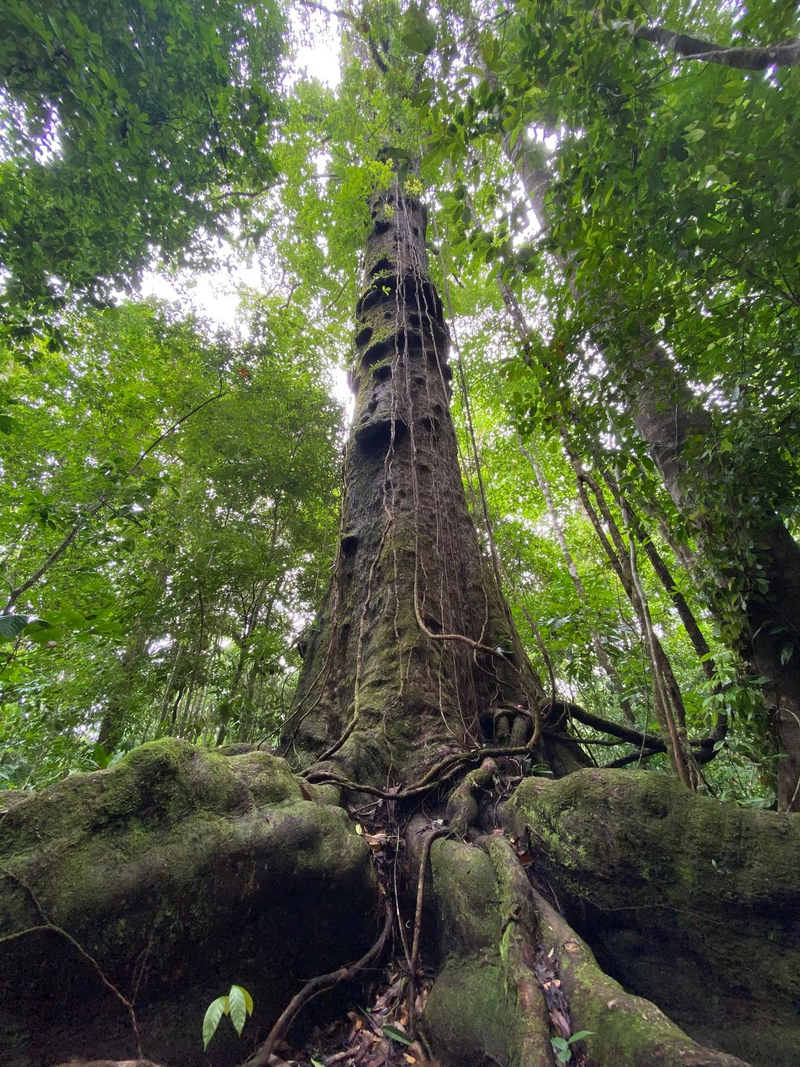
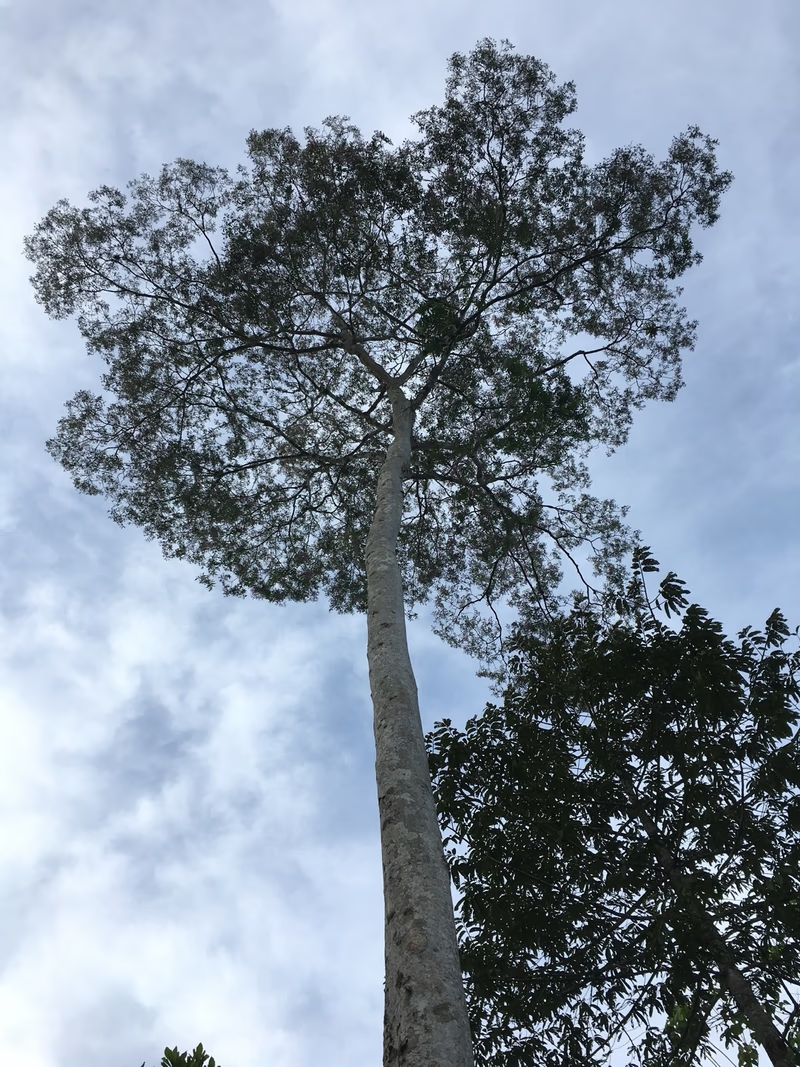
Manú is a large, emergent or upper-canopy rainforest tree that can tower 30–45 meters above the forest floor under optimal conditions. The trunk is straight, cylindrical, and magnificently buttressed — mature trees develop plank buttresses up to 3 meters tall that radiate outward from the base, creating sculptural root systems that serve as microhabitats for ferns, mosses, and small vertebrates. The crown is relatively compact and rounded compared to the massive trunk — a common pattern in emergent tropical trees that sacrifice canopy breadth for height.
The overall impression is one of engineering perfection. Every aspect of Manú's architecture — the buttressed base distributing lateral forces, the unbranched lower trunk minimizing wind resistance, the dense wood resisting mechanical failure — reflects hundreds of years of growth in one of Earth's most competitive environments.
Distinctive Features
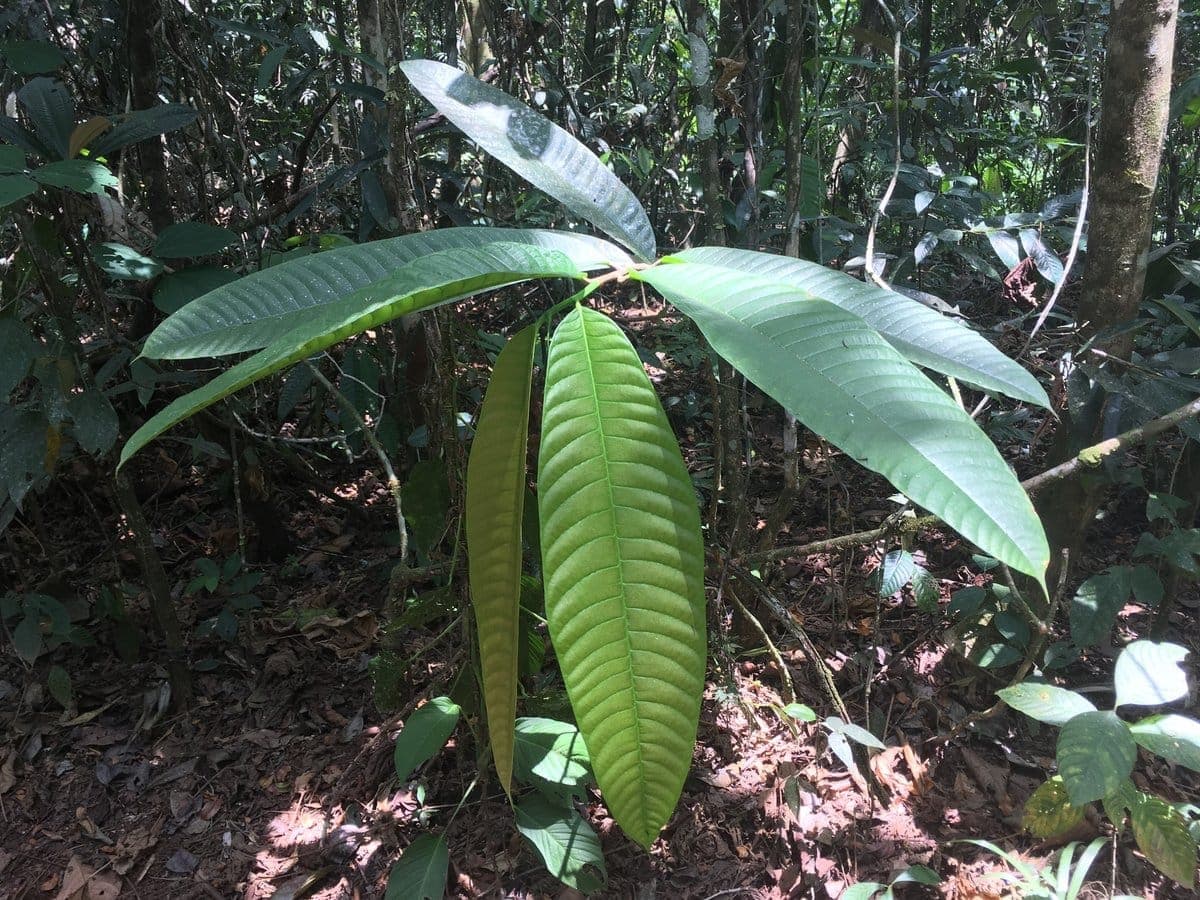
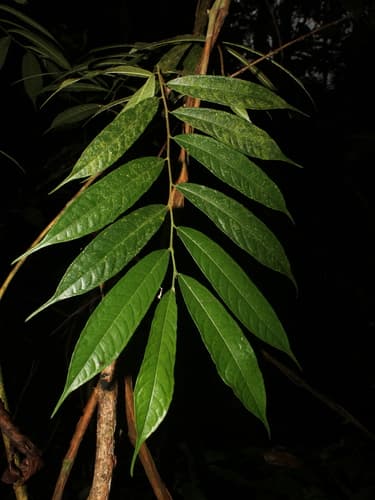
Leaves
- Type: Simple, alternate, distichous (arranged in one plane)
- Size: 8–15 cm long, 3–6 cm wide
- Shape: Elliptic to oblong, with acuminate (long-pointed) tip
- Texture: Leathery (coriaceous), glossy above, paler beneath
- Venation: Pinnate with 8–12 pairs of secondary veins; prominent drip tip sheds water rapidly
- Persistence: Evergreen — maintains canopy year-round
Bark and Trunk
- Outer bark: Dark brown to nearly black, deeply fissured in older trees
- Inner bark: Pinkish-brown with white latex when cut
- Bark thickness: Exceptionally thick (5+ cm in mature trees) — fire and mechanical damage resistance
- Buttresses: Plank-type, 1–3 m tall, radiating to 2+ m from trunk
- Latex: White, viscous, non-toxic; exudes slowly from fresh cuts
Flowers
- Type: Small, perfect (bisexual) flowers
- Color: Greenish-white to cream
- Arrangement: Short axillary racemes (3–8 cm)
- Size: 3–5 mm diameter; inconspicuous individually
- Petals: 5–6, fused at base
- Fragrance: Subtle, sweet
- Timing: Dry season (February–April); brief flowering period
- Pollination: Small insects (generalist); wind may contribute
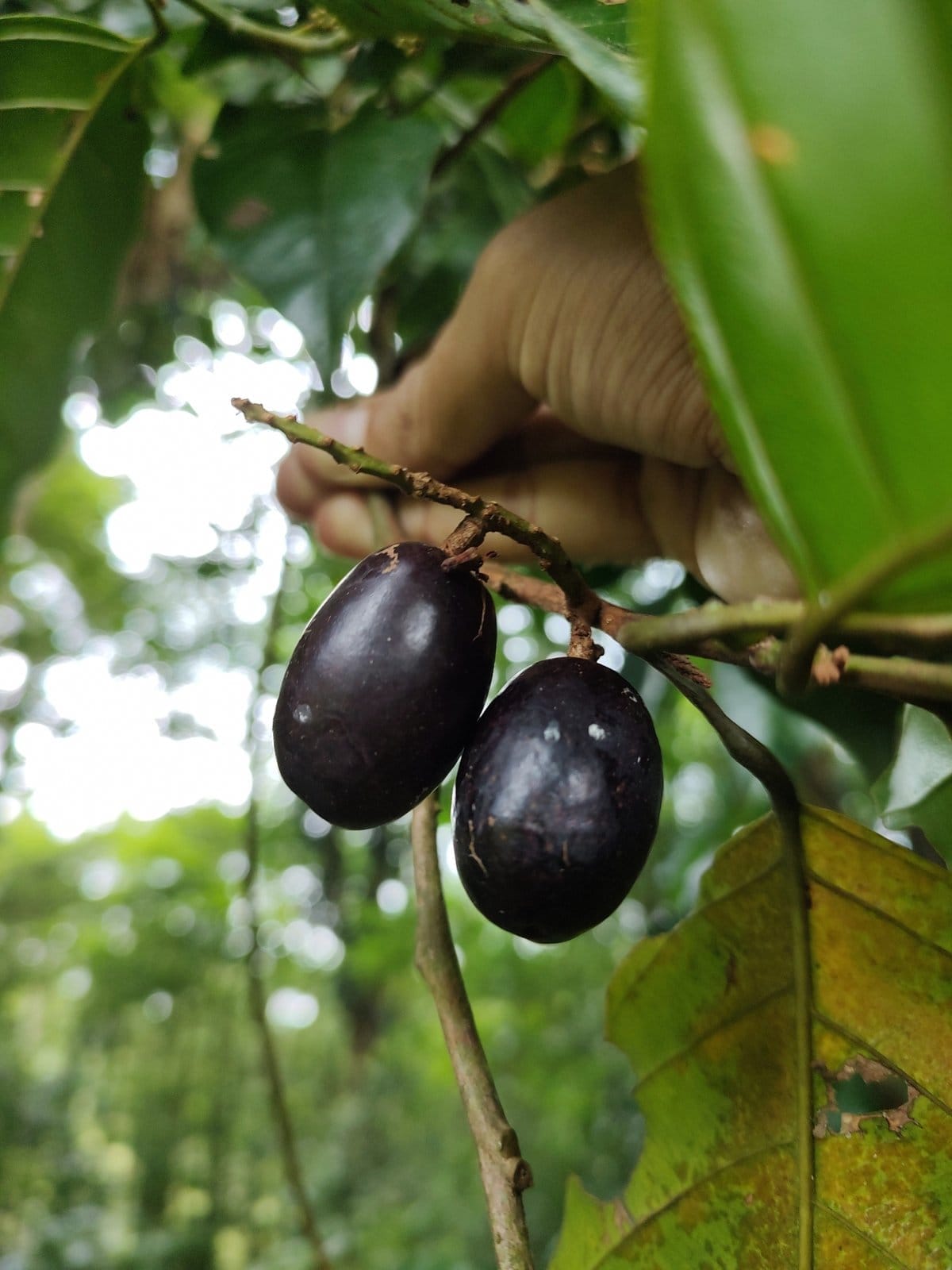
Fruits and Seeds
- Type: Drupe with thin fleshy mesocarp
- Size: 2–3 cm diameter, ovoid
- Color: Purple-black when ripe (June–August)
- Flesh: Thin, oily; attractive to frugivorous birds
- Seed: Single, large (1.5–2 cm); hard endocarp
- Germination: Hypogeal; slow (30–90 days); requires shade
- Dispersal: Primarily by large frugivorous birds — toucans, guans, bellbirds
The Legendary Timber
Nature's Ironwood
Manú wood is among the densest and most durable timbers on Earth. With a specific gravity of 1.05–1.25, it is one of the few commercial timbers that genuinely sinks in water. A cubic meter of Manú heartwood weighs over 1,100 kg — heavier than water, heavier than concrete, and nearly as dense as aluminum. This extraordinary density comes from tightly packed wood fibers, high extractive content (natural oils and resins), and silica deposits within the cell walls. The result is timber that resists decay, insects, marine borers, and mechanical damage for decades — even in direct soil or water contact — making it arguably the most durable construction wood in the Neotropics.
Wood Properties
Why Manú Wood Lasts
The extraordinary durability arises from a combination of biochemical defenses:
-
High extractive content (15–20% by weight): Natural phenolic compounds, tannins, and terpenoids saturate the heartwood, creating a chemical environment toxic to decay fungi and boring insects [3].
-
Silica deposits: Microscopic silicon dioxide crystals embed within cell walls, forming a mineral matrix that physically resists fungal penetration and rapidly dulls the mandibles of wood-boring insects — and, infamously, the blades of human tools.
-
Dense fiber packing: Fiber cell walls are exceptionally thick relative to lumen diameter, leaving minimal space for fungal hyphae to colonize. Water penetration is also extremely slow, limiting the moisture conditions that favor decay.
-
Interlocked grain: Fibers spiral in alternating directions between growth increments, making the wood virtually impossible to split and resistant to checking and cracking during weathering.
Traditional and Commercial Uses
Traditional Indigenous Uses
- House posts: Central structural posts (horcones) for traditional Bribri and Cabécar longhouses; last 100+ years without treatment
- Bridge construction: Spans across rivers and gorges in indigenous territories
- Canoe paddles: Preferred material for durability in constant water contact
- Tool handles: Axes, hoes, machete handles — outlast several tool heads
- Fence posts: Last 40–60 years in tropical soil without preservatives
- Weapons: Historically used for clubs, spear tips, and defensive stakes
Modern Commercial Uses
- Heavy construction: Bridge timbers, dock pilings, railroad ties
- Marine applications: Dock pilings and structures (Teredo-resistant)
- Specialty flooring: High-end hardwood flooring for extreme durability
- Turning and carving: Dense, fine-grained heartwood takes exceptional polish
- Carbon storage: Standing trees sequester enormous carbon per unit area
- Pharmaceutical research: Bark and leaf extracts under investigation for bioactive compounds [4]
Working Manú is notoriously difficult. The silica content dulls steel saw blades within minutes — only tungsten carbide tooling is practical for sustained cutting. The wood cannot be nailed without pre-drilling (it splits nails instead). Screws require pilot holes. Planing produces a glass-smooth surface but generates extreme tool wear. Despite these challenges, traditional indigenous craftsmen worked Manú for centuries using stone tools and controlled fire — techniques that European woodworkers could not replicate with steel.
Conservation Status
Sources: IUCN Red List — Minquartia guianensis↗, Nickrent et al. 2010 (Santalales phylogeny)↗, Ricker et al. 2000 (enrichment planting)↗
Vulnerable — A Slow-Motion Crisis
Minquartia guianensis is assessed as Vulnerable (VU) on the IUCN Red List under criterion A2cd — indicating a projected population decline of 30%+ within three generations due to ongoing exploitation and habitat loss. Because Manú takes 200–300 years to reach harvestable size, "three generations" spans nearly a millennium, making traditional timber management virtually impossible. Every large Manú felled today removes a tree that germinated when medieval cathedrals were being built in Europe.
Threats
Conservation Measures
Legal Protection
- Listed in Costa Rica's national forestry regulations as a controlled species — commercial harvest requires permits and diameter limits
- Protected within national parks and biological reserves (La Selva, Tortuguero, Braulio Carrillo, Hitoy-Cerere)
- CITES listing under consideration for international trade regulation
- Indigenous territories provide de facto protection where traditional land rights are enforced
Active Conservation Programs
- Seed banking: Collection and cryogenic storage of seeds from large-diameter trees across the species' range
- Enrichment planting: Introduction of nursery-grown seedlings into degraded forest patches at La Selva and CATIE
- Growth monitoring: Long-term forestry plots tracking growth rates of marked individuals (OTS, CATIE)
- Genetic studies: Population genetics research to assess connectivity between fragmented populations [5]
- Community forestry: Collaboration with Bribri communities to integrate traditional knowledge into management plans
Ecological Importance
Role in Rainforest Structure
Old-Growth Indicator Species
The presence of large Manú trees is one of the most reliable indicators of primary or old-growth forest in Costa Rica's Caribbean lowlands. Because the species takes centuries to reach full size and does not colonize disturbed sites, a forest containing Manú trees >80 cm diameter is almost certainly at least 200 years old. These living monuments serve as ecological benchmarks — if the Manú are still standing, the forest is intact.
Forest Structure Services
- Emergent canopy architecture: Crowns extend above the general canopy, creating structural complexity and light heterogeneity below
- Buttress root microhabitats: The sculptural plank buttresses create protected spaces used by amphibians, reptiles, invertebrates, and small mammals
- Trunk epiphyte substrate: Deeply fissured bark supports diverse communities of orchids, bromeliads, ferns, and mosses
- Carbon storage: A single large Manú tree stores 5–15 tonnes of carbon — among the highest per-tree values in tropical forests, owing to enormous wood density [6]
Food Web Connections
- Primary dispersers: Keel-billed Toucans (Ramphastos sulfuratus), Chestnut-mandibled Toucans (R. swainsonii), and Black Guans (Chamaepetes unicolor) consume ripe drupes
- Great Green Macaw connection: Although Manú is not a primary food source, large Manú trees provide nesting cavities used by the critically endangered Great Green Macaw (Ara ambiguus) — conservation of one species supports the other
- Seed predation: Agoutis (Dasyprocta punctata) gnaw through the hard endocarp and cache seeds, occasionally forgetting caches — a form of secondary dispersal
- Invertebrate communities: The long-lived bark supports specialized beetle, ant, and mite communities studied as old-growth forest indicators
Hemiparasitic Root Ecology
One of Manú's most intriguing ecological features is its subtle hemiparasitism. Like other members of the Santalales order, Minquartia guianensis forms haustorial connections between its roots and those of neighboring trees. These specialized root structures penetrate the host's vascular tissue and extract water and dissolved nutrients — a strategy that supplements the Manú's own photosynthesis and root absorption.
This parasitism is facultative (optional) rather than obligate — Manú can grow without host connections — but it may explain several observations: why transplanted seedlings often fail despite adequate light and moisture; why Manú grows best in species-rich primary forest with many potential host species; and why isolated trees in plantations grow more slowly than expected. The haustorial connections create underground ecological networks that tie Manú's fate to its host community — another reason why this species depends on intact, diverse forests [1].
Distribution in Costa Rica
Geographic Distribution
Elevation: 0-800m
Range and Habitat
Manú occurs primarily in Costa Rica's Caribbean lowland wet forests, from sea level to approximately 800 m elevation. The species requires consistently high rainfall (2,500–5,000+ mm/year) with no pronounced dry season — conditions found along the Caribbean slope and in the humid southern Pacific (Osa Peninsula). It is absent from the seasonally dry Pacific lowlands of Guanacaste.
Key Observation Sites
Traditional Knowledge
Indigenous Heritage
A Tree of Permanence
For the Bribri and Cabécar peoples of Costa Rica's Caribbean lowlands, Manú is not just timber — it is a material expression of permanence. The central post (horcón) of a traditional conical longhouse (ù-sure) was traditionally Manú wood, chosen specifically because it would outlast not only the builders but their grandchildren. A Manú horcón placed during a grandfather's youth would still be structurally sound when his great-grandchildren gathered around it — a living connection across generations embedded in the architecture itself.
Construction Knowledge
- Post selection: Trees chosen by experienced elders based on size, trunk straightness, heartwood color, and proximity to water (wetter sites produce denser wood)
- Harvest timing: Traditional harvest during the waning moon was believed to produce more durable wood — a practice with possible biochemical basis (lower sap moisture)
- Processing: Posts fire-hardened at the base before planting; no chemical treatment needed
- House posts: Central structural elements lasting 100+ years in tropical conditions
- Bridge construction: Logs spanning rivers and ravines in indigenous territories
Cultural and Medicinal Significance
- Cosmological role: Associated with ancestral permanence and the connection between generations
- Medicinal bark tea: Used traditionally for fevers, malaria symptoms, and gastrointestinal disorders; modern pharmacological studies have identified antiplasmodial compounds in bark extracts [4]
- Latex applications: White bark latex applied to wounds as a styptic (stops bleeding)
- Sustainable harvest ethics: Traditional protocols limited harvest to specific trees at specific times, preventing overexploitation — a form of indigenous forest management
- Knowledge transmission: Identification, selection, and processing skills passed through generations of master builders
Growing Information
Cultivation Challenges
Manú is among the most challenging tropical trees to cultivate. Its extremely slow growth (1–3 mm diameter per year), shade-dependent juvenile phase, possible hemiparasitic requirements, and sensitivity to transplanting make it unsuitable for conventional plantation forestry. Successful cultivation requires patience measured in decades and conditions that closely replicate primary rainforest.
Reforestation Approaches
Enrichment Planting
The most promising approach for Manú conservation is enrichment planting — introducing nursery-grown seedlings into existing degraded forest or secondary forest that provides the necessary shade canopy. Key protocols developed at CATIE and La Selva:
- Collect fresh seed from large-diameter mother trees (>60 cm DBH)
- Sow immediately in shaded nursery beds (germination: 30–90 days)
- Grow seedlings for 12–18 months under 80–90% shade
- Transplant into forest gaps under 200 m² during wet season peak
- Maintain for 3–5 years (protection from browsing, competition clearing)
- Monitor growth biennially (expect 2–5 cm height/year initially)
Research Priorities
- Mycorrhizal associations: Understanding fungal partnerships may improve transplant success
- Haustorial biology: Clarifying whether host tree connections are needed for optimal growth
- Provenance trials: Comparing seedling performance across populations (Caribbean vs. Osa)
- Genetic rescue: Introducing pollen/seed between fragmented populations to maintain diversity
- Growth acceleration: Investigating whether controlled light gaps can speed juvenile growth without compromising survival [7]
Related Species in Costa Rica
Interesting Facts
References and Resources
Comprehensive treatment of hemiparasitism in Santalales; haustorial root biology in Olacaceae
Molecular phylogenetics supporting reclassification of Olacaceae; Minquartia placement in Coulaceae
Wood density variation across tropical trees; Minquartia among highest recorded values
Pharmacological validation of traditional antimalarial use; bioactive bark compounds
Vulnerability assessment: A2cd criterion; population decline from overexploitation
Allometric equations for estimating biomass and carbon in tropical trees; wood density as key predictor
Protocols for enrichment planting of slow-growing hardwoods in Neotropical forests
Community science observations, photos, and distribution data
Global occurrence records and distribution mapping
Safety Information Disclaimer
Safety information is provided for educational purposes only. Individual reactions may vary significantly based on age, health status, amount of exposure, and individual sensitivity. Always supervise children around plants. Consult a medical professional or certified arborist for specific concerns. The Costa Rica Tree Atlas is not liable for injuries or damages resulting from interaction with trees described in this guide.
• Always supervise children around plants
• Consult medical professional if unsure
• Seek immediate medical attention if poisoning occurs
Information compiled from authoritative toxicology sources, scientific literature, and medical case reports.
Help improve this page
Know something about this tree? Share local knowledge, suggest a correction, or submit a photo to improve this guide for everyone.