Matapalo
Ficus spp.
Quick facts
Native Region
Pantropical (multiple species)
Max Height
25-45 meters
Family
Moraceae
Conservation
LC — Least Concern
Uses
Safety Information
Toxicity Details
Low toxicity. Ficus species produce milky latex which contains ficin (proteolytic enzyme) and other compounds. Latex can cause mild digestive upset if ingested but is not dangerously toxic. Figs (fruits) are generally edible and are an important wildlife food, though some species' figs may cause mild stomach upset in humans if eaten in quantity. Overall not a major toxicity concern.
Skin Contact Risks
Milky latex can cause skin irritation, dermatitis, or allergic reactions in sensitive individuals. Some people develop contact dermatitis from handling leaves, bark, or especially the latex when tree is cut. Wash hands after contact. Not severe but can be annoying for sensitive people.
Allergenic Properties
MODERATE ALLERGEN RISK: Ficus species can trigger allergic reactions in latex-sensitive individuals. Some people allergic to latex (rubber) may react to fig latex. Indoor Ficus plants are known allergens. Additionally, leaves can cause irritation when handled. However, not a major outdoor pollen allergen.
Wildlife & Pet Risks
Safe and vital for wildlife. Figs are one of the most important food sources for tropical wildlife—eaten by monkeys, birds, bats, and many other species. Safe for pets and livestock in normal circumstances. Milky latex may cause mild irritation if consumed.
Season
Flowering
All
Fruiting
All
How to identify
Matapalo (Strangler Figs)
Matapalos (literally "tree-killers") are the strangler figs of Costa Rica—members of the genus Ficus with one of nature's most remarkable life strategies. These trees begin life as epiphytes, germinating from bird-dropped seeds high in the forest canopy. They send roots cascading earthward, eventually enveloping their host tree in a woody embrace that slowly strangles it to death. Yet despite this seemingly sinister behavior, strangler figs are among the most important trees in tropical ecosystems—their figs feed hundreds of species of birds, mammals, and insects, sustaining wildlife year-round when other food is scarce. To understand tropical forests is to understand the Matapalo.
Quick Reference
iNaturalist Observations
Community-powered species data
📸 Photo Gallery
Whole tree
📷 (c) totamalawi, some rights reserved (CC BY-NC)(CC BY-NC)
View source ↗Trunk & Roots
📷 (c) Loren Cassin Sackett, some rights reserved (CC BY)(CC BY)
View source ↗Habitat
📷 (c) Anita Gould, some rights reserved (CC BY-NC)(CC BY-NC)
View source ↗Whole tree
📷 (c) Eva Hedström, some rights reserved (CC BY-NC)(CC BY-NC)
View source ↗Whole Tree (Canopy)
📷 (c) Kevin Keegan, some rights reserved (CC0)(CC0)
View source ↗Photos sourced from the iNaturalist citizen science database. View all observations →↗
Common Strangler Fig Species in Costa Rica
Why "Ficus spp."? Costa Rica has 60+ Ficus species, many with strangler habit: - Multiple species share name "Matapalo" or "Higuerón" - Identification to species requires expert knowledge - Ecological role similar across strangler species - This page covers the strangler fig group collectively We use "Matapalo" as the umbrella term for strangler figs, understanding this includes many distinct species.
Taxonomy and Classification
- Ficus: Latin name for fig - Matapalo: Spanish "mata" (kills) + "palo" (tree/stick) - Higuerón: From Spanish "higuera" (fig tree) - Family Moraceae includes mulberries and breadfruit - Genus contains ~850 species worldwide
The Strangling Life Cycle
How Stranglers Work
The strangler fig life cycle is one of nature's most dramatic: Stage 1: Aerial Beginning - Bird or bat eats fig elsewhere - Deposits seed (with fertilizer!) on branch high in canopy - Seed germinates as EPIPHYTE on host tree - Young fig is harmless—just a small plant Stage 2: The Roots Descend
- Fig sends aerial roots down toward ground - Roots can drop 20-30+ meters! - Once they reach soil, growth accelerates - More and more roots follow Stage 3: The Embrace - Roots anastomose (fuse together) - Form lattice around host trunk - Crown expands, shading host - Roots compete for water and nutrients Stage 4: The Slow Kill - Host tree gradually weakens - Dies over years to decades - Host rots away inside lattice - Fig becomes FREE-STANDING with hollow trunk The Result: - Hollow lattice trunk (climbable!) - Fig occupies former host's canopy position - New "tree" made of fused roots - Host completely absorbed This process takes 50-100+ years!
Not every fig encounter kills the host: Sometimes hosts survive: - Host may be too large/vigorous - Fig may grow alongside rather than around - Some host species are more resistant Not all figs strangle: - Some Costa Rican Ficus are "normal" trees - Start from seeds on ground - Never develop strangling behavior - "Free-standing" figs The strangler strategy is remarkable but not universal!
Physical Description
Form and Structure
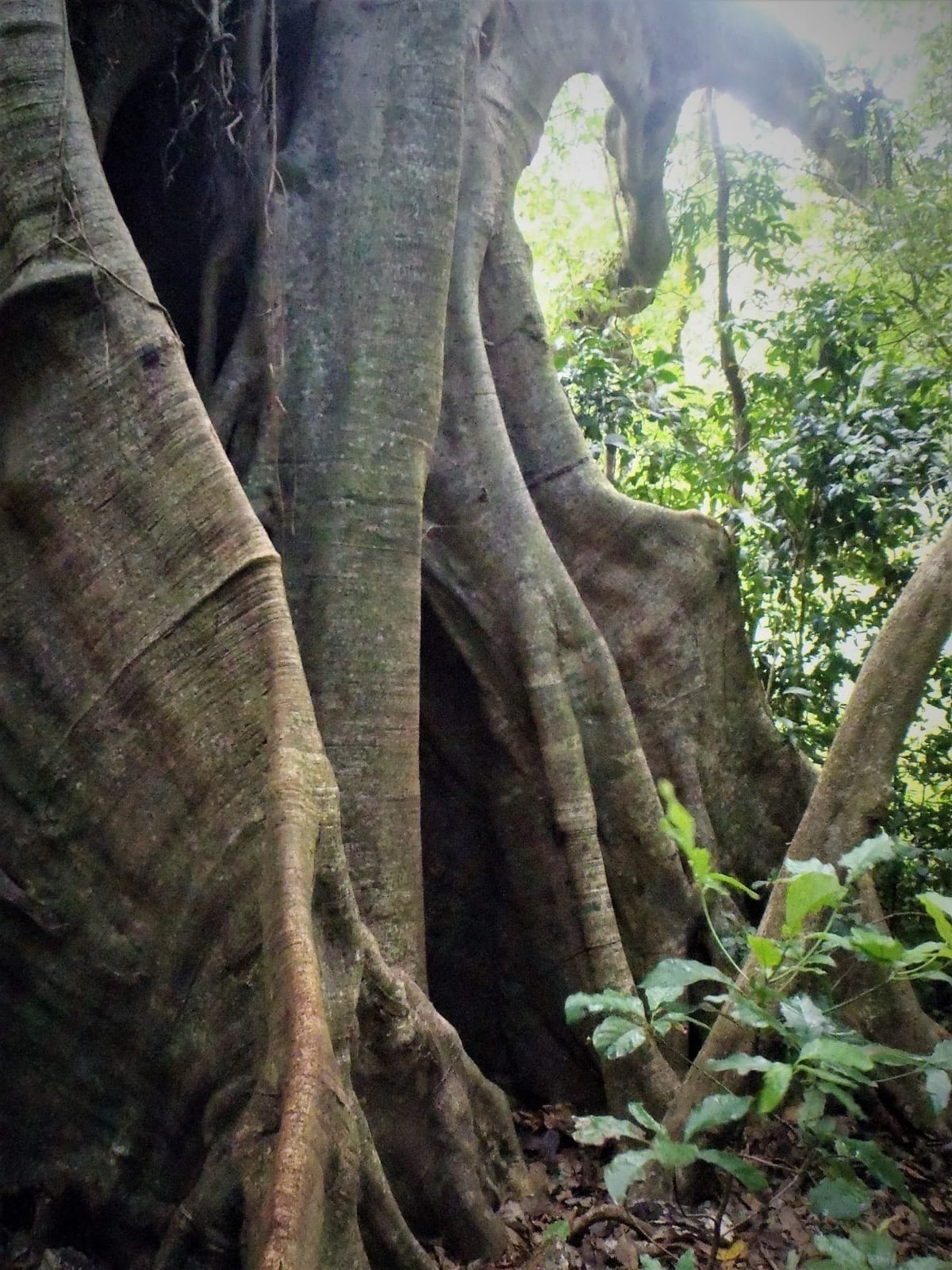
Mature strangler figs are massive trees with distinctive architecture—their trunks are often a lattice of fused aerial roots rather than solid wood, and large buttresses may extend outward.
Identifying Features
Trunk and Roots
- Trunk type: Lattice of fused roots
- Hollow center: Where host decayed
- Buttresses: Often massive, spreading
- Aerial roots: May hang from branches
- Bark: Smooth, gray to brownish
- Latex: Milky sap (all Ficus)
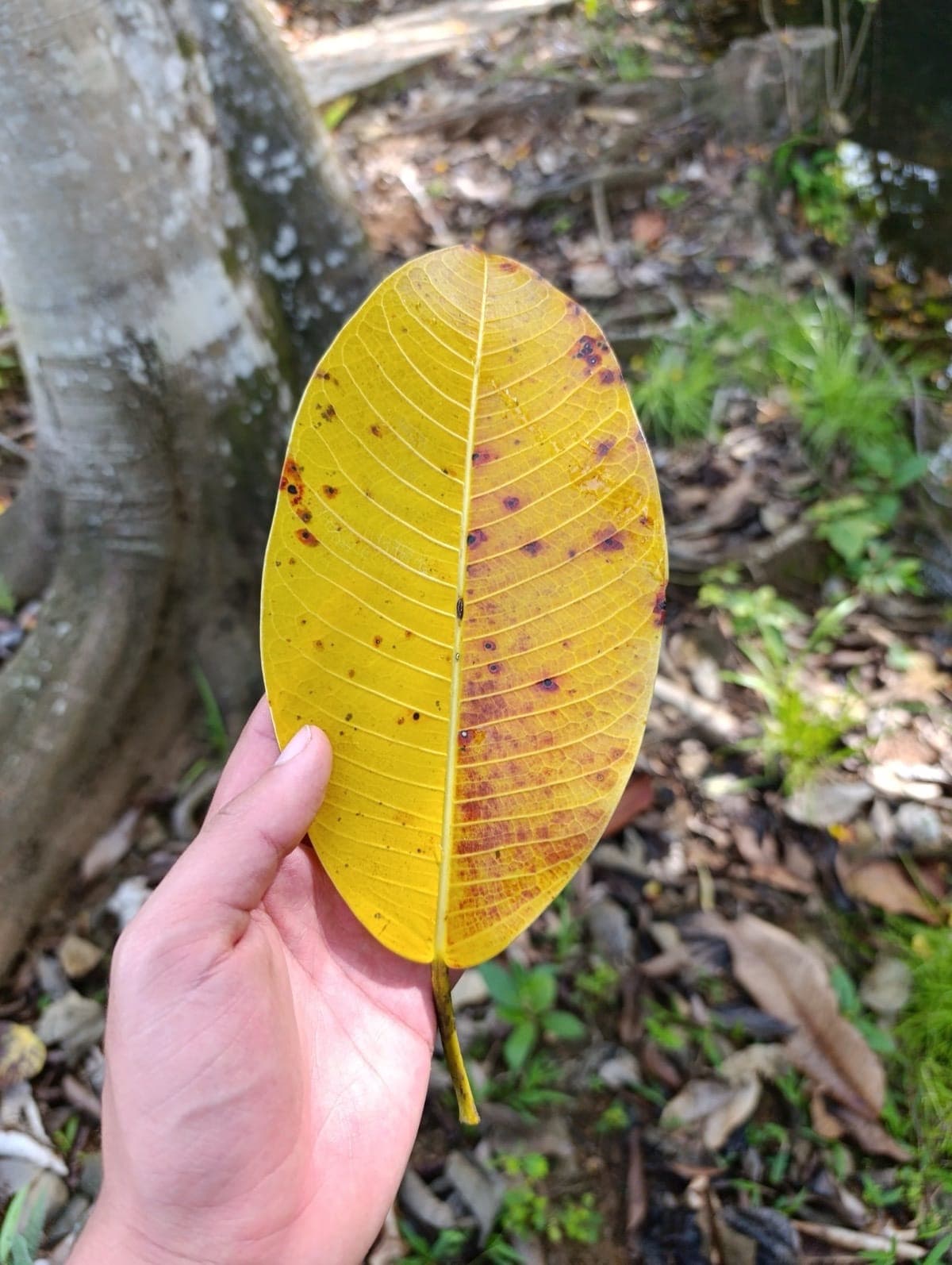
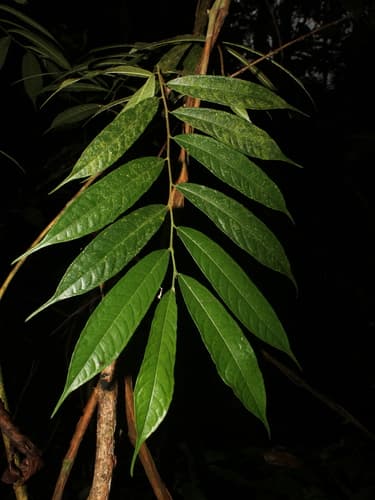
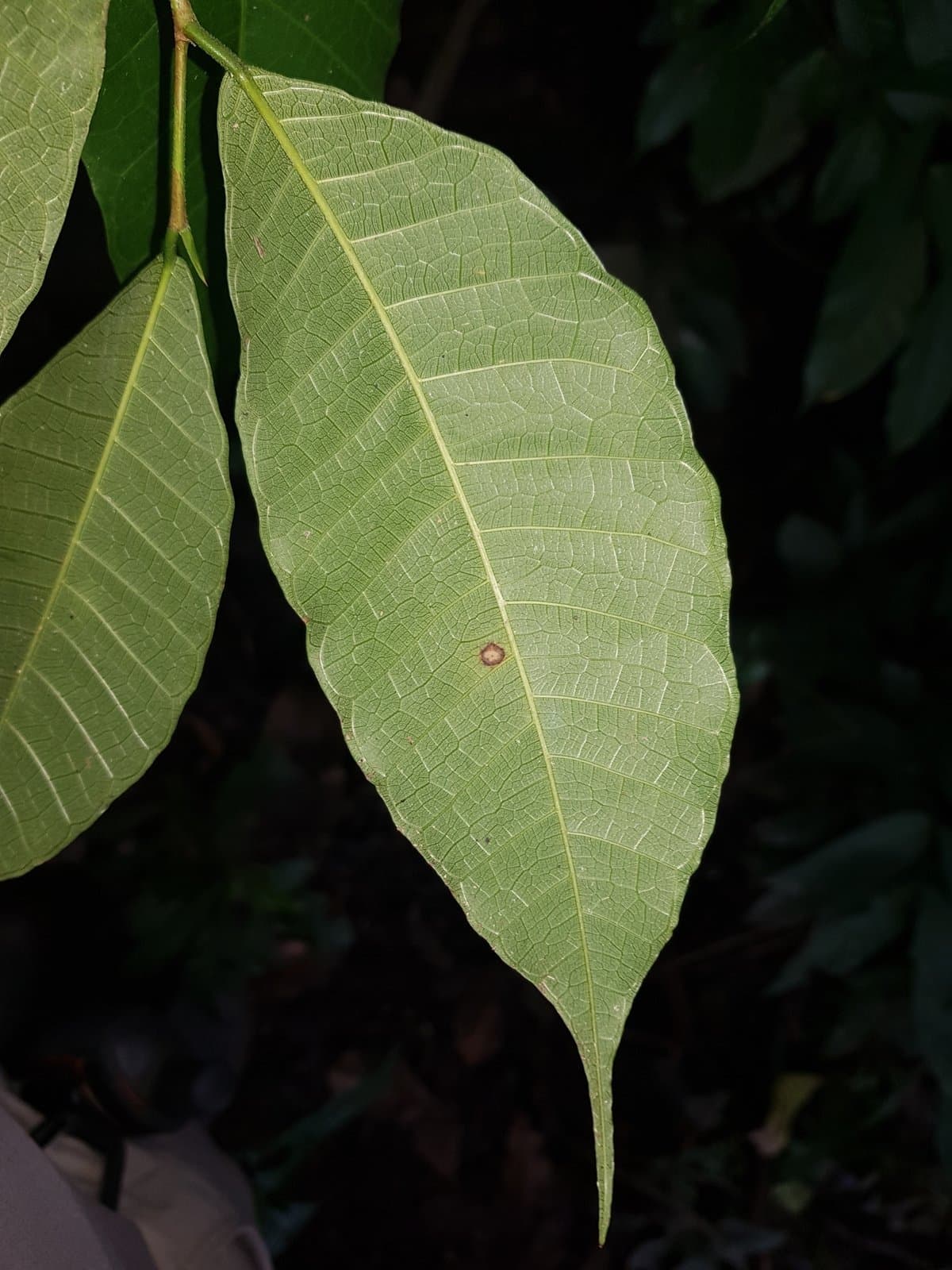
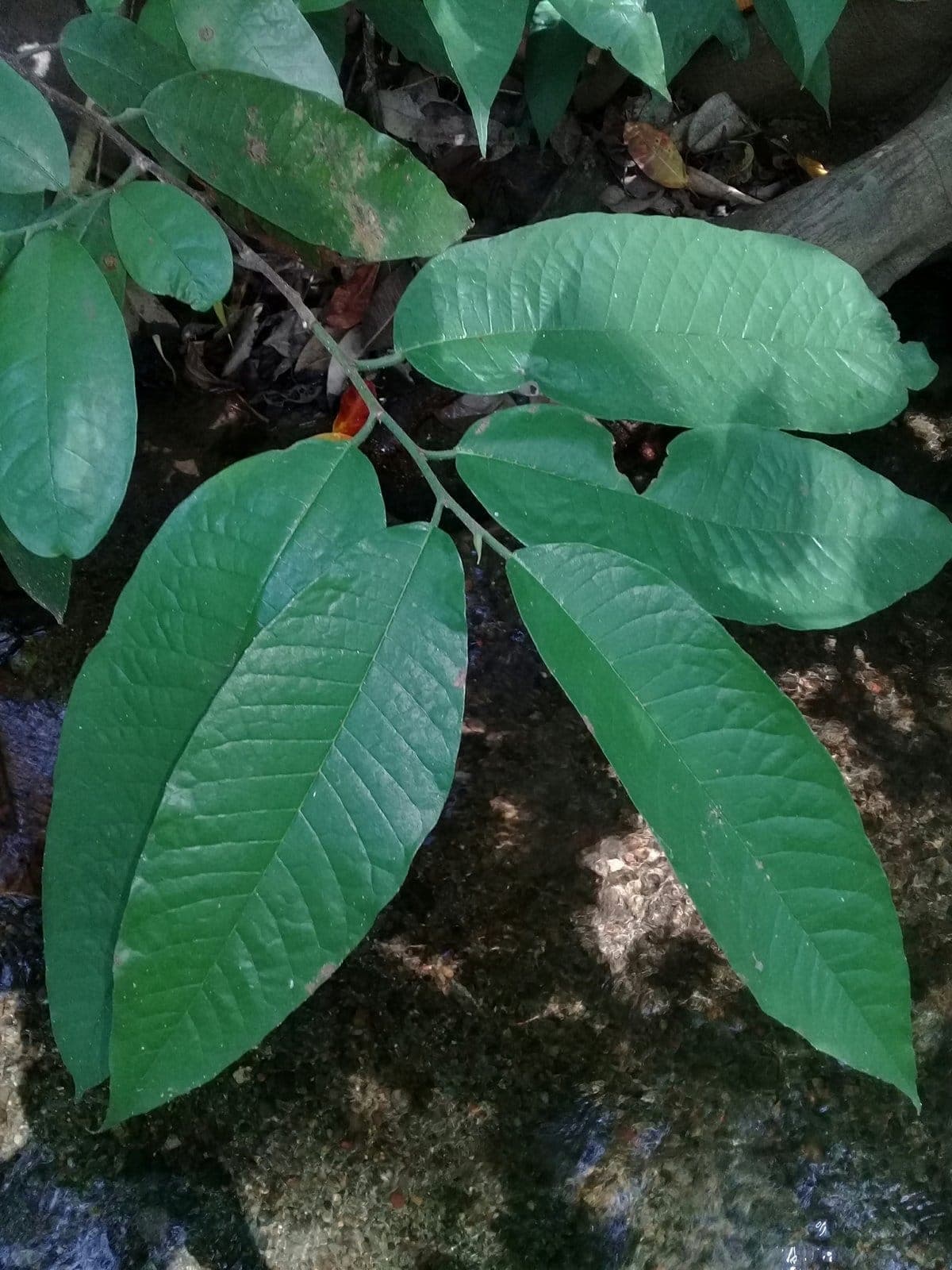
Leaves
- Type: Simple, alternate
- Shape: Variable by species
- Size: 5-25 cm depending on species
- Texture: Leathery, glossy
- Stipules: Present, often large
Figs (Syconia)
- Type: Actually inverted flowers!
- Shape: Round to pear-shaped
- Size: 0.5-3 cm by species
- Color: Green → yellow/red/purple when ripe
- Location: On branches, trunk (cauliflory)
- Production: Year-round, asynchronous!
Crown
- Shape: Broad, spreading
- Density: Very dense, dark shade
- Position: Emergent or upper canopy
- Architecture: Often multi-stemmed appearance
Ecological Importance
The Keystone Species
Strangler figs are considered keystone species—their removal would cause cascading ecosystem collapse: Food Timing: - Figs fruit YEAR-ROUND - Not synchronized to season - Individual trees fruit at different times - Provide food when everything else is scarce The Numbers: - 70+ bird species eat figs in Costa Rica - 30+ mammal species depend on figs - Countless insects involved - Fish eat fallen figs! Nutritional Value: - High in calcium - Good sugar content - Soft, easily digested - Seeds pass through animals The Test: - Remove figs from ecosystem - Many species would starve - Especially in dry season/lean times - Cascading effects throughout food web No other tree genus provides such consistent, year-round food for such diversity of wildlife!
Wildlife Dependent on Figs
Mammals
- Spider monkeys: Major fig eaters
- Howler monkeys: Important food source
- White-faced capuchins: Frequent fig visitors
- Fruit bats: Night-time dispersers
- Kinkajous: Nocturnal fig consumers
- Agoutis: Eat fallen figs
- Peccaries: Ground foragers
Birds
- Toucans: Major dispersers (all species)
- Parrots: Especially green macaws
- Trogons: Frequent visitors
- Tanagers: Many species
- Orioles: Attracted to ripe figs
- Thrushes: Clay-colored, others
- Pigeons/Doves: Ground and canopy
The Fig Wasp Mutualism
Figs and Their Wasps
Every Ficus species has its own specific pollinating wasp: The Relationship: - Each fig species = one wasp species - Wasp enters fig through tiny pore (ostiole) - Pollinates flowers INSIDE the fig - Lays eggs inside some flowers - Wasp offspring develop inside fig - New wasps emerge, carrying pollen to next fig The Dependency: - Figs CANNOT reproduce without their wasp - Wasps CANNOT reproduce without their fig - Obligate mutualism—neither survives alone - Co-evolved over millions of years Conservation Implication: - Save the fig, save the wasp - Save the wasp, save the fig - Lose either, lose both - Plus all the species that depend on figs! This is one of the most intimate plant-animal relationships in nature!
Distribution and Habitat
Global Distribution
Geographic Distribution
Distribution in Costa Rica
Habitat Preferences
Uses
Ecological Services
Human Uses
In some regions, strangler fig roots are trained over generations to form living bridges: Famous Examples: - Meghalaya, India: UNESCO-recognized living bridges - Some attempts in Costa Rica - Roots guided across gaps - Strengthen over decades In Costa Rica: - Aerial roots sometimes used for climbing - Hollow trunks create natural passages - Potential for eco-tourism structures - Experimental living architecture
Identification Guide
How to Identify Strangler Figs
Where to See Matapalos in Costa Rica
Strangler figs are easy to find once you know what to look for: Spotting Tips: - Look for lattice/hollow trunks - Check for aerial roots hanging down
- Note trees with "multiple trunks" fused together - During fruiting, watch for bird activity Best Experience: - Find a large fruiting tree - Sit quietly and watch - Count species visiting - Dawn and dusk are best Photography: - Wide angle for trunk architecture - Look for light through hollow trunk - Capture wildlife feeding - Roots against sky dramatic A fruiting Matapalo can be the best wildlife watching spot in the entire forest!
Conservation
Most strangler fig species are not immediately threatened: Current Status:
- Generally Least Concern - Widespread across range - Adaptable to disturbance
- Some colonize secondary forest Conservation Importance: - Keystone species protection - Critical for wildlife conservation - Indicator of forest health - Pollinator wasp dependency Threats: - Deforestation removes host trees - Fragmentation disrupts wasp dispersal - Climate change may affect timing - Some killed as "parasites" Conservation Message: - Protecting figs = protecting ecosystems - Leave large figs in pastures - Maintain forest connectivity - Educate against killing "strangler trees"
Ecological Management & Landscape Use
Strangler figs are not cultivated in the conventional sense — they establish naturally wherever their fig-wasp pollinators and frugivorous seed dispersers co-exist. However, land managers increasingly recognise their value and manage landscapes to support them.
Establishing Figs in Restoration Sites
- Natural recruitment: The most effective strategy is to provide host trees and let birds and bats do the planting. Retain tall isolated trees in pastures — these become seed-deposition sites
- Assisted planting: Collect ripe figs from mature Matapalo trees during fruiting events; mash fruit pulp onto rough bark crevices or epiphyte mats on target host trees at 3–5 m height. This mimics natural bird-deposited seed
- Nursery propagation: Sow tiny seeds on moist sphagnum moss under 50% shade; keep consistently moist. Germination is rapid (5–10 days) but seedlings are extremely delicate. Transplant onto host trees or onto rocks/walls at 6–8 weeks
- Air-layering: Take 20–30 cm cuttings from aerial roots; pot in moist, well-drained mix; roots develop in 4–8 weeks. This produces a ground-rooted fig (free-standing form) rather than an epiphytic strangler
Management of Existing Trees
Companion Plantings Around Figs
- Understorey palms (Bactris, Geonoma): Thrive in the dappled shade beneath fig canopy and support additional bird species
- Epiphytes: Encourage orchid and bromeliad colonisation of fig trunks — fig bark is excellent substrate
- Fruiting species nearby (Virola, Brosimum, Inga): Create year-round food sources that keep seed dispersers in the area, increasing fig recruitment
- Nurse trees for host establishment: Plant fast-growing hosts (Cecropia, Erythrina) in restoration sites; figs will colonise naturally within 5–10 years
Seasonal Management Calendar
Growth Timeline
- Year 1: Inconspicuous epiphytic seedling on host tree; 10–20 cm
- Year 5–10: Aerial roots reach the ground; rapid growth once independently rooted
- Year 15–30: Lattice of roots envelops host trunk; crown merges with or overtops host canopy
- Year 50–100: Full free-standing structure; hollow trunk forms as host decays; keystone fruiting status achieved
- Year 200+: Ancient figs become landscape landmarks; some measured at 30+ m crown diameter
A single mature Matapalo can support more animal species than any other tree in the Neotropical forest. Before removing or harming any strangler fig, consider that you are dismantling a wildlife apartment building that took decades to construct.
External Resources
Community observations and photos
Research on figs and fig wasps
Tropical ecology resources
Global biodiversity occurrence data and distribution maps
Conservation status and species assessment
References
📚 Scientific References & Further Reading
Shanahan, M. et al. (2001). Fig-eating by vertebrate frugivores: a global review. Biological Reviews
Harrison, R.D. (2005). Figs and the diversity of tropical rainforests. BioScience
Janzen, D.H. (1979). How to be a Fig. Annual Review of Ecology and Systematics
There is something almost mythological about the strangler fig—a tree that begins as an innocent seed dropped in bird droppings, grows into an embracing presence around its host, and slowly, over decades, squeezes the life from the very tree that gave it a home. It sounds like a villain's origin story. Yet the Matapalo is no villain; it is, in fact, one of the forest's greatest benefactors. When other trees fruit briefly and seasonally, the strangler figs fruit year-round, sustaining monkeys and toucans, bats and butterflies, through the lean times when nothing else offers food. Without figs, scientists estimate, a significant percentage of tropical fruit-eating animals would vanish. The hollow trunk that remains after the host has rotted away becomes shelter for countless creatures. The massive crown provides shade and habitat. Even in death, the strangler gives life. Stand inside one of these hollow lattice trunks, look up through the cathedral of living roots, and you understand: this is not a tree that kills—this is a tree that transforms death into abundance, parasitism into generosity, strangling into sustaining. The Matapalo teaches us that in nature, as in life, the line between taking and giving is never as clear as it seems.
Safety Information Disclaimer
Safety information is provided for educational purposes only. Individual reactions may vary significantly based on age, health status, amount of exposure, and individual sensitivity. Always supervise children around plants. Consult a medical professional or certified arborist for specific concerns. The Costa Rica Tree Atlas is not liable for injuries or damages resulting from interaction with trees described in this guide.
• Always supervise children around plants
• Consult medical professional if unsure
• Seek immediate medical attention if poisoning occurs
Information compiled from authoritative toxicology sources, scientific literature, and medical case reports.
Help improve this page
Know something about this tree? Share local knowledge, suggest a correction, or submit a photo to improve this guide for everyone.