Almendro
Dipteryx panamensis
Quick facts
Native Region
Nicaragua to Colombia
Max Height
40-60 meters (130-200 feet)
Family
Fabaceae
Conservation
NE — Not Evaluated
Indigenous Names
Names used by the indigenous peoples of Costa Rica, preserving traditional ecological knowledge.
Bribri
- Kóso— Almendro, great forest tree(Source: Jara & García, 2003)
Cabécar
- Kóso— Strong tree of the forest(Source: Constenla Umaña, 1998)
Uses
Safety Information
Toxicity Details
The seeds (tonka beans) contain coumarin, a compound that can be toxic in large doses and has been banned as a food additive in some countries. However, traditional use in small amounts (flavoring) is generally considered safe. The seed coat can cause digestive upset if eaten. The fleshy fruit coating is edible and safe. Wildlife eat the fruit pulp without issue. Not recommended to consume seeds in quantity. Children should not eat the seeds raw.
Skin Contact Risks
No significant skin hazards. The tree, bark, and leaves do not cause skin irritation. The seed handling is safe. Wood dust during cutting may cause minor irritation but is not considered allergenic.
Allergenic Properties
Allergies to almendro are rare. The tonka bean (seed) contains coumarin which some people are sensitive to, but this is from ingestion not contact. Tree nut allergies (despite the name 'almendro') are not typically cross-reactive as it's a legume, not a true nut. Wood dust may cause mild respiratory irritation during prolonged exposure.
Season
Flowering
Feb-Apr
Fruiting
Jun-Sep
How to identify
Almendro
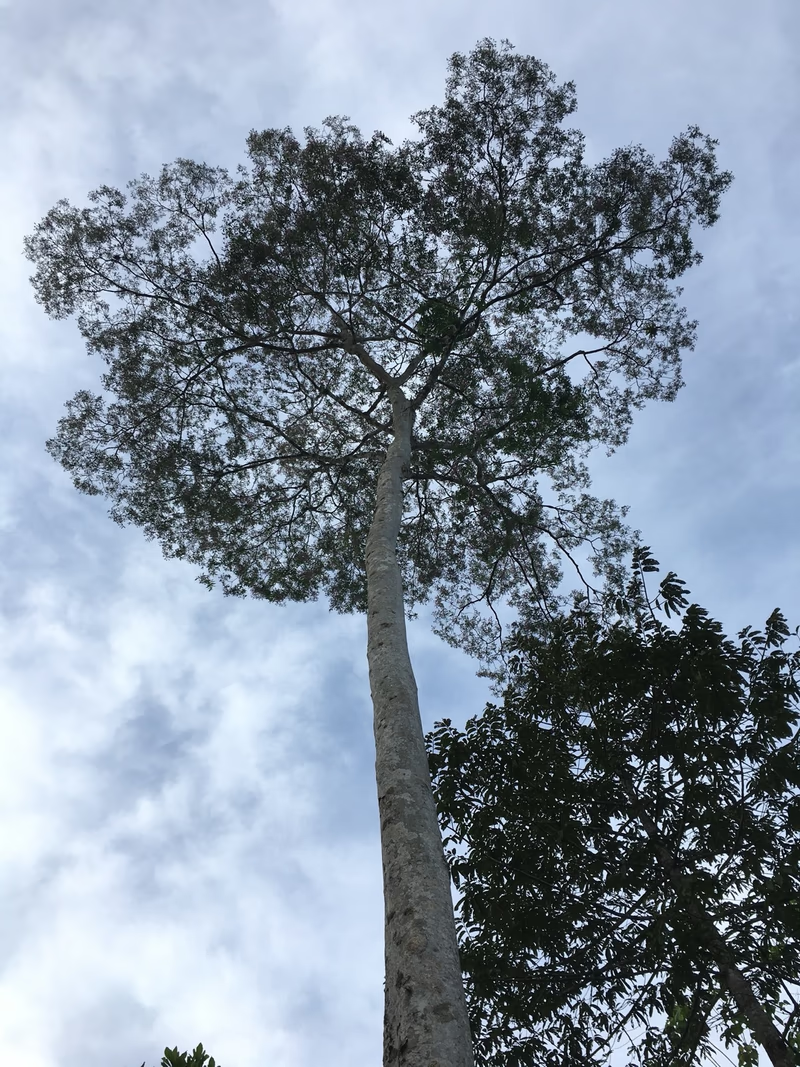
The Almendro (Dipteryx panamensis), also known as Almendro Amarillo or Tonka Bean Tree, is one of Central America's most magnificent and conservation-critical trees. Rising 40-60 meters above the rainforest canopy, it provides irreplaceable nesting cavities and food for the endangered Great Green Macaw (Ara ambiguus), whose survival is directly tied to this species.
Quick Reference
iNaturalist Observations
Community-powered species data
📸 Photo Gallery
Whole tree
📷 (c) aparayil, some rights reserved (CC BY-NC)(CC BY-NC)
View source ↗Leaves
📷 (c) aparayil, some rights reserved (CC BY-NC)(CC BY-NC)
View source ↗Whole tree
📷 (c) Lena Struwe, some rights reserved (CC BY-SA)(CC BY-SA)
View source ↗Leaves
📷 (c) aparayil, some rights reserved (CC BY-NC)(CC BY-NC)
View source ↗Whole tree
📷 (c) Lena Struwe, some rights reserved (CC BY-SA)(CC BY-SA)
View source ↗Photos sourced from iNaturalist's community science database. Browse all observations →↗
Taxonomy & Classification
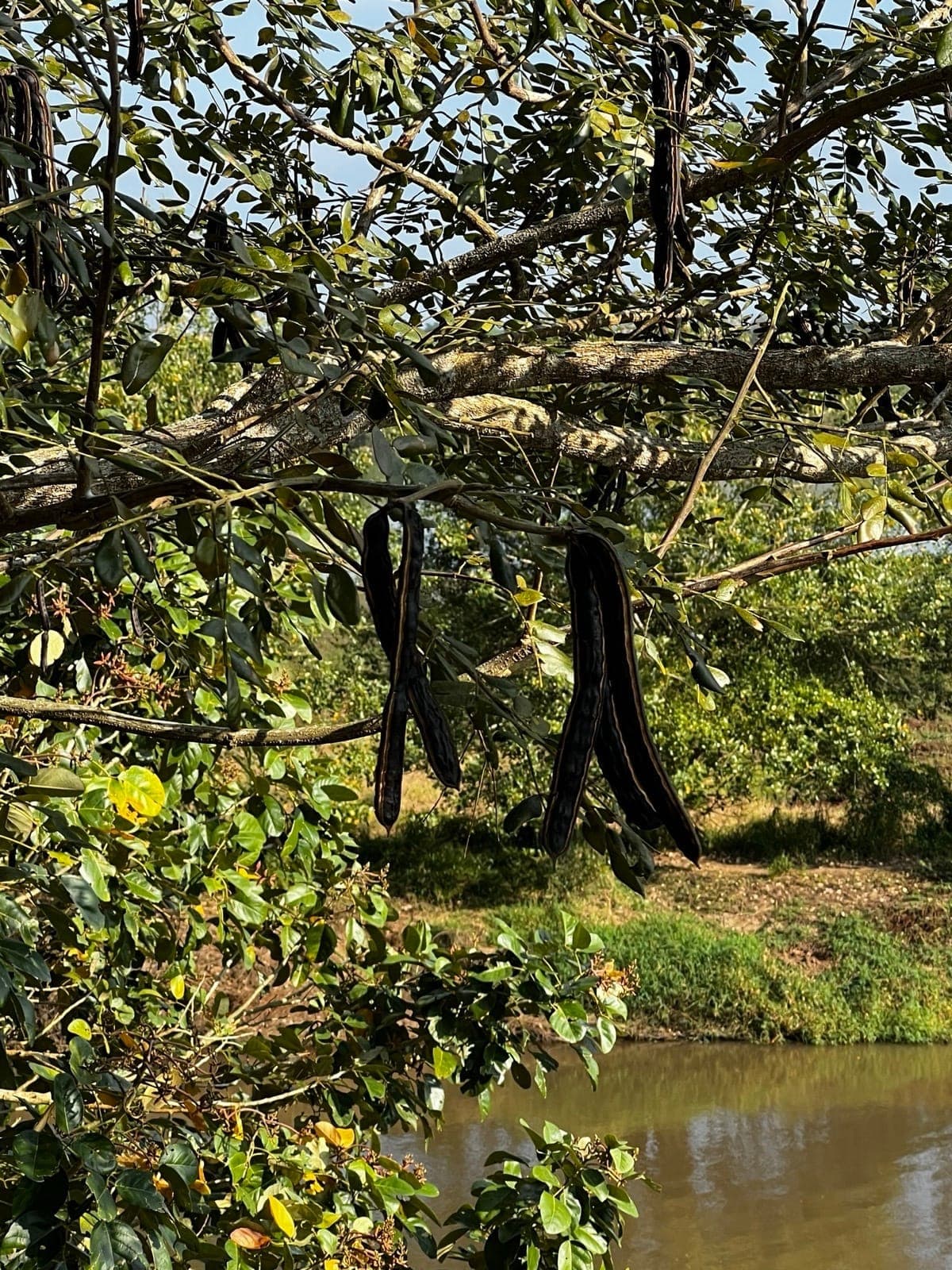
The genus Dipteryx includes approximately 12 species of large tropical trees. The name derives from Greek di- (two) and pteryx (wing), referring to the two wing-like appendages on the fruit. The species epithet panamensis indicates it was first scientifically described from Panama.
Common Names
Physical Description
Overall Form
The Almendro is a massive emergent tree that towers above the rainforest canopy. It is one of the largest trees in the Central American lowland rainforests, with a distinctive umbrella-shaped crown visible from great distances.
Distinctive Features
Trunk & Bark
- Buttresses: Massive, extending 3-5 m from trunk base
- Bark: Grayish-brown, thick, deeply furrowed
- Wood: Extremely hard and dense (specific gravity 1.0+)
- Heartwood: Dark brown with yellowish streaks
- Diameter: Often exceeds 2 m in old-growth specimens
Leaves
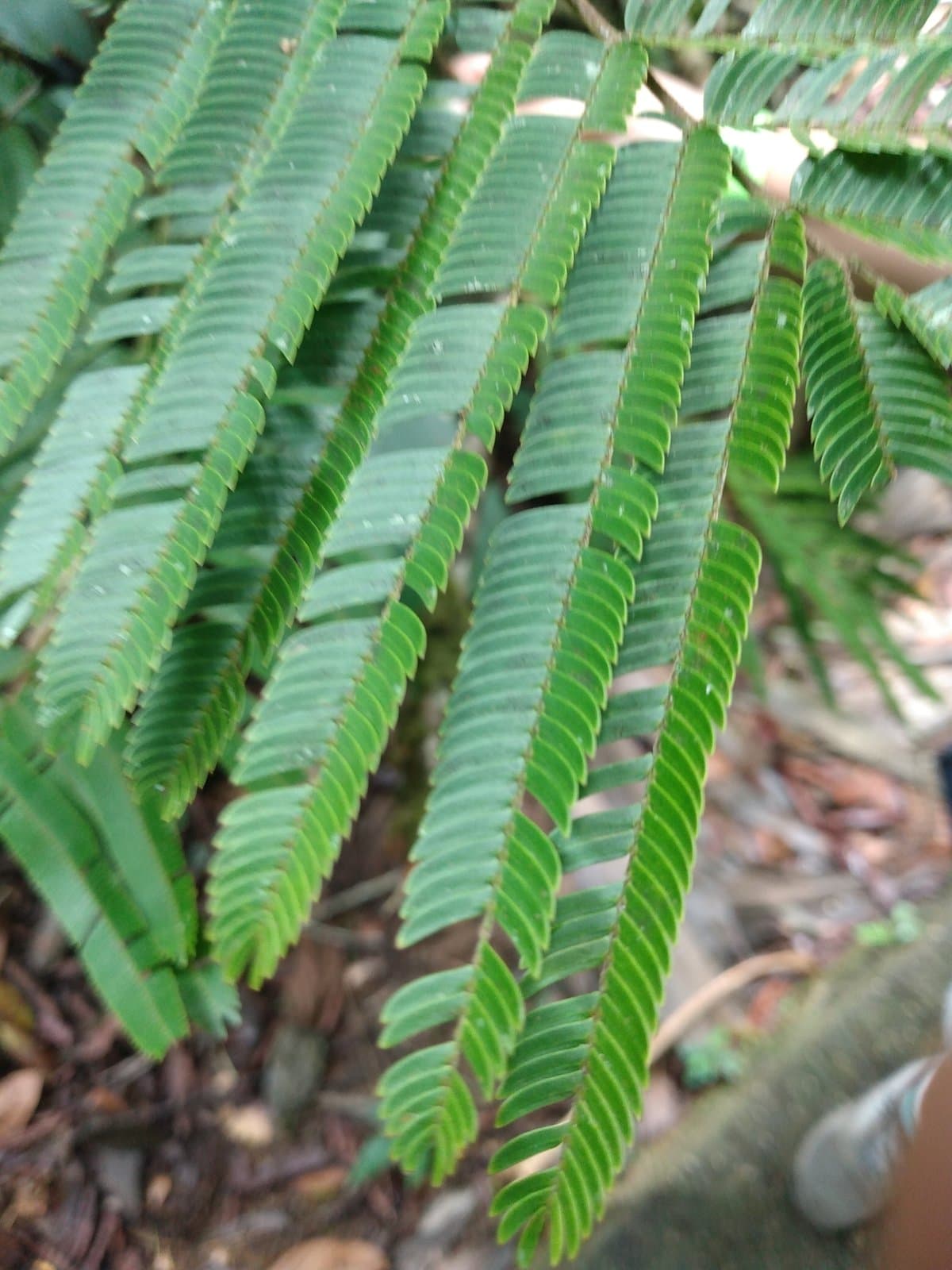
- Type: Pinnately compound (odd-pinnate)
- Leaflets: 5-9, alternating, elliptic to oblong
- Size: Leaflets 5-15 cm long
- Texture: Leathery, glossy dark green above
- Margin: Entire (smooth edges)
Flowers
- Color: Pink to lavender, occasionally white
- Type: Papilionaceous (pea-flower shape)
- Size: Small, about 1 cm
- Arrangement: Terminal panicles
- Season: February to May
- Fragrance: Sweetly aromatic
Fruits & Seeds
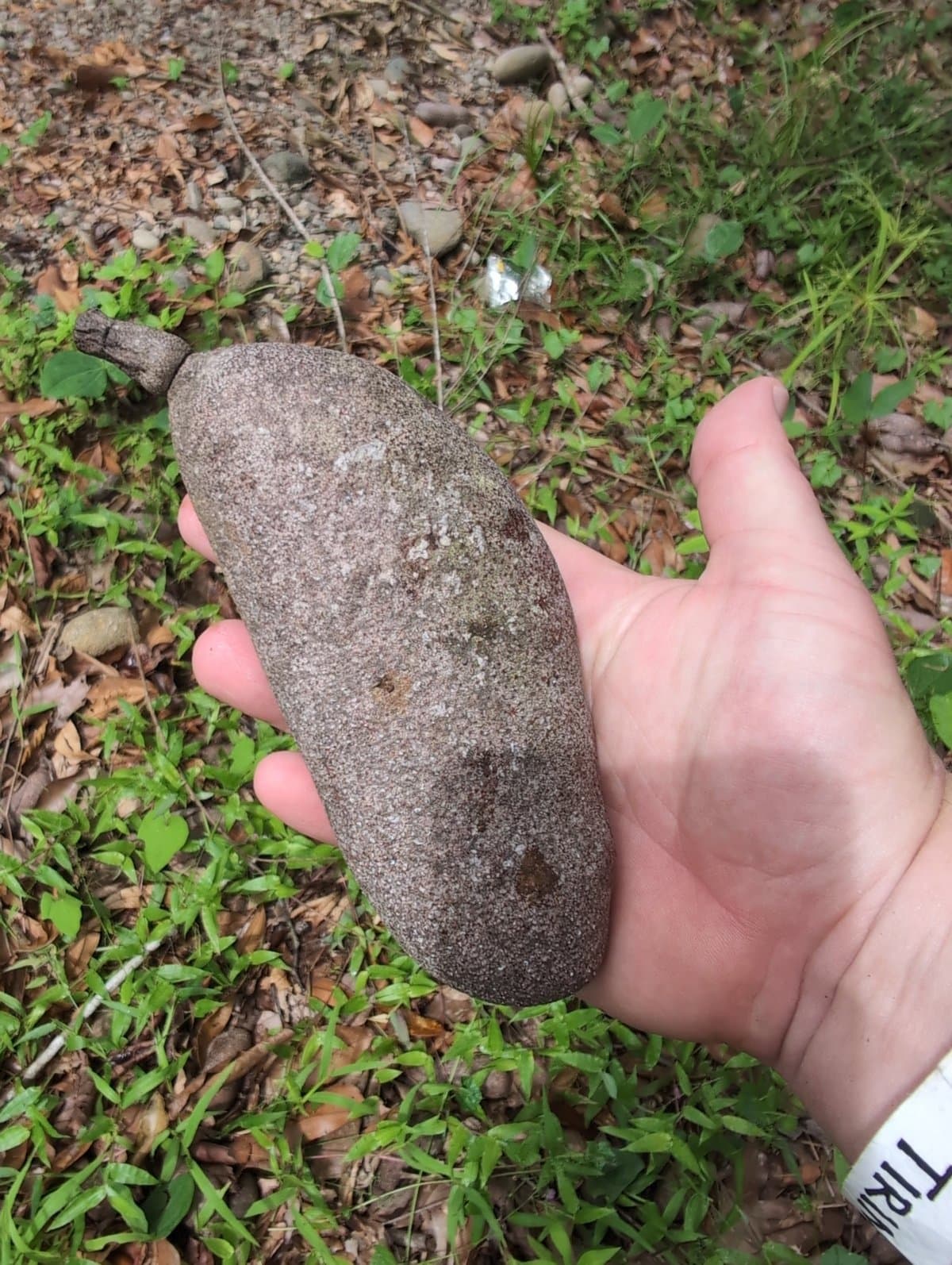
- Type: Single-seeded drupe
- Size: 5-7 cm long, oval
- Color: Green, becoming yellowish when ripe
- Seed: Large, aromatic (contains coumarin)
- Maturation: December to March
- Dispersal: Gravity, bats, large birds
Almendros are often identifiable from a distance by their enormous size and distinctive umbrella-shaped crown rising above the forest canopy. During fruiting season (December-March), the presence of Great Green Macaws is often the first indicator of a nearby Almendro.
Distribution & Habitat
Native Range
Geographic Distribution
Distribution in Costa Rica
The Almendro is found primarily in the Caribbean lowlands and northern region, from sea level to about 800 meters elevation. The largest remaining populations are in the San Juan-La Selva Biological Corridor.
Preferred Habitat
Ecological Significance
The Great Green Macaw Connection
The Almendro is essential to the survival of the Great Green Macaw (Ara ambiguus), one of the world's most endangered parrots. Macaws depend on Almendros for 70-80% of their diet during nesting season and require the large natural cavities that only ancient Almendros provide for nesting. The loss of Almendros directly threatens macaw extinction.
For Great Green Macaws
- Food Source: Seeds are primary diet (Dec-Mar)
- Nesting Sites: Natural cavities in trunks/branches
- Cavity Requirements: Only trees 100+ years old
- Territory Anchor: Pairs defend Almendro groves
- Population Link: Macaw numbers track Almendro availability
For Other Wildlife
- Toucans: Feed on fruits and nest in cavities
- Bats: Fruit bats disperse seeds
- Tapirs: Eat fallen fruits
- Agoutis: Cache and disperse seeds
- Epiphytes: Massive branches host gardens of orchids and bromeliads
Ecosystem Services
Conservation Status
Critical Situation
Conservation Status
In 2008, Costa Rica became the first country to legally ban all cutting of Almendro trees (Decree 35340-MINAET), recognizing the species' critical importance to the endangered Great Green Macaw. Violations carry significant fines and potential imprisonment.
Threats & Challenges
Primary Threats
- Historical Logging: Valuable timber decimated populations
- Deforestation: Agricultural expansion continues
- Fragmentation: Isolated trees cannot support macaws
- Slow Regeneration: Takes 80-100 years for nesting cavities
- Climate Change: Shifting rainfall patterns
Conservation Actions
- Legal Protection: Complete logging ban in Costa Rica
- Corridor Creation: San Juan-La Selva Biological Corridor
- Private Reserves: Payment for ecosystem services
- Community Programs: Local macaw conservation groups
- Research: Monitoring populations and regeneration
Conservation History
How You Can Help
Cultural & Economic Importance
Traditional Uses
Modern Value
Living Value vs. Timber Value
Studies have shown that a living Almendro tree provides far more economic value through ecosystem services, ecotourism, and biodiversity conservation than it would as timber. A single large Almendro supporting Great Green Macaws can generate thousands of dollars annually in birdwatching tourism while storing tons of carbon and anchoring entire forest ecosystems.
Research & Monitoring
Scientific Importance
Citizen Science
If you observe an Almendro tree or Great Green Macaw in Costa Rica, report it to iNaturalist or eBird. These observations help scientists track populations and identify important areas for conservation. GPS coordinates and photos are especially valuable.
Identification Guide
How to Identify Almendro
Where to See Almendro
Best Locations in Costa Rica
The best time to see Almendros is during fruiting season (December-March) when Great Green Macaws are actively feeding and nesting. Stay at eco-lodges in the Sarapiquí area and arrange early morning tours with local guides who know the locations of fruiting trees. Patience is rewarded—watching a pair of Great Green Macaws in an ancient Almendro is an unforgettable experience.
Cultivation & Restoration Planting
Growing Almendro is a long-term commitment — this slow-growing giant may take 30–50 years to fruit, but every seedling planted contributes to the survival of the critically endangered Great Green Macaw.
Seed Collection & Propagation
- Seed source: Collect fallen fruits beneath mature trees during peak fruiting (December–March)
- Viability: Seeds lose viability quickly; sow within 2 weeks of collection
- Pre-treatment: Soak seeds in water for 48 hours; scarify hard endocarp with a file or sandpaper to speed germination
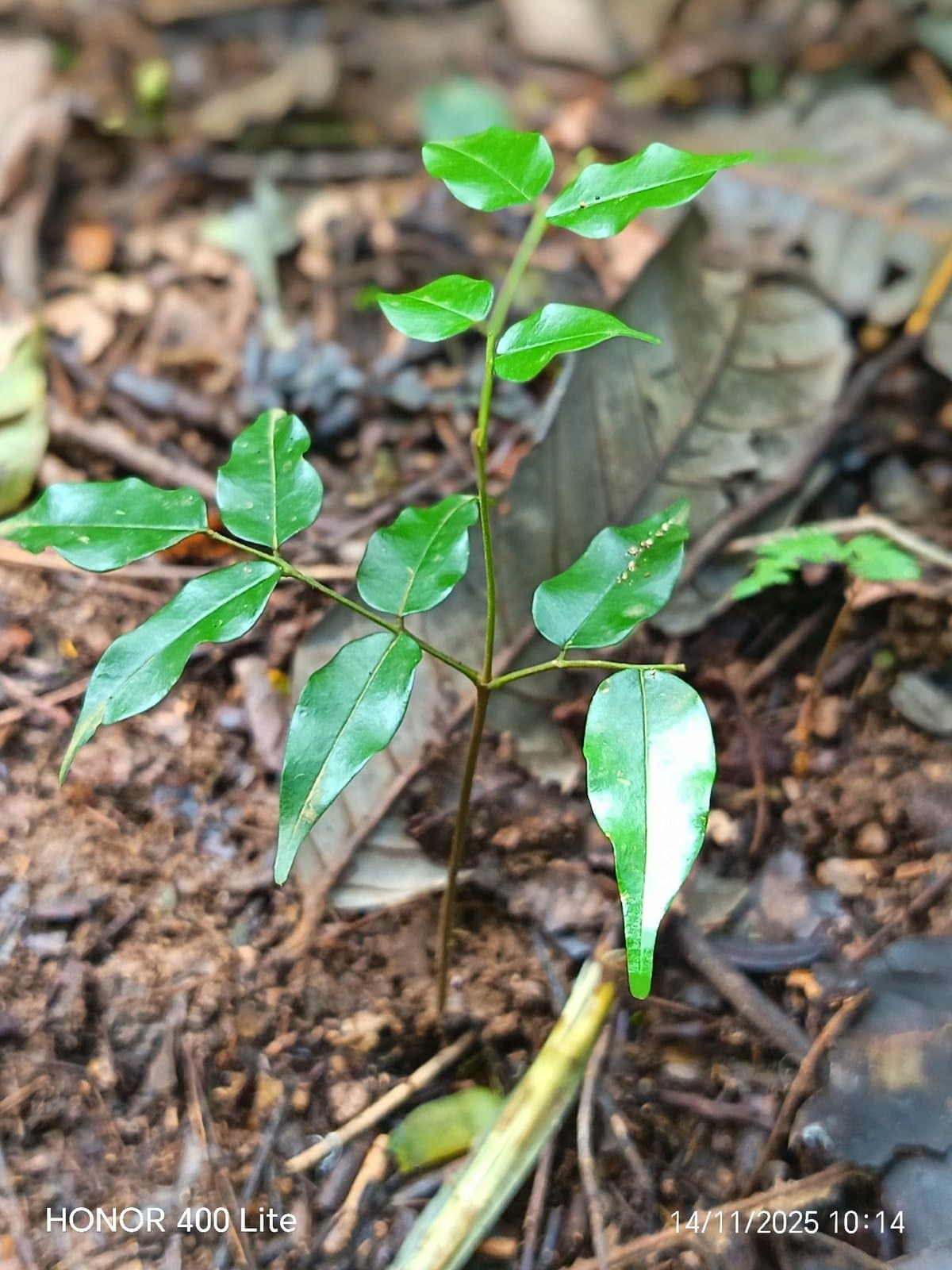
- Germination: Sow 3–5 cm deep in well-drained nursery bags with forest soil mix; germination takes 30–60 days
- Nursery care: Provide 50–70% shade for the first 6 months; water every 2–3 days; seedlings are ready for field planting at 40–60 cm height (8–12 months)
Site Selection & Planting
Maintenance & Care
- Watering: Irrigate during establishment (first 2 dry seasons); mature trees are self-sufficient in humid lowlands
- Fertilization: Apply 50 g balanced NPK (15-15-15) per seedling at planting; repeat annually for 3 years with increasing doses
- Weed control: Maintain a 1 m weed-free circle around seedlings for the first 3 years; mulch with leaf litter
- Pruning: Minimal — remove only damaged or competing lower branches; the tree self-prunes well
- Pest management: Monitor for bark beetles in stressed trees; maintain vigorous growth through proper site selection
Companion Planting for Reforestation
Seasonal Care Calendar
Growth Timeline
- Year 1–3: Establish root system; 0.5–1 m height growth per year under good conditions
- Year 5–10: Trunk development accelerates; 1–1.5 m/year height growth
- Year 15–25: Canopy begins to emerge above surrounding forest
- Year 30–50: First fruiting; tree reaches reproductive maturity
- Year 100+: Full stature (40–50 m); critical nesting habitat for Great Green Macaws
Almendro is protected under Costa Rican law. Executive Decree 25700-MINAE (1997) provided initial protection, and Decree 35340-MINAET (2008) established the full logging ban. A permit from SINAC is required to fell or transport this species. Planting Almendro in biological corridors between the San Juan River and Sarapiquí is one of the most impactful conservation actions for the Great Green Macaw.
External Resources
Community observations and photos
Ara Project - macaw conservation
Biological corridor conservation
National conservation system
Global biodiversity occurrence data and distribution maps
Conservation status and species assessment
References
📚 Scientific References & Further Reading
Chassot, O. & Monge, G. (2012). Linking Great Green Macaws to rainforest conservation in Costa Rica. Conservation Biology
Powell, G.V.N., et al. (1999). Seasonal variation in availability of food resources for the Great Green Macaw. Biological Conservation
Monge-Arias, G. & Chassot, O. (2009). The Almendro and the Great Green Macaw: Saving a keystone relationship
MINAE (2008). Decreto 35340-MINAET: Veda de Almendro
The Almendro represents one of conservation's most compelling stories: a magnificent ancient tree whose fate is inseparably linked to one of the world's rarest parrots. Saving the Almendro means saving the Great Green Macaw, and saving both means preserving the irreplaceable rainforests of the Caribbean lowlands. Every Almendro standing today is a monument to what we choose to protect for future generations.
Safety Information Disclaimer
Safety information is provided for educational purposes only. Individual reactions may vary significantly based on age, health status, amount of exposure, and individual sensitivity. Always supervise children around plants. Consult a medical professional or certified arborist for specific concerns. The Costa Rica Tree Atlas is not liable for injuries or damages resulting from interaction with trees described in this guide.
• Always supervise children around plants
• Consult medical professional if unsure
• Seek immediate medical attention if poisoning occurs
Information compiled from authoritative toxicology sources, scientific literature, and medical case reports.
Help improve this page
Know something about this tree? Share local knowledge, suggest a correction, or submit a photo to improve this guide for everyone.