Guapinol
Hymenaea courbaril
Quick facts
Native Region
Tropical Americas
Max Height
25-40 meters
Family
Fabaceae
Conservation
LC — Least Concern
Uses
Safety Information
Toxicity Details
Guapinol is non-toxic. The fruit pulp surrounding the seeds is edible and has been consumed for millennia - sweet, mealy, with a distinctive strong smell (hence 'Stinking Toe' name, referring to the pod shape and odor). While the smell is off-putting to some, the pulp is nutritious and safe. Children throughout tropical America eat guapinol. The hard seeds are not eaten (too hard to chew) but are non-toxic. The tree is in the legume family and fixes nitrogen - beneficial for soil.
Skin Contact Risks
No skin irritation. The resin (copal) is sticky but non-irritating and has been used for centuries in varnishes and incense.
Wildlife & Pet Risks
Safe for all animals. The fruit pulp is eaten by many mammals including monkeys, agoutis, deer. Domestic animals (horses, cattle) may eat fallen fruits. The hard pods must be broken open to access pulp.
Season
Flowering
Mar-May
Fruiting
Oct-Dec
How to identify
Guapinol (Jatobá)
The Guapinol (Hymenaea courbaril), known as Jatobá in Brazil and Stinking Toe in the Caribbean, is one of the most culturally and economically important trees of tropical America. Its amber-like resin has preserved ancient insects for millions of years, its rock-hard wood is prized for flooring and furniture, and its stinky seed pods contain nutritious flour that sustained indigenous peoples for millennia. A tree of remarkable gifts—if you can get past the smell!
Quick Reference
iNaturalist Observations
Community-powered species data
📸 Photo Gallery
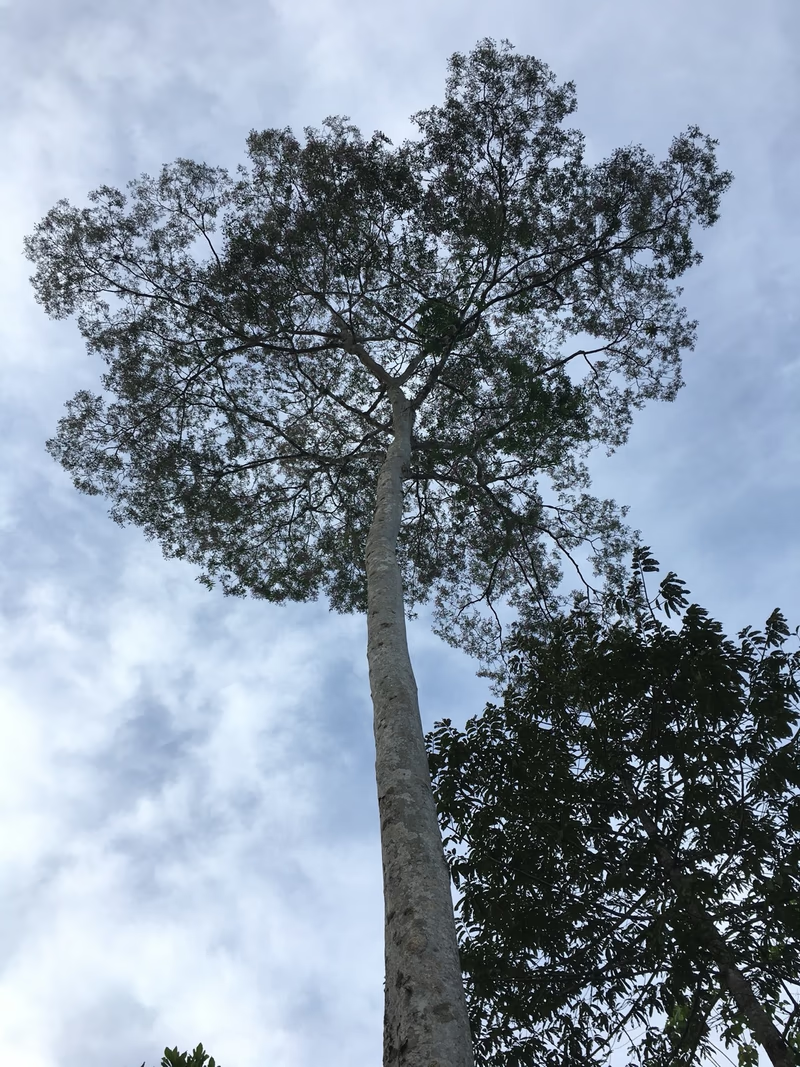
Whole tree
📷 (c) Noland Martin, some rights reserved (CC BY)(CC BY)
View source ↗Leaves
📷 (c) Miguel David Artavia Solís, some rights reserved (CC BY-NC)(CC BY-NC)
View source ↗Whole tree
📷 (c) Miguel David Artavia Solís, some rights reserved (CC BY-NC)(CC BY-NC)
View source ↗Leaves
📷 (c) Miguel David Artavia Solís, some rights reserved (CC BY-NC)(CC BY-NC)
View source ↗Whole tree
📷 (c) Richard Joyce, some rights reserved (CC BY-NC)(CC BY-NC)
View source ↗Photos sourced from iNaturalist's community science database. View all observations →↗
Taxonomy and Classification
- Hymenaea: Greek god of marriage (Hymenaios)—possibly referring to the paired leaflets joined at the base - courbaril: Indigenous Caribbean name for the tree - Guapinol: From Nahuatl, used throughout Central America - Jatobá: Tupi-Guaraní name, widely used in Brazil - Stinking Toe: Caribbean name for the smelly pods
Common Names
Physical Description
General Form
The Guapinol is a large, semi-deciduous to evergreen tree with a massive trunk and broad spreading crown. It's one of the emergent giants of Neotropical forests, often towering above the surrounding canopy. The bark exudes fragrant amber-colored resin, and the seed pods are unmistakable—both visually and olfactorily!
Distinctive Features
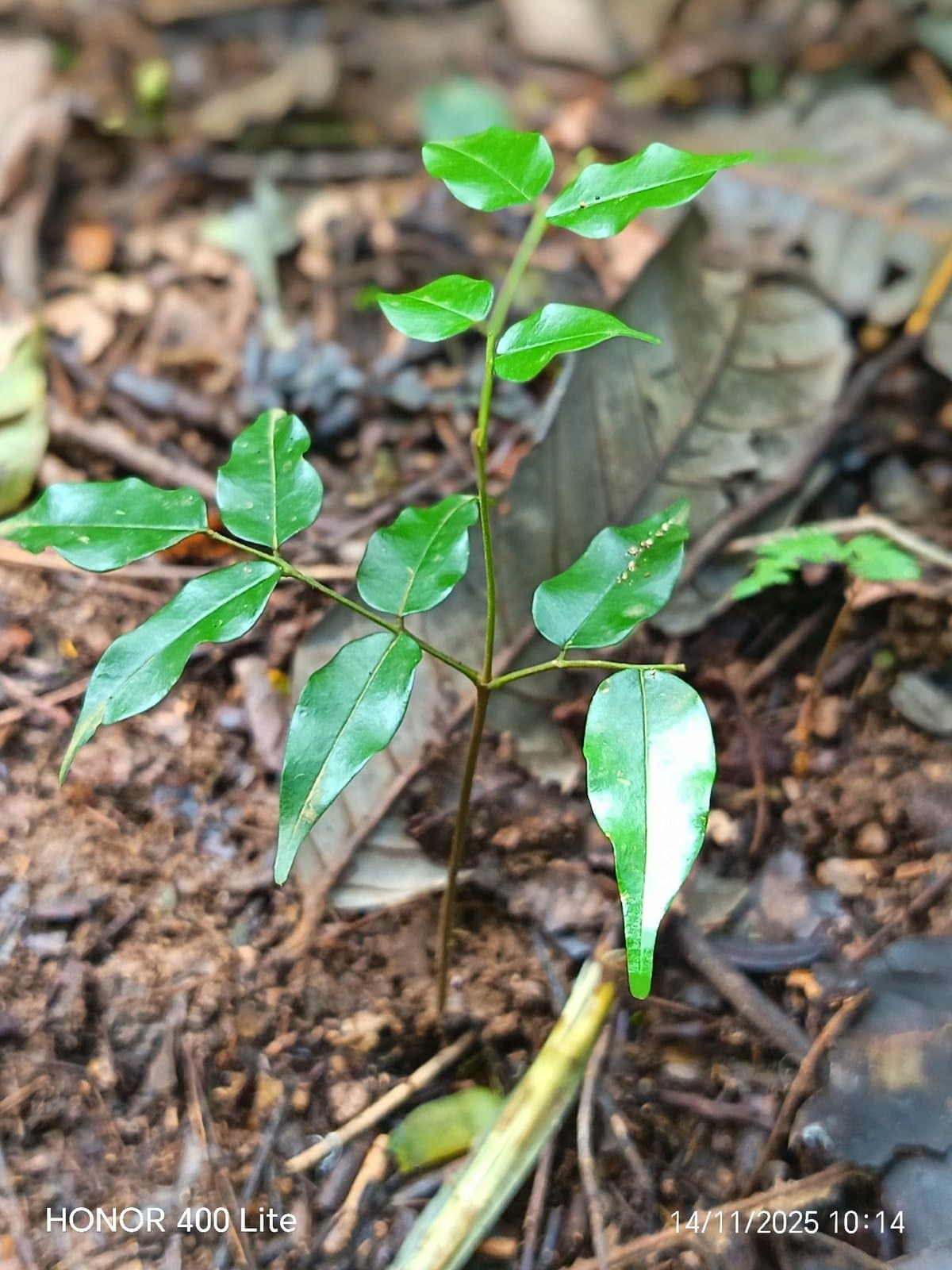
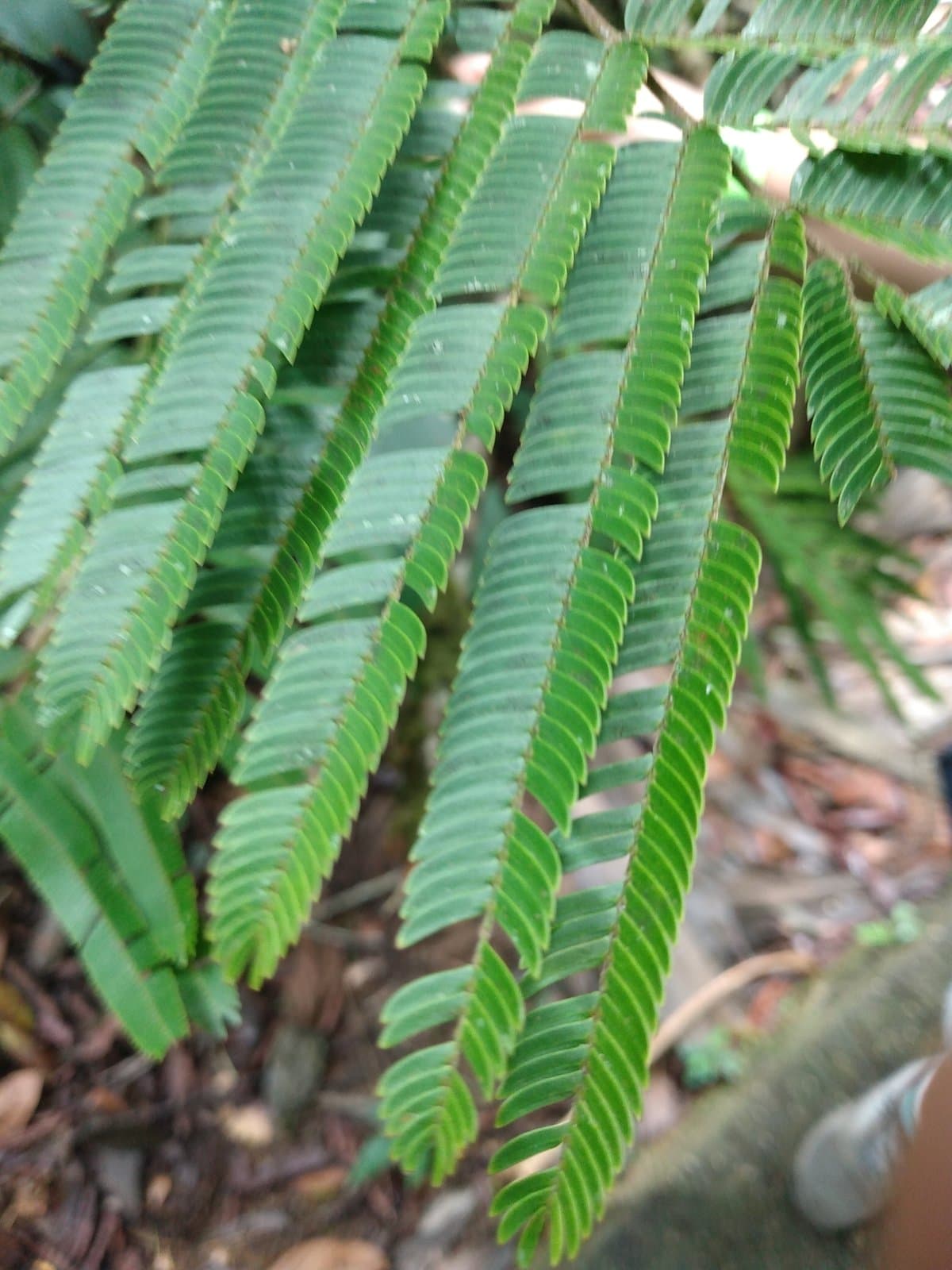
Leaves
- Type: Compound, 2 leaflets
- Shape: Asymmetrical, sickle-shaped
- Size: 5-10 cm each leaflet
- Texture: Leathery, glossy
- Feature: Oil glands visible as dots
- Color: Dark green above, paler below
Bark and Resin
- Bark: Gray-brown, smooth becoming scaly
- Resin: Clear to amber, aromatic
- Location: Exudes from trunk wounds
- Use: Becomes copal/amber when hardened
- Scent: Aromatic, like incense
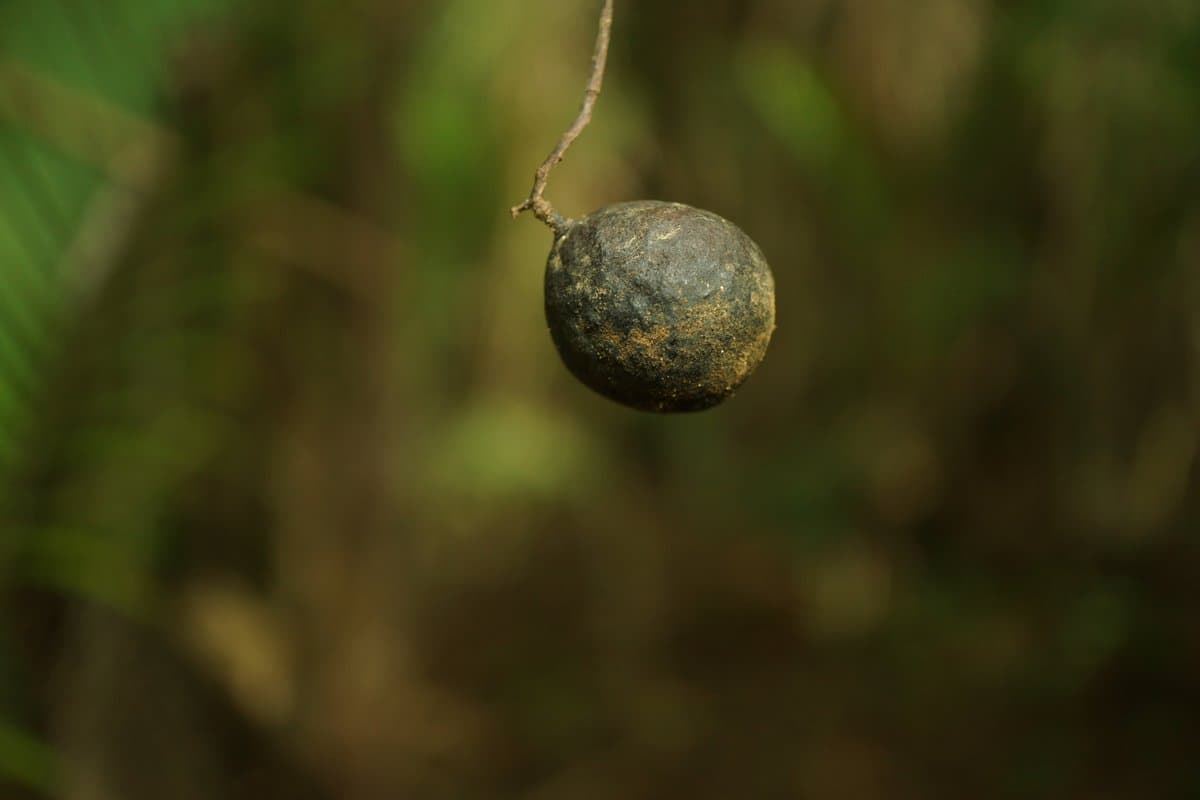
The Infamous Fruit
- Type: Woody legume pod
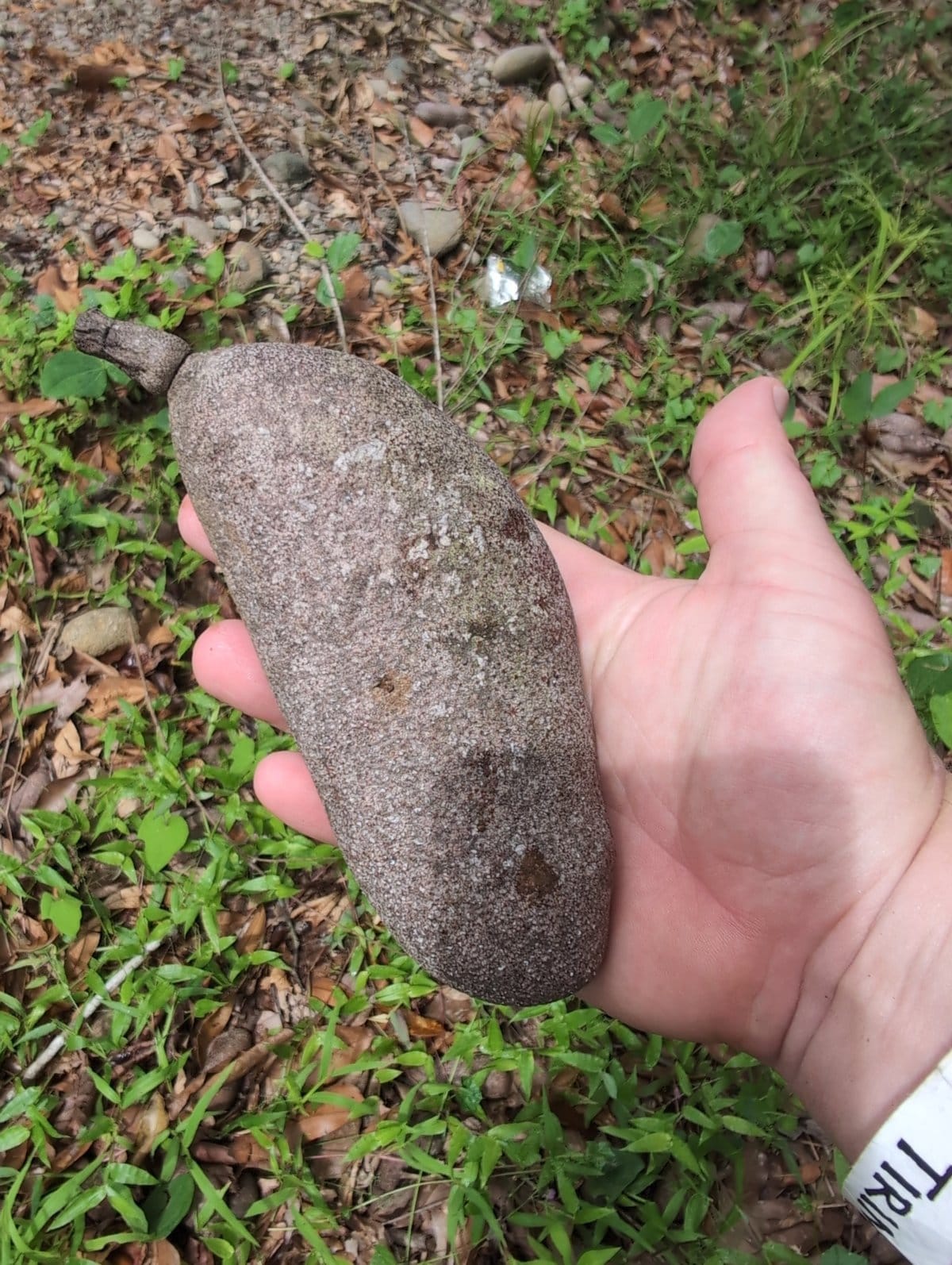
- Shape: Oblong, like a fat toe
- Size: 10-18 cm long, 5-7 cm wide
- Shell: Very hard, woody
- Pulp: Dry, powdery, cream to tan
- Seeds: 2-5 large seeds in pulp
- Smell: Like stinky cheese or feet!
Flowers
- Type: White to cream, fragrant
- Size: Small, 10-15 mm
- Arrangement: Terminal panicles
- Pollination: Bats, moths
- Season: Usually dry season
The fruit's common name says it all! When you crack open the hard shell, you're greeted by a pungent smell reminiscent of: - Stinky cheese 🧀 - Unwashed feet 🦶 - Gym locker room 😷 BUT WAIT! Despite the smell, the powdery pulp is: - Highly nutritious (protein, fiber, minerals) - Sweet with hints of carob - Traditional food for indigenous peoples - Made into drinks, desserts, and flour Don't judge this fruit by its aroma—it's actually quite delicious!
Distribution and Habitat
Native Range
Geographic Distribution
Distribution in Costa Rica
Found throughout the country in both wet and dry forests:
Habitat Preferences
The Amber Connection
Copal and Fossil Amber
From Resin to Amber: A 20-Million-Year Story
The Guapinol genus (Hymenaea) is the source of some of the world's most famous amber deposits: Living Resin (Copal): - Fresh resin is sticky, aromatic - Hardens into "copal" over decades/centuries - Used in varnishes, incense, traditional medicine Fossil Amber: - Extinct Hymenaea species created famous ambers - Dominican amber: 15-20 million years old - Mexican amber: 22-26 million years old - Often contains trapped insects, spiders, plants - Key source for paleontology research Today's Guapinol is the living relative of these amber-producing trees, and its resin will eventually become amber in millions of years!
The famous movie premise of extracting dinosaur DNA from amber mosquitoes is science fiction, but amber DOES preserve remarkable ancient specimens. Most famous amber comes from extinct relatives of the Guapinol. The amber you buy today may have come from trees very similar to those still standing in Costa Rican forests!
Ecological Importance
Ecosystem Roles
Seed Dispersal
- Primary: Large rodents (agoutis, pacas)
- Secondary: Tapirs, peccaries
- Mechanism: Animals cache and forget seeds
- Pattern: Long-distance dispersal
- Germination: Requires scarification
Food Web Role
- Flowers: Bats, moths, bees
- Fruit Pulp: Rodents, monkeys, tapirs
- Seeds: Specialized rodent consumers
- Foliage: Some specialized insects
- Dead Wood: Decomposer communities
Forest Dynamics
- Nitrogen Fixation: Yes (legume family)
- Canopy Position: Emergent/upper canopy
- Shade: Creates forest microhabitats
- Persistence: Long-lived, stable populations
- Regeneration: Gap dynamics
Wildlife Habitat
- Cavities: Large branches, nest sites
- Epiphytes: Support orchids, bromeliads
- Roots: Shelter for ground fauna
- Crown: Bird territories
The Guapinol is considered a keystone species in many forests because: - Its massive fruits feed animals when other food is scarce - Large rodents depend on it (and vice versa for seed dispersal) - Its emergent canopy creates forest structure - Nitrogen fixation enriches forest soils - Long lifespan provides habitat stability Forests with healthy Guapinol populations tend to have healthy wildlife populations overall.
Human Uses
Traditional Uses
Millennia of Human Use
Indigenous peoples have used Guapinol for thousands of years: Food: - Fruit pulp eaten raw or made into drinks - Pulp dried and ground into flour - Fermented into alcoholic beverages - Seeds roasted and eaten Medicine: - Bark tea for respiratory ailments - Resin for wounds and skin conditions - Leaves for various treatments Materials: - Resin for torches and lighting
- Resin in incense and ceremonies - Bark for tanning leather Archaeological sites show Guapinol use dating back millennia!
Modern Commercial Uses
Timber Properties
Wood Characteristics
- Janka Hardness: 2,350 lbf (extremely hard!)
- Density: 890-1,010 kg/m³
- Color: Salmon-pink to orange-brown
- Grain: Interlocked, attractive
- Durability: Very resistant to decay
- Workability: Difficult due to hardness
Common Uses
- Premium hardwood flooring
- Durable outdoor furniture
- Tool handles, sporting goods
- Musical instruments
- Luxury cabinetry
- Heavy construction
While Guapinol is listed as Least Concern, large specimens are increasingly rare due to: - High timber value drives selective logging - Slow growth makes recovery difficult - Large trees needed for reproduction - Habitat loss reduces populations Sustainable forestry and plantation cultivation are important for maintaining this valuable species.
Cultivation and Propagation
Growing Guapinol
Identification Guide
How to Identify Guapinol
Where to See Guapinol in Costa Rica
Late Dry Season (March-May): Best time to find fallen fruit pods— follow your nose! The distinctive smell helps locate trees, and you can observe agoutis processing the seeds. Look for resin tears on trunks.
Cultural Significance
Costa Rican Heritage
Guapinol in Costa Rican Culture
The Guapinol has deep roots in Costa Rican life: - Place Names: Multiple locations named "Guapinol" - Traditional Food: Fruit pulp beverages and desserts - Furniture Heritage: Heirloom pieces passed down - Rural Identity: Symbol of cattle ranches (shade tree) - Children's Memory: The smell is unforgettable! Many Costa Ricans have childhood memories of cracking open the "stinky toe" pods and daring friends to eat the pulp!
External Resources
Community observations and photos
Wood properties database
Plant resources of tropical Africa
Global biodiversity occurrence data and distribution maps
Conservation status and species assessment
References
📚 Scientific References & Further Reading
Langenheim, J.H. (2003). Plant Resins: Chemistry, Evolution, Ecology, and Ethnobotany. Timber Press, Portland
Janzen, D.H. (1983). Costa Rican Natural History. University of Chicago Press
Lee, Y.T. & Langenheim, J.H. (1975). Systematics of the genus Hymenaea (Leguminosae, Caesalpinioideae). University of California Publications in Botany 69
The Guapinol connects us to deep time like few other trees. Its ancient relatives created the amber that now preserves prehistoric life in museum collections worldwide. Today's living Guapinol still produces the same remarkable resin, still feeds the same forest animals, still provides the same hard wood and stinky (but nutritious!) fruit. To stand beneath a Guapinol is to stand beneath a tree whose lineage reaches back tens of millions of years—a living link to forests that existed before humans walked the Earth.
Safety Information Disclaimer
Safety information is provided for educational purposes only. Individual reactions may vary significantly based on age, health status, amount of exposure, and individual sensitivity. Always supervise children around plants. Consult a medical professional or certified arborist for specific concerns. The Costa Rica Tree Atlas is not liable for injuries or damages resulting from interaction with trees described in this guide.
• Always supervise children around plants
• Consult medical professional if unsure
• Seek immediate medical attention if poisoning occurs
Information compiled from authoritative toxicology sources, scientific literature, and medical case reports.
Help improve this page
Know something about this tree? Share local knowledge, suggest a correction, or submit a photo to improve this guide for everyone.