Papaturro
Coccoloba caracasana
Quick facts
Native Region
Central and South America
Max Height
8-20 meters
Family
Polygonaceae
Conservation
LC — Least Concern
Uses
Safety Information
Toxicity Details
Non-toxic and safe. Fruits are edible, similar to its close relative the sea grape (Coccoloba uvifera). Grape-like fruits can be eaten raw or made into jelly, though they are somewhat tart and astringent. Member of Polygonaceae (buckwheat family), which is generally safe. No toxic compounds of concern.
Skin Contact Risks
No skin irritation from any part of the tree. Safe to handle leaves, bark, and fruits.
Allergenic Properties
Very low allergen risk. Not known to cause significant allergic reactions. Pollen is not a major allergen.
Wildlife & Pet Risks
Completely safe for wildlife and pets. Fruits are an important food source for birds and other animals. Safe for livestock to browse.
Season
Flowering
Feb-Mar
Fruiting
Apr-Jun
How to identify
Papaturro
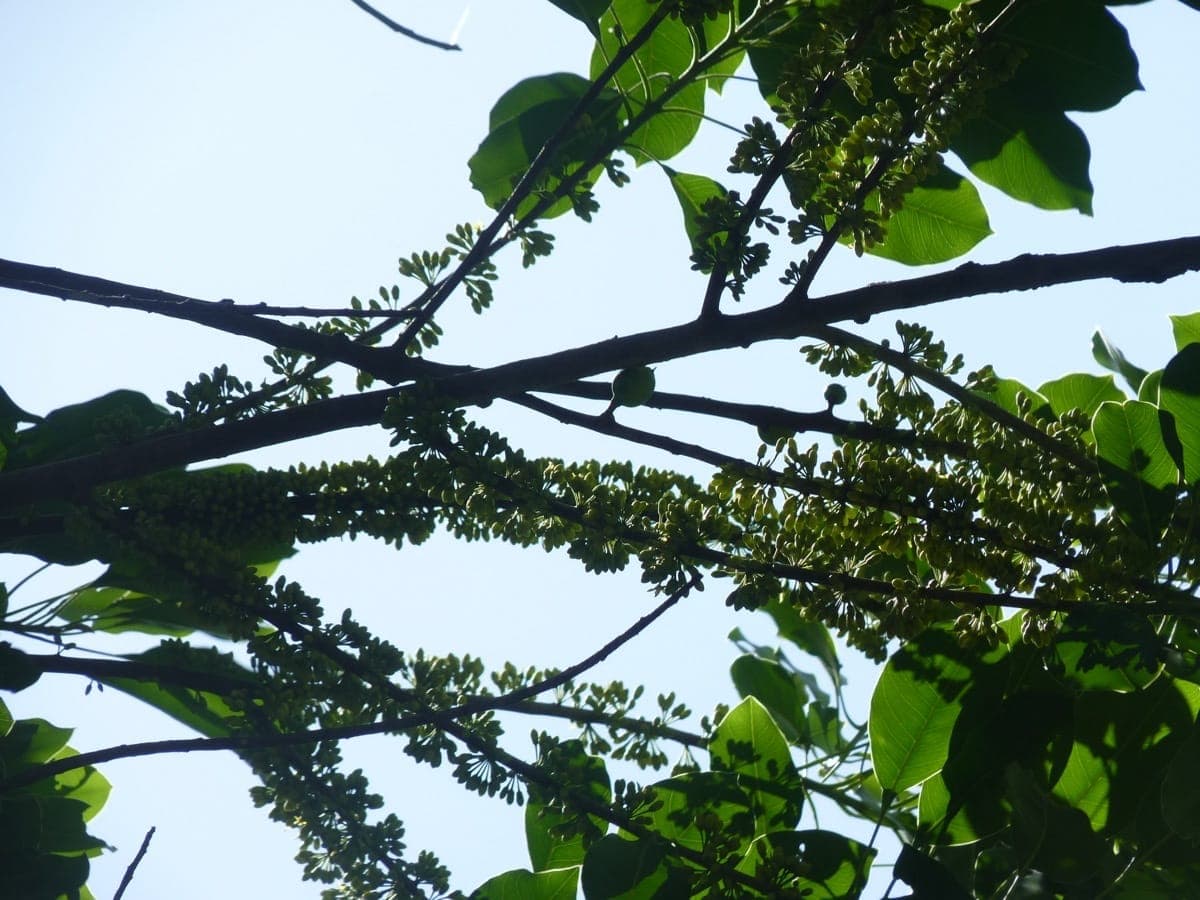
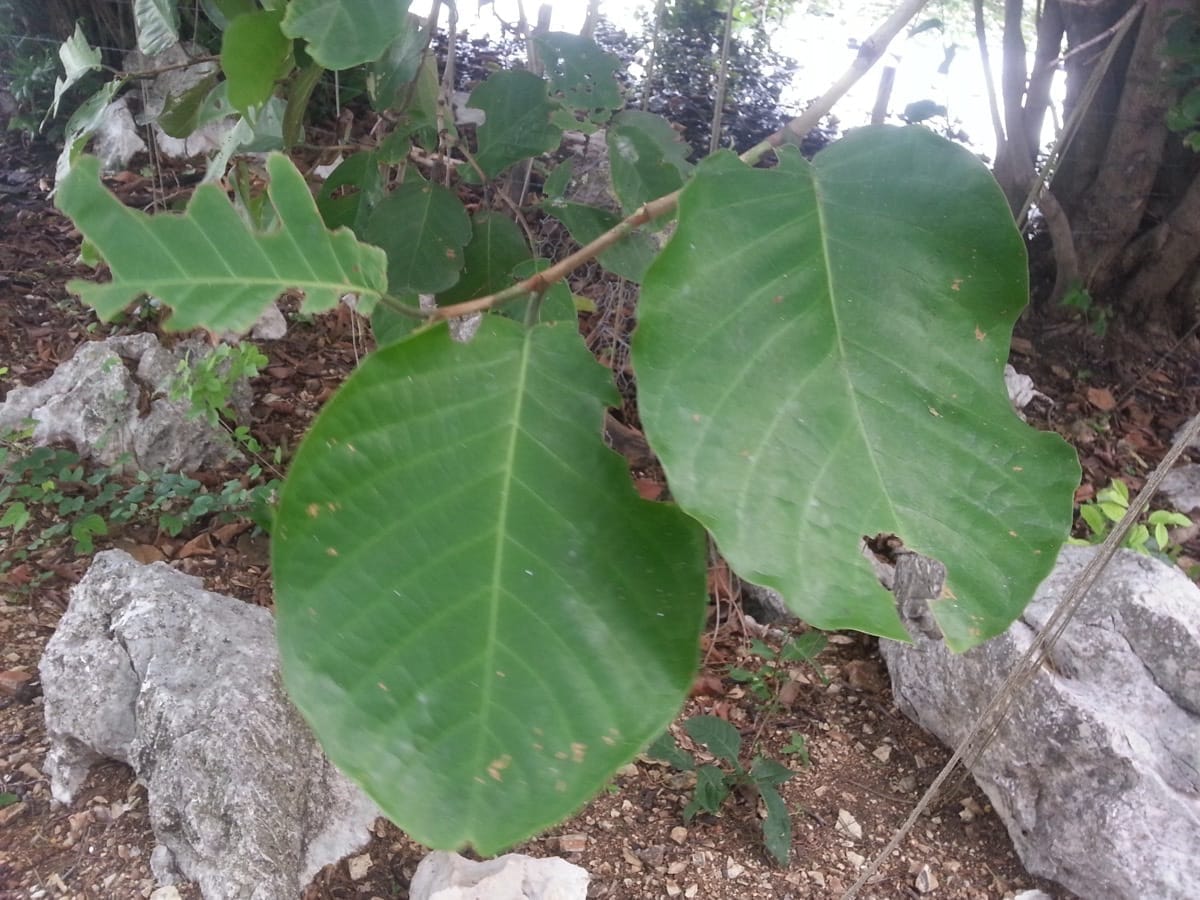
The Papaturro (Coccoloba caracasana), known as Big-Leaf Seagrape or Wild Grape, is a distinctive tree that catches the eye with its exceptionally large, round leaves that can span a dinner plate. Unlike its famous coastal cousin the Sea Grape (C. uvifera), this species thrives inland in Costa Rica's dry forests, forest edges, and disturbed areas. Its clusters of small grape-like fruits feed birds and wildlife, while the tree itself provides welcome shade with its broad, tropical leaves. The Papaturro is a perfect example of how the buckwheat family (Polygonaceae) has produced some truly impressive tropical trees far removed from the small herbaceous plants most people associate with that family.
Quick Reference
iNaturalist Observations
Community-powered species data
📸 Photo Gallery
Whole tree
📷 (c) Nate Hartley, some rights reserved (CC BY-NC)(CC BY-NC)
View source ↗Leaves
📷 (c) jonathan_chama_corrales, some rights reserved (CC BY-NC)(CC BY-NC)
View source ↗Whole tree
📷 (c) jonathan_chama_corrales, some rights reserved (CC BY-NC)(CC BY-NC)
View source ↗Leaves
📷 (c) jonathan_chama_corrales, some rights reserved (CC BY-NC)(CC BY-NC)
View source ↗Leaves
📷 (c) jonathan_chama_corrales, some rights reserved (CC BY-NC)(CC BY-NC)
View source ↗Photos sourced from the iNaturalist citizen science database. View all observations →↗
Taxonomy and Classification
- Coccoloba: Greek "kokkos" (berry) + "lobos" (lobe) - lobed berries - caracasana: From Caracas, Venezuela (type locality) - Family Polygonaceae includes buckwheat, rhubarb, sorrel - Genus has ~120-150 species, mostly Neotropical
Common Names
Related Species in Costa Rica
Physical Description
Overall Form
The Papaturro is a small to medium-sized tree (sometimes shrubby) with a rounded crown and very distinctive foliage. The leaves are the key identification feature—exceptionally large for a tree, nearly circular, and with a leathery texture. The tree often has a somewhat irregular, spreading growth form.
Distinguishing Features
The Remarkable Leaves
- Shape: Nearly circular (orbicular)
- Size: 15-40 cm diameter!
- Base: Heart-shaped (cordate)
- Texture: Thick, leathery
- Color: Dark green above, paler below
- Margin: Entire (smooth edge)
- Veins: Prominent, radiating from base
Bark
- Color: Gray to brownish
- Texture: Smooth to slightly rough
- Young stems: Often reddish
- Ocrea: Characteristic sheathing stipule
The Grape-Like Fruit
- Type: Small drupes in clusters
- Shape: Oval, grape-like
- Size: 6-10 mm diameter
- Color: Green → Red → Purple/black
- Arrangement: Hanging clusters (racemes)
- Taste: Sweet when ripe, astringent unripe
Flowers
- Size: Very small
- Color: White to greenish
- Arrangement: Long, hanging racemes
- Fragrance: Mild
- Timing: Dry to early wet season
Like all members of Polygonaceae, Coccoloba species have a distinctive structure called an ocrea—a sheath formed from fused stipules that wraps around the stem at each node. Identifying the Ocrea: - Look at stem nodes (where leaves attach) - Paper-like or membranous tube encircling stem - Often brownish and dried on older branches - Diagnostic for the buckwheat family This feature connects the tropical Papaturro to its temperate relatives like buckwheat and rhubarb!
Distribution and Habitat
Global Distribution
Geographic Distribution
Distribution in Costa Rica
Habitat Preferences
Ecological Role
Value to Wildlife
Fruit Consumers
- Many bird species: Major food source
- Bats: Consume ripe fruit
- Monkeys: Opportunistic feeders
- Coatis and raccoons: Eat fallen fruit
- Agoutis: Cache and eat seeds
Other Ecological Value
- Pioneer species: Colonizes disturbed areas
- Shade producer: Large leaves create cover
- Nectar source: Flowers visited by insects
- Erosion control: Stabilizes slopes
The Papaturro plays an important role in forest succession: Early Colonizer: - Establishes in gaps and disturbed areas - Tolerates full sun - Fast-growing initially Wildlife Facilitator: - Fruits attract seed-dispersing birds - Birds bring seeds of other species - Papaturro "nurses" forest recovery Eventual Replacement: - As forest matures, gives way to canopy trees - Important stepping stone in regeneration This makes Papaturro valuable for forest restoration!
Uses and Products
Edible Fruit
The Wild Grapes
The fruit of Papaturro is edible and pleasant: Characteristics: - Sweet when fully ripe (purple/black) - Astringent when unripe - Small but abundant - Grape-like texture Traditional Use: - Eaten fresh in the field - Sometimes made into beverages - Wild food for rural communities - Children's snack Collection: - Harvest when fruits turn dark - Handle carefully (bruise easily) - Best eaten immediately While not commercially important, the fruit is a pleasant wild food and provides excellent wildlife nutrition.
Other Uses
Cultural and Historical Significance
Traditional Knowledge
The Papaturro has been part of the rural landscape and folk knowledge of Central American communities for centuries, though it has never achieved the fame of its coastal cousin, the Sea Grape. In rural Guanacaste and the dry Pacific lowlands, the tree is well known to farming communities as a reliable provider of wild fruit and shade.
Rural Heritage
- Children's snack: Generations of Costa Rican children have gathered the ripe purple fruits while playing in fields
- Fence-line tree: Traditionally left standing when clearing land, valued for shade in pastures
- Seasonal marker: Fruiting signals the transition from dry to wet season
- Wildlife indicator: Rural communities use flocking birds at Papaturro trees to find ripe fruit
Folk Medicine
- Bark decoctions: Used traditionally for diarrhea and intestinal complaints
- Leaf poultices: Applied to skin inflammations in folk medicine
- Fruit beverages: Fermented drinks made from ripe fruits in some communities
- Astringent properties: The tannin-rich bark has been used as a gargle for sore throats
The origin of the common name Papaturro is debated among etymologists. Some suggest it derives from indigenous roots predating Spanish colonization, while others connect it to the Spanish word papa (tuber/food) combined with regional suffixes. The name is used across Central America for several Coccoloba species, reflecting the genus's importance as a wild food source. In some regions, the tree is simply called Uvero or Uvita ("little grape"), a direct reference to its grape-like fruits that connect it linguistically to its famous coastal relative.
An Overlooked Ecological Ally
In the context of Costa Rica's ambitious reforestation programs, the Papaturro is increasingly recognized for its value in ecological restoration. Its ability to colonize degraded lands, attract seed-dispersing birds, and thrive in poor soils makes it an ideal "nurse tree" for forest recovery in the dry Pacific lowlands—a region where deforestation has been particularly severe. Conservation organizations working in Guanacaste have begun including Papaturro in their restoration plantings, appreciating what rural communities have long known: this unassuming tree is a quiet workhorse of the dry forest ecosystem.
Conservation Status
Sources: IUCN Red List↗, Tropicos — Coccoloba caracasana↗, GBIF — Coccoloba caracasana↗
Coccoloba caracasana is classified as Least Concern by the IUCN, reflecting its wide distribution and adaptability. However, this designation should not breed complacency—the tree's dry forest habitat is one of the most threatened ecosystems in Central America.
Threats and Challenges
Conservation Value
The Papaturro's role as a pioneer species gives it outsized conservation importance. While it may not be the most majestic tree in the forest, it is often the first tree to return after disturbance, preparing the ground for the more demanding species that follow. This makes it a cornerstone of dry forest restoration—an ecosystem that has been reduced to less than 2% of its original extent in Costa Rica's Pacific lowlands.
Traditional Medicine
Cultivation
Growing Papaturro
Identification Guide
How to Identify Papaturro
Where to See Papaturro in Costa Rica
The Papaturro is easy to find once you know what to look for: Where to Look: - Forest edges and light gaps - Roadsides in dry forests - Secondary growth areas - Rural fence lines Key Identifier: The huge, nearly circular leaves are unmistakable. No other common tree has leaves this shape and size. Best Season: - Fruiting: Late dry season into wet season - Easy to spot when fruit clusters are hanging - Birds gathering at trees indicate ripe fruit
The Polygonaceae in the Tropics
Most people associate the buckwheat family (Polygonaceae) with small plants like: - Buckwheat (the grain) - Rhubarb - Sorrels and docks - Knotweeds But in the Neotropics, the family has produced impressive TREES: Coccoloba (Sea Grapes and Papaturros): - Large-leaved trees - Grape-like fruits - ~150 species Triplaris (Ant Trees): - Tall trees - Hollow stems house ants - Including Costa Rica's Hormigo The connection? All share the distinctive ocrea (stem sheath) and small flowers in elongated clusters.
External Resources
Community observations and photos
Global biodiversity occurrence records
Botanical nomenclature and references
Regional botanical reference for Mesoamerica
Conservation status assessments
References
📚 Scientific References & Further Reading
Howard, R.A. (1961). Studies in the genus Coccoloba, III. Journal of the Arnold Arboretum
Burger, W. (1983). Flora Costaricensis: Polygonaceae. Fieldiana Botany
Janzen, D.H. (1991). Historia Natural de Costa Rica. Editorial Universidad de Costa Rica
Zamora, N.; González, J.; Poveda, L.J. (2004). Árboles de Costa Rica, Vol. III. INBio, Santo Domingo de Heredia
Standley, P.C. (1937). Flora of Costa Rica: Polygonaceae. Publications of the Field Museum, Botanical Series
Pennington, T.D.; Sarukhán, J. (2005). Árboles Tropicales de México. UNAM / Fondo de Cultura Económica
The Papaturro challenges our assumptions about plant families. When you think of the buckwheat family, you probably picture small plants with triangular seeds or rhubarb in a pie—not a tropical tree with leaves the size of serving platters. Yet here stands the Papaturro, proof that evolution can take a body plan in unexpected directions when given millions of years and a tropical climate to work with. Those enormous round leaves, looking almost artificial in their perfect symmetry, mark this tree as something special even from a distance. And then there are the fruits—clusters of tiny grapes that bring flocks of birds and provide wild food for anyone who knows to look. In Costa Rica's dry forests, where the Papaturro thrives along roadsides and forest edges, it serves as a pioneer species, a wildlife cafeteria, and a living lesson in how nature plays with form. The next time you see those distinctive dinner-plate leaves, take a moment to appreciate this unexpected tropical giant of the buckwheat family.
Safety Information Disclaimer
Safety information is provided for educational purposes only. Individual reactions may vary significantly based on age, health status, amount of exposure, and individual sensitivity. Always supervise children around plants. Consult a medical professional or certified arborist for specific concerns. The Costa Rica Tree Atlas is not liable for injuries or damages resulting from interaction with trees described in this guide.
• Always supervise children around plants
• Consult medical professional if unsure
• Seek immediate medical attention if poisoning occurs
Information compiled from authoritative toxicology sources, scientific literature, and medical case reports.
Help improve this page
Know something about this tree? Share local knowledge, suggest a correction, or submit a photo to improve this guide for everyone.