Podocarpus oleifolius
Podocarpus oleifolius
Quick facts
Native Region
Mexico to Panama and northwestern South America (Colombia, Ecuador, Peru, Venezuela, Bolivia); in Costa Rica, the Talamanca and Central Volcanic highlands
Max Height
To 25-30 m, trunk to 1.5 m dbh (smaller, often shrubby, above ~3,000 m)
Family
Podocarpaceae
Conservation
LC — Least Concern
Uses
Safety Information
Toxicity Details
No toxicity is documented for Podocarpus oleifolius specifically. Like its Costa Rican relative Ciprecillo (P. costaricensis), this species belongs to Podocarpaceae, not Taxaceae (true yews) — it lacks the taxine alkaloids responsible for yew toxicity. No poisoning case reports for this species were located during this review.
Skin Contact Risks
No documented skin irritation from bark, foliage, or the fleshy seed receptacle. Handling is considered safe based on the general safety profile of Podocarpus species and the absence of any contrary report.
Allergenic Properties
Low allergen risk. Like other conifers in this family, pollen is wind-dispersed (anemophilous), but no specific allergy case reports for Podocarpus oleifolius were found, and its remote high-elevation habitat limits everyday human exposure.
Structural Hazards
No significant structural risks documented. A medium-to-large forest conifer with a straight trunk; no reports of unusual limb drop or hazard specific to this species.
Wildlife & Pet Risks
No wildlife toxicity is documented for this species. As with its relative Ciprecillo, the fleshy, colorful seed receptacle is adapted for bird dispersal and presents no known hazard to wildlife; birds and small mammals in Costa Rica's highland oak-conifer forest are the presumed dispersers, following the general Podocarpaceae pattern, though this atlas found no dedicated Costa Rica-specific frugivory study naming particular species for P. oleifolius.
Season
Flowering
Feb-Apr
Fruiting
Aug-Oct
How to identify
Podocarpus oleifolius
This page profiles Podocarpus oleifolius D.Don, Costa Rica's second
native conifer — a distinct species from Ciprecillo (Podocarpus
costaricensis de Laub. ex Silba), already documented elsewhere in this atlas.
Some general sources loosely call P. oleifolius "ciprecillo" too, since the
word is a generic Spanish diminutive of "ciprés" (cypress) applied to several
unrelated conifers. This atlas found no distinct, independently verifiable
Costa Rican common name for P. oleifolius — GBIF's vernacular name records
for this species are exclusively Colombian, Ecuadorian, Peruvian, Venezuelan,
and Slovak/English ("pino de pasto," "romerillo," "olive-leaf podoberry," none
from Costa Rica). Rather than reuse the ambiguous "ciprecillo" and recreate a
naming collision this atlas has actively worked to fix elsewhere (see Roble de
Altura / Chicalaba / Roble Encino disambiguation), this page uses the
scientific name as its title and slug: podocarpus-oleifolius. If a
genuine, source-backed Costa Rican-specific common name surfaces later, this
page's title should be revisited.
Quick Reference
iNaturalist Observations
Community-powered species data
📸 Photo Gallery
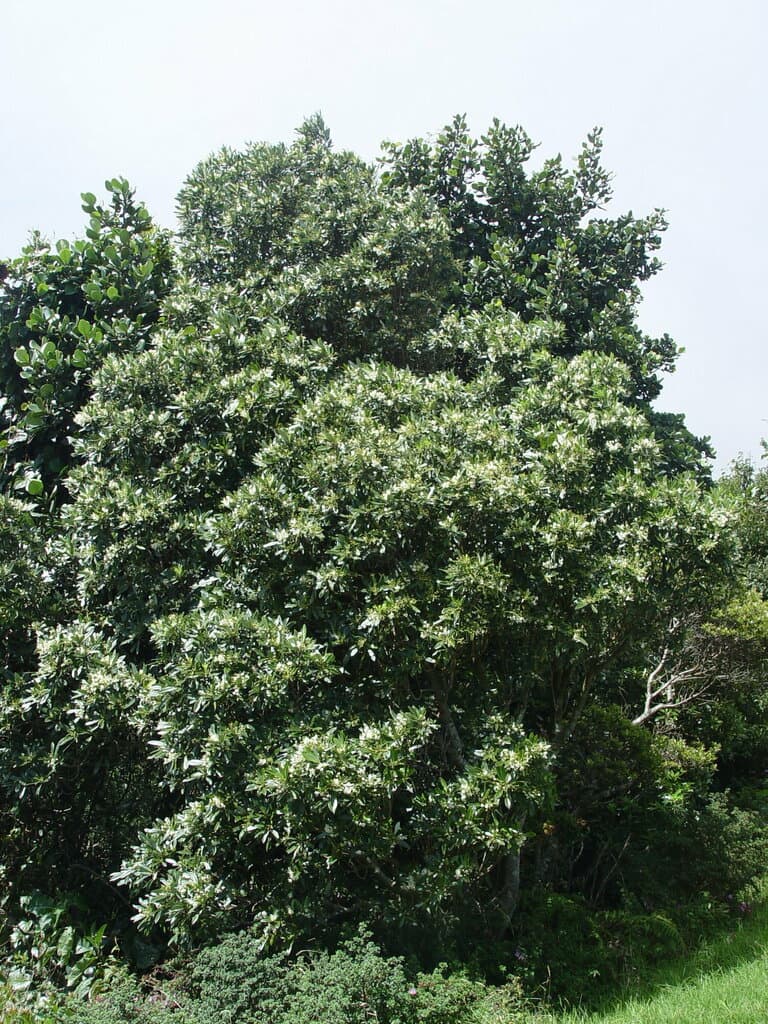
Canopy in montane oak-conifer forest
📷 (c) Dirk Mezger, some rights reserved (CC BY-NC)(CC BY-NC)
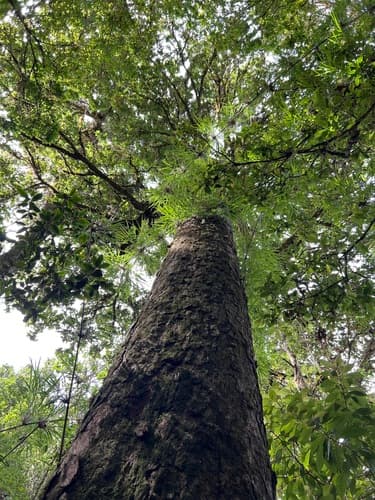
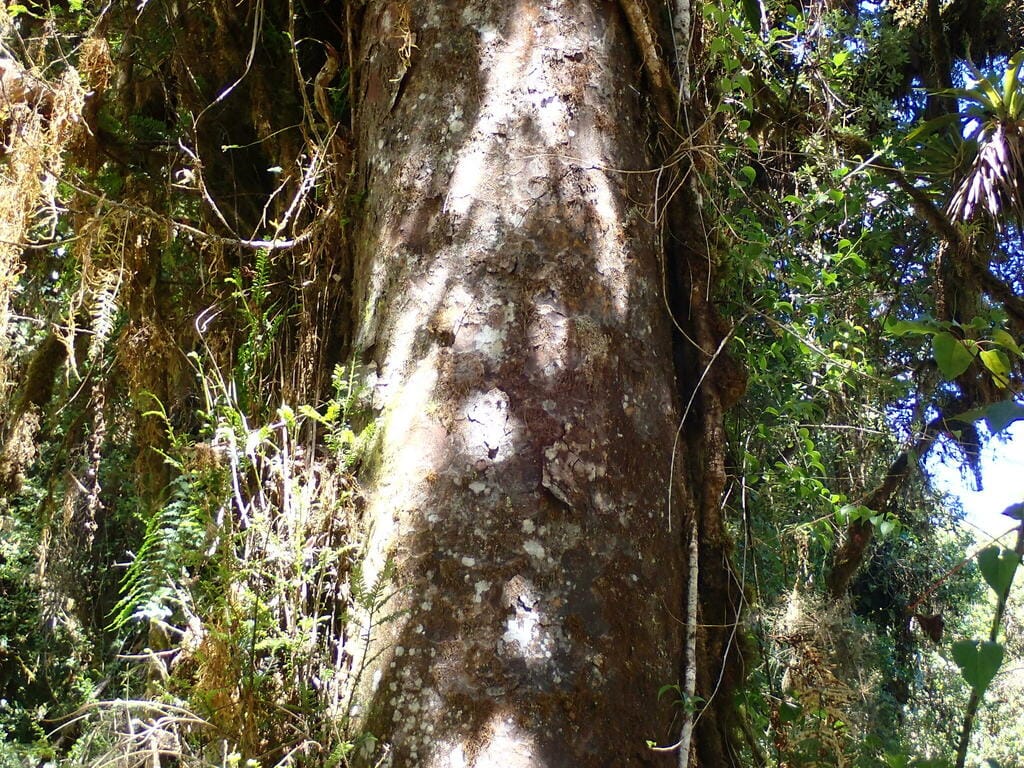
View source ↗Trunk and bark
📷 (c) Dirk Mezger, some rights reserved (CC BY-NC)(CC BY-NC)
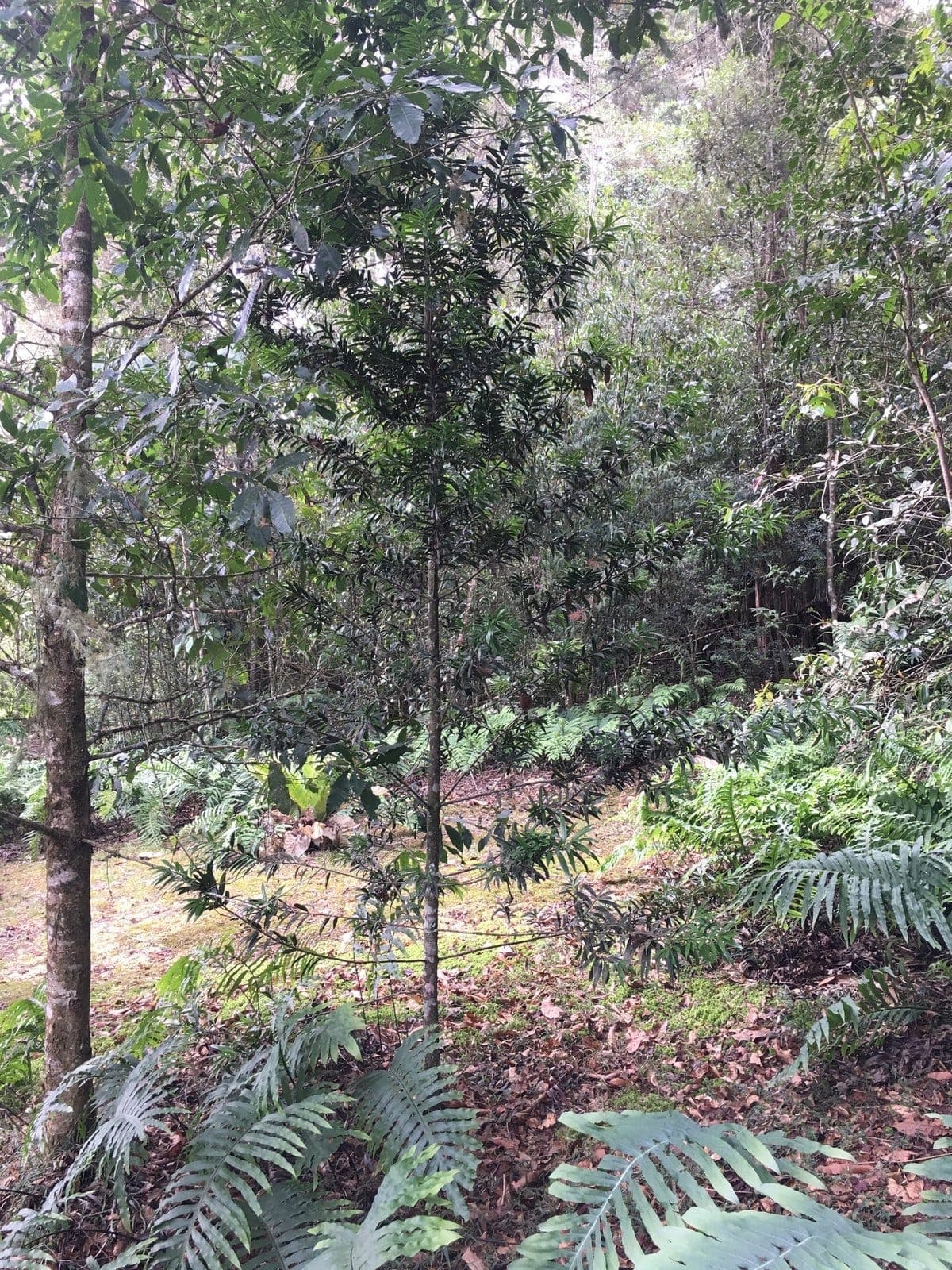
View source ↗Foliage detail
📷 (c) Joey Santore, some rights reserved (CC BY-NC)(CC BY-NC)
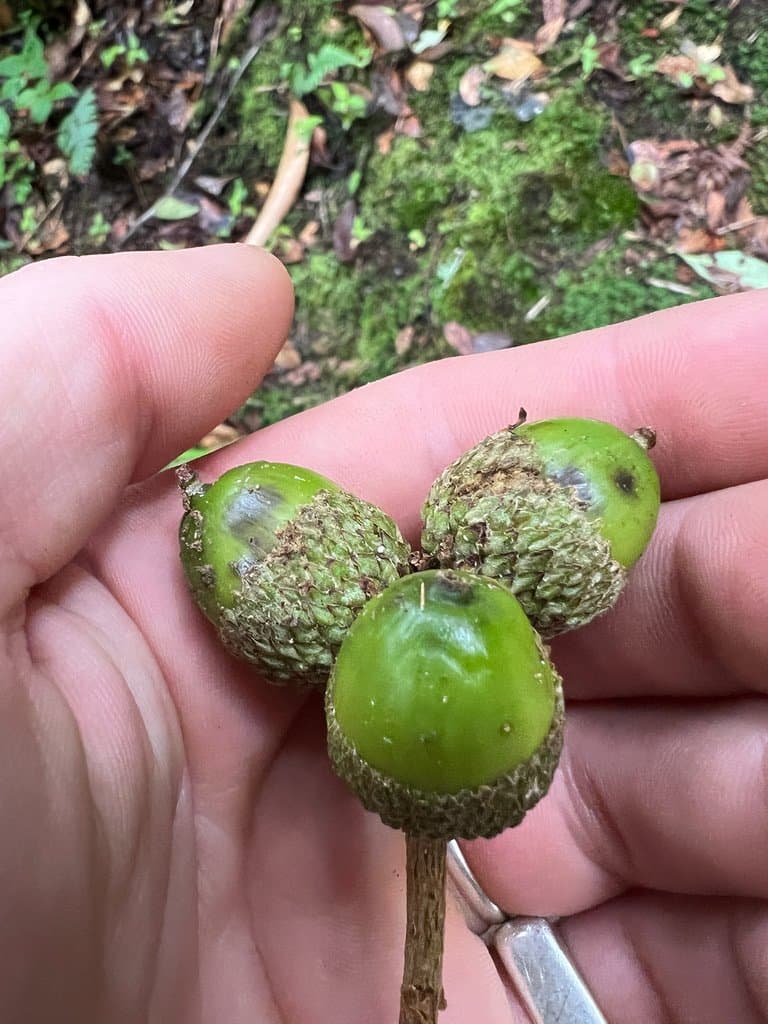
View source ↗Branch with immature seed cones
📷 (c) Joey Santore, some rights reserved (CC BY-NC)(CC BY-NC)
View source ↗Leaves and immature cones, with scale reference
📷 (c) Caminos Amigables con Felinos-Panthera, some rights reserved (CC BY-NC)(CC BY-NC)
View source ↗Foliage spray, hand-held for scale
📷 (c) Markov Bram Baltodano Rodríguez, some rights reserved (CC BY-NC)(CC BY-NC)
View source ↗Photos sourced from iNaturalist's community science database, all from Costa
Rica observations at Cerro de la Muerte-area localities (El Guarco, Copey,
Cerro Abejonal, Poás). Every image's license was independently verified
directly against the iNaturalist API's license_code field for its source
observation before use — none of this gallery's photos were taken on trust
from search-result metadata alone. This atlas was not able to source a
dedicated flower/pollen-cone photograph or a full whole-tree habit shot at
time of publication. Browse all Podocarpus oleifolius observations in Costa
Rica
→↗ (70
total, 37 research-grade). If you have additional quality images, please
contribute through our photo submission page.
Taxonomy
Costa Rica has exactly two native conifer species, both in genus Podocarpus, and both profiled separately in this atlas:
These are two different, independently named species that happen to share a genus and a country. They are not the same tree under two names, and this page's subject is not endangered in the way Ciprecillo is.
A Further Taxonomic Wrinkle: subsp. costaricensis
To add one more layer of naming complexity this atlas wants to be fully transparent about: GBIF and other sources recognize Podocarpus oleifolius subsp. costaricensis (J.T.Buchholz & N.E.Gray) Silba — an infraspecific taxon (subspecies) within P. oleifolius covering the Central American population of this species, from southern Mexico to Panama. Its synonym is Podocarpus monteverdeensis de Laub. This is not the same taxon as the separate species Podocarpus costaricensis (Ciprecillo). The shared epithet "costaricensis" is coincidental — both names independently reference Costa Rica, at different taxonomic ranks, for different plants: one a full species restricted to four sites in San José, the other a subspecies-level population spanning the whole Central American range of a widespread species. Trees and Shrubs Online (Royal Botanic Garden Edinburgh) treats P. oleifolius as having two subspecies: subsp. costaricensis (southern Mexico to Panama) and subsp. oleifolius (northwestern South America). Molecular work by Nieto-Blázquez et al. (2020) found the broader P. oleifolius sensu lato complex to be paraphyletic, with Costa Rican populations falling in a distinct clade from South American ones — evidence that this subspecies-level split may reflect a real evolutionary distinction, though full taxonomic resolution is still pending further study (Mill, 2015).
Common Names
No indigenous-language name for this species was identified in the sources consulted for this page (GBIF, IUCN, Trees and Shrubs Online, conifers.org, Wikipedia, iNaturalist). If a Bribrí, Cabécar, or other indigenous name for Podocarpus oleifolius exists, it has not yet been documented here and would require review under this atlas's indigenous knowledge governance policy before addition.
Etymology and Taxonomic Notes
- Genus Podocarpus: from Greek pous (foot) and karpos (fruit), referring to the fleshy stalk (receptacle) bearing the seed.
- Species epithet oleifolius: Latin, "olive-leaved," describing the leaf shape's resemblance to olive (Olea) foliage.
- Authority: Scottish botanist David Don, who published the species in 1824 — one of the earliest formally described American Podocarpus species.
- Synonyms recognized by GBIF include Nageia oleifolia (D.Don) Kuntze, Podocarpus macrostachyus Parl., and Podocarpus monteverdeensis de Laub. (the last now treated as a synonym of subsp. costaricensis, and notably named after Monteverde, Costa Rica).
- Family context: Podocarpaceae is the second-largest conifer family after Pinaceae. Unlike pines and cypresses, podocarps bear a fleshy, berry-like receptacle rather than a woody cone — an adaptation for bird dispersal shared with Ciprecillo (P. costaricensis).
Sources: GBIF species record↗, GBIF synonym list↗, Trees and Shrubs Online — Podocarpus oleifolius↗, conifers.org — Podocarpus oleifolius↗
Geographic Distribution
Geographic Distribution
Podocarpus oleifolius has by far the widest range of any conifer native to Costa Rica — and one of the widest of any Neotropical podocarp. Trees and Shrubs Online gives its full range as "southern Mexico through Central America (Costa Rica, Panama) to northwestern South America (Colombia, Ecuador, Peru, Venezuela, Bolivia)," growing in "montane to alpine forests at (800-)1,200-3,300 m asl, most commonly above 2,000 m asl." Wikipedia's summary (citing Mill, 2015) also lists El Salvador, Guatemala, and Honduras within the species' broader Mesoamerican range.
A direct GBIF occurrence query for this species in Costa Rica returned 401 total records, with example localities clustering around Copey (Dota), El Guarco (Cartago), Cerro Abejonal (León Cortés), and Poás (Alajuela) — squarely within the Cerro de la Muerte / Talamanca / Central Volcanic highland belt. iNaturalist alone records 70 Costa Rican observations for this taxon (37 at research grade), independently confirming the same geographic concentration.
Where Podocarpus oleifolius Grows in Costa Rica
Confirmed habitat, based on GBIF and iNaturalist occurrence records:
Costa Rica's montane oak forest ecoregion was, before this species' addition,
covered by only two named conifers' worth of context: the documented
Ciprecillo (P. costaricensis) and this page's subject. Podocarpus
oleifolius is the country's second native gymnosperm lineage and the more
widespread of the two — its addition means this atlas now profiles both of
Costa Rica's native conifer species, completing conifer coverage for the
montane oak forest ecoregion documented in
docs/MISSING_SPECIES_LIST.md.
Habitat
Trees and Shrubs Online describes P. oleifolius habitat as "montane to alpine forests," and conifers.org's range-wide summary (drawing on herbarium and occurrence data across the species' full distribution) gives a mean elevation of 1,970±810 m with a reported range of 825-3,300 m, mean annual temperature of 16.8°C, and mean annual precipitation of 1,940 mm — describing it as an "upper montane species of evergreen and semi-deciduous forests, often in cloud forest with abundant epiphytes." At its highest elevations the species is reduced to "shrub or small tree," a growth-form shift toward the treeline paralleling what this atlas has documented for Roble de Altura (Quercus costaricensis) at similarly extreme elevations.
In Costa Rica specifically, the concentration of occurrence records around Cerro de la Muerte, Copey, and El Guarco places this species squarely within the country's montane oak forest belt — the same general habitat zone documented for Roble de Altura, Chicalaba, and Ciprecillo, though P. oleifolius tolerates a wider elevational band than any of those three, per the 800-3,300 m range cited above.
Sources: Trees and Shrubs Online — Podocarpus oleifolius↗, conifers.org — Podocarpus oleifolius↗, GBIF occurrence records↗
Botanical Description
Sources: Trees and Shrubs Online — Podocarpus oleifolius↗, conifers.org — Podocarpus oleifolius↗
How to Identify
Elevation and habitat are the first clues: a conifer above roughly 2,000 m in Talamanca or the Central Volcanic highlands is very likely one of Costa Rica's two native Podocarpus species. Look for spirally arranged, linear to lanceolate leaves (not needles in bundles, and not scale-like as in cypress); a fleshy, red, berry-like seed receptacle rather than a woody cone; and — if leaves seem unusually large — check whether you are looking at juvenile rather than adult foliage, since this species' two leaf forms differ substantially in size.
This atlas found no dedicated, Costa Rica-specific field key distinguishing P. oleifolius from P. costaricensis where their ranges might overlap in elevation. Both are podocarps with generally similar linear leaves and fleshy fruit. In practice, location is currently the most reliable distinguishing clue documented: Ciprecillo is known only from four sites in San José Province below 1,700 m, while this page's subject is documented much more broadly across the Talamanca and Central Volcanic highlands, commonly above 2,000 m. Confirming field-morphology differences (cone size, leaf dimensions) between the two would be a valuable addition to a future revision of this page.
Ecological Role
As one of only two native conifer lineages in Costa Rica, Podocarpus oleifolius contributes the same kind of structural and ecological diversity documented for Ciprecillo — an evergreen conifer presence within forests otherwise dominated by broadleaf angiosperms, including the oaks (Quercus costaricensis, Q. copeyensis) with which it shares much of its Talamanca and Central Volcanic range.
Seed Dispersal
A Wider-Ranging Relative of Ciprecillo
Sources: Trees and Shrubs Online — Podocarpus oleifolius↗, IUCN Red List — Podocarpus oleifolius assessment↗
Uses and Applications
This atlas found little source-backed documentation of specific economic or traditional uses for Podocarpus oleifolius in Costa Rica. Regional common names elsewhere in its range ("pino de pasto," "pinete") suggest general recognition and likely historical timber use in Colombia, Ecuador, and Venezuela, but no Costa Rica-specific use was confirmed during this research. Rather than extend this section with plausible-sounding but unverified claims, it is kept short and limited to what is documented.
Regional Timber Use (Outside Costa Rica)
Common names such as "pino de pasto" and "pino colombiano" in Colombia, and general Podocarpus timber characteristics documented for the genus (fine-grained, moderate durability, historically marketed as "yellowwood" in some regions), suggest this species has been used regionally for timber elsewhere in its wide range. This atlas did not find a source confirming commercial timber use of P. oleifolius specifically within Costa Rica, and — unlike Ciprecillo, whose historical Costa Rican timber use is documented — treats this as an open question rather than asserting a Costa Rica-specific claim it cannot source.
Scientific and Conservation Value
The clearest documented significance of this species to Costa Rica is what it represents biogeographically and taxonomically: as one of only two native conifer lineages in the country, it is directly relevant to understanding how Podocarpaceae — a family with its center of diversity in the Southern Hemisphere — reached and diversified in Central America. The taxonomic complexity around subsp. costaricensis and its relationship to the separate species P. costaricensis (discussed above) is itself a live area of systematic botany, referenced in Mill's (2015) monographic revision and revisited with molecular data by Nieto-Blázquez et al. (2020).
Sources: GBIF vernacular names↗, conifers.org — Podocarpus.php↗
Cultural Significance
This atlas found no independently sourced material documenting Costa Rican cultural, ceremonial, or folkloric significance specific to Podocarpus oleifolius, distinct from the general cultural weight Costa Rica's montane oak-conifer cloud forests carry as a habitat type (discussed at greater length on this atlas's Roble de Altura page). Rather than borrow that broader habitat-level narrative and present it as species-specific, this section is kept short.
No Costa Rica-specific cultural narrative naming Podocarpus oleifolius individually was found in the sources consulted for this page. Its regional common names in Colombia, Ecuador, Venezuela, and Peru ("pino de pasto," "romerillo," "pinete") indicate local recognition and use in those countries, but this atlas found no equivalent evidence of a distinct Costa Rican vernacular identity for the species — a finding this page treats as informative in itself, and part of the reasoning behind this page's scientific-name title (see the naming callout at the top of this page).
No indigenous name, use, or narrative for this species was identified during research for this page. Per this atlas's governance policy, any future indigenous-knowledge content about Podocarpus oleifolius would need to go through the consent and review process described in Indigenous Knowledge Governance before being added — it is intentionally absent here, not merely unresearched.
Safety
No toxicity, allergy, or injury case reports specific to Podocarpus oleifolius were located during this research. The safety profile below is inferred cautiously from the broader, well-documented non-toxicity of Podocarpaceae generally (as distinct from the toxic Taxaceae/true yews) rather than from species-specific testing.
Toxicity
Podocarpaceae, the family to which P. oleifolius belongs, is not known for the taxine-alkaloid toxicity that makes true yews (Taxaceae, genus Taxus) dangerous — this distinction is explicitly documented for Costa Rica's other native podocarp, Ciprecillo, and this atlas has found no reason to expect P. oleifolius to differ. No poisoning case reports specific to this species were located.
Allergen Risk
As a wind-pollinated conifer, P. oleifolius produces airborne pollen, which is a generic allergy consideration for conifers broadly. No species-specific allergy case reports were found, and the species' remote, high-elevation habitat limits everyday human exposure for most Costa Ricans, similar to the reasoning documented for Roble de Altura.
Pet and Wildlife Safety
No veterinary case reports specific to Podocarpus oleifolius were located during this review. Its fleshy seed receptacle, following the general Podocarpaceae pattern, is presumed safe for the birds and mammals that disperse it, consistent with the documented safety of Ciprecillo's similar fruit structure.
Sources: conifers.org — Podocarpus.php (genus overview)↗, this atlas's Ciprecillo (Podocarpus costaricensis) page (family-level toxicity comparison)
Conservation Status
Population trend: Not documented as declining range-wide
Podocarpus oleifolius was assessed by the IUCN Red List with an assessment ID of 42504, reflecting its wide range across Mexico, Central America, and northwestern South America and the absence of a documented major population decline. This is a markedly different conservation picture from Costa Rica's other native conifer, Ciprecillo (P. costaricensis), which is Critically Endangered — a reminder that shared ancestry within a genus does not imply shared conservation status. This atlas independently confirmed the Least Concern category via a direct GBIF IUCN Red List category lookup for this taxon, which returned "LEAST CONCERN" consistent with the IUCN Red List's own record.
Podocarpus oleifolius is not listed on any CITES Appendix. This atlas checked independently rather than assuming CITES status transfers within the genus or defaulting to "none" without verification — a documented historical bug pattern in this project's own content (see PR #746/#748). A review of CITES-listed plant taxa found the genus Podocarpus absent from all three Appendices; the only conifer with any CITES Appendix I listing identified in this research is Araucaria araucana (monkey puzzle tree, family Araucariaceae — an entirely different, unrelated conifer family native to Chile and Argentina). No Podocarpaceae genus or species was found listed on any CITES Appendix in the sources consulted. This atlas also did not find a Costa Rica-specific national (SINAC) conservation listing naming P. oleifolius specifically; the Roble de Altura page's independent review of Decreto N°25700-MINAE (Costa Rica's national logging-ban list) found a generic "Podocarpus" listing without species specificity, which may or may not extend to this species — this atlas treats that as an open question rather than asserting national protection it cannot confirm at the species level.
Why This Species' Conservation Picture Differs So Much From Ciprecillo's
This side-by-side comparison is a useful reminder for readers of this atlas: within the same small genus, in the same country, one species can be a flagship conservation priority while its relative is not threatened at all. Both are equally native, equally part of Costa Rica's tiny native-conifer heritage, and equally worth documenting — but they do not require, or deserve, the same conservation framing.
Sources: GBIF species record with IUCN category↗, GBIF IUCN Red List category lookup↗, Wikipedia summary citing Gardner (2013) IUCN assessment↗, this atlas's Ciprecillo and Roble de Altura pages (comparative and CITES-verification methodology)
External Resources
Global occurrence and distribution data, including the IUCN Least Concern status and 401 Costa Rican records
GBIF
Official conservation assessment for Podocarpus oleifolius
IUCN
70+ Costa Rica observations and community photos
iNaturalist
Detailed botanical description (Royal Botanic Garden Edinburgh / International Dendrology Society)
Trees and Shrubs Online
Species-level conifer database entry with range-wide ecological statistics
conifers.org
Costa Rica's other, Critically Endangered native conifer — read this page to understand the naming distinction
Costa Rica Tree Atlas
References
📚 Scientific References & Further Reading
Don, D. (1824). Podocarpus oleifolius. In Lambert, A Description of the Genus Pinus, ed. 2, 2: appendix
Gardner, M. (2013). Podocarpus oleifolius. The IUCN Red List of Threatened Species 2013. IUCN Red List of Threatened Species
Mill, R.R. (2015). A Monographic Revision of the Genus Podocarpus (Podocarpaceae) III. The species of Colombia, Costa Rica, Ecuador, El Salvador, French Guiana, Guatemala, Guyana, Honduras, Mexico, Nicaragua, Panama, Peru and Suriname. Edinburgh Journal of Botany 72(1): 1-111
Farjon, A. (2010). A Handbook of the World's Conifers. Brill Academic Publishers, 2 vols.
Nieto-Blázquez, M.E., Roncal, J., and Peguero, B. et al. (2020). Molecular phylogenetics of Neotropical Podocarpus reveals paraphyly in P. oleifolius sensu lato. Cited via Trees and Shrubs Online species account (primary paper not directly accessed for this page)
Royal Botanic Garden Edinburgh / International Dendrology Society (2026). Podocarpus oleifolius — Trees and Shrubs Online. treesandshrubsonline.org
Eckenwalder, J.E. (2009). Conifers of the World: The Complete Reference. Timber Press
Podocarpus oleifolius completes this atlas's coverage of Costa Rica's entire native-conifer heritage — just two species, in one family, one of them a widespread Least Concern podocarp reaching from Mexico to Bolivia, the other a Critically Endangered endemic found nowhere outside four sites in San José Province. This page deliberately avoided reusing "ciprecillo" for a second species, chose a transparent scientific-name slug instead, and disclosed every layer of this genus's naming complexity — including the coincidental, unrelated infraspecific name subsp. costaricensis — rather than quietly resolving the ambiguity off the page. Real field photography of its flowers and cones, a confirmed Costa Rica-specific common name if one exists, and species-level clarity on Costa Rica's SINAC protection status are all open work for a future revision.
🌲 ¡Pura Vida!
Safety Information Disclaimer
Safety information is provided for educational purposes only. Individual reactions may vary significantly based on age, health status, amount of exposure, and individual sensitivity. Always supervise children around plants. Consult a medical professional or certified arborist for specific concerns. The Costa Rica Tree Atlas is not liable for injuries or damages resulting from interaction with trees described in this guide.
• Always supervise children around plants
• Consult medical professional if unsure
• Seek immediate medical attention if poisoning occurs
Information compiled from authoritative toxicology sources, scientific literature, and medical case reports.
Help improve this page
Know something about this tree? Share local knowledge, suggest a correction, or submit a photo to improve this guide for everyone.