Chilillo (Chile Muelo / Quiebra Muelas)
Drimys granadensis
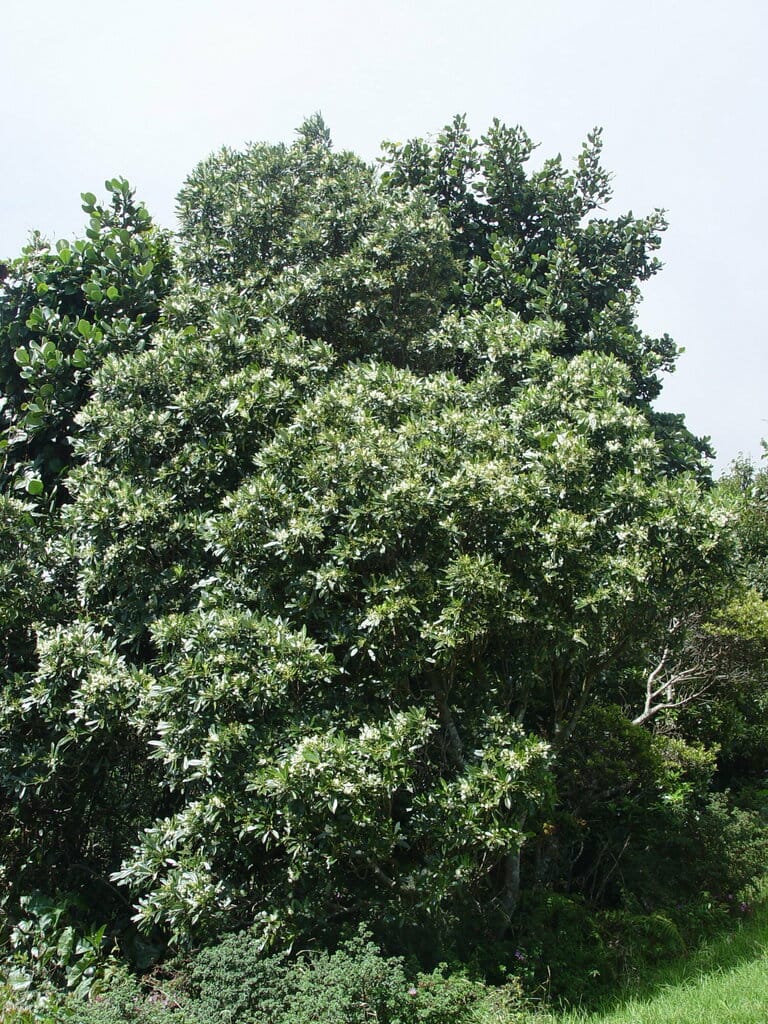
Quick facts
Native Region
Southern Mexico to Peru, through the mountains of Central America (Costa Rica: upper montane oak forest and páramo-edge transition, Talamanca and Central Volcanic cordilleras)
Max Height
up to 12-13 m (most Costa Rican individuals are shrubby to small-tree stature, 3-8 m, especially near the upper end of its elevation range)
Family
Winteraceae
Conservation
LC — Least Concern
Uses
Safety Information
Toxicity Details
Chilillo's leaves and bark are rich in aromatic, pungent essential oil — a chemically active trait documented across the genus Drimys generally, and confirmed compositionally in a 2024 peer-reviewed analysis of the closely related Ecuadorian population of this exact species (Cartuche et al., 2024), which identified 64 compounds including a small proportion (~2%) of safrole, a compound the study's own authors flag as warranting toxicity assessment before any therapeutic use. This atlas found no documented case of serious poisoning from chewing or ingesting chilillo, and long-standing Costa Rican oral tradition describes campesinos deliberately chewing the leaves for their numbing, pepper-hot sensation on gums and tongue — but that same numbing, burning intensity is itself the reason this atlas rates toxicity as low rather than none: concentrated essential oil compounds taken in quantity, rather than casual chewing, are the theoretical risk, and this has not been clinically studied for this species.
Skin Contact Risks
No documented cases of allergic contact dermatitis from handling chilillo bark, wood, or foliage were found. The aromatic leaf oil can produce a mild, transient tingling or burning sensation on broken or crushed leaf surfaces (the same essential-oil property responsible for its 'chile' common name), so this atlas rates skin contact risk as low rather than none, out of caution for sensitive skin or mucous membranes rather than any documented injury.
Allergenic Properties
Chilillo is insect-pollinated (documented floral visitors include beetles and flies, per Colombian pollination-ecology research on this species), not wind-pollinated, so this atlas found no basis for rating it a significant airborne allergen — unlike wind-pollinated highland trees such as this atlas's oak species. Allergen risk is rated low as a general precaution for any flowering plant rather than a documented sensitivity.
Wildlife & Pet Risks
This atlas found no documented veterinary case reports of chilillo toxicity in pets or livestock, and no dedicated wildlife-toxicity literature for this species specifically. Given the concentrated essential oil in the leaves and bark, this atlas takes the same general precaution recommended for aromatic, oil-rich foliage generally, without asserting a specific documented risk. The purple-black berries are consumed by highland birds (general frugivore behavior documented for cloud-forest trees with fleshy fruit), with no reported adverse effects to wildlife.
Season
Flowering
Mar-Jun
Fruiting
Jul-Sep
How to identify
Chilillo (Chile Muelo / Quiebra Muelas)
This tree has no single, universally used Costa Rican common name. The most consistently documented option — and the one iNaturalist's Costa Rica–specific taxon page currently prefers — is Chilillo, also recorded regionally as Chile Muelo, Quiebra Muelas ("tooth-breaker"), and simply Muelo. All four names trace to the same folk association: chewing the tree's pungent, numbing leaves to dull tooth or gum pain. A different name, Canelo de Páramo, is well documented for this species in Colombia and Ecuador, but this atlas found no independent Costa Rican source using it — and reusing any "canelo" name here would risk exactly the kind of naming collision this atlas has worked to fix elsewhere, since "Canelo" is already the documented Costa Rican name of a completely different, unrelated tree in this atlas, Ocotea tenera (Lauraceae). Chilillo and Canelo (Ocotea tenera) are not the same tree, not the same family, and not close relatives — this page uses Chilillo specifically to keep that distinction clear.
Quick Reference
iNaturalist Observations
Community-powered species data
📸 Photo Gallery
Whole tree in flower
📷 (c) odenwaelder, some rights reserved (CC BY-NC)(CC BY-NC)
View source ↗Flowering branch
📷 (c) Jake Rehage, some rights reserved (CC BY)(CC BY)
View source ↗Flower detail
📷 (c) Cy Stavros, some rights reserved (CC BY)(CC BY)
View source ↗Leaf underside (glaucous)
📷 (c) harrii, some rights reserved (CC BY)(CC BY)
View source ↗Foliage in habitat
📷 (c) Mark Richman, some rights reserved (CC BY)(CC BY)
View source ↗Flowers and buds
📷 (c) Jake Rehage, no rights reserved (CC0)(CC0)
View source ↗All six photos are independently verified Costa Rica observations with
confirmed open licenses (CC BY, CC BY-NC, or CC0 — each checked directly
against the iNaturalist API's license_code field before inclusion here, not
assumed from any credit template). This atlas was not able to source a
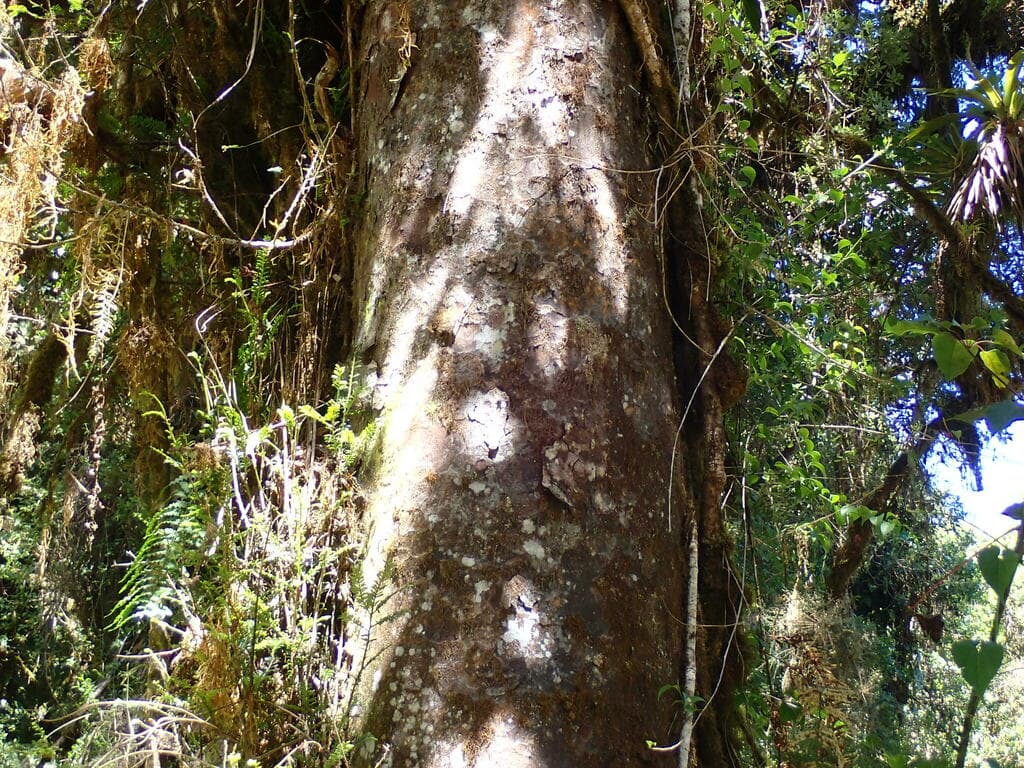
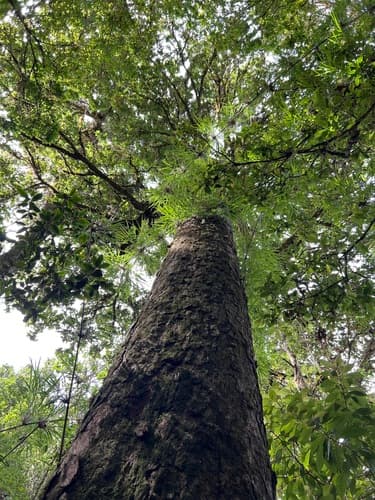
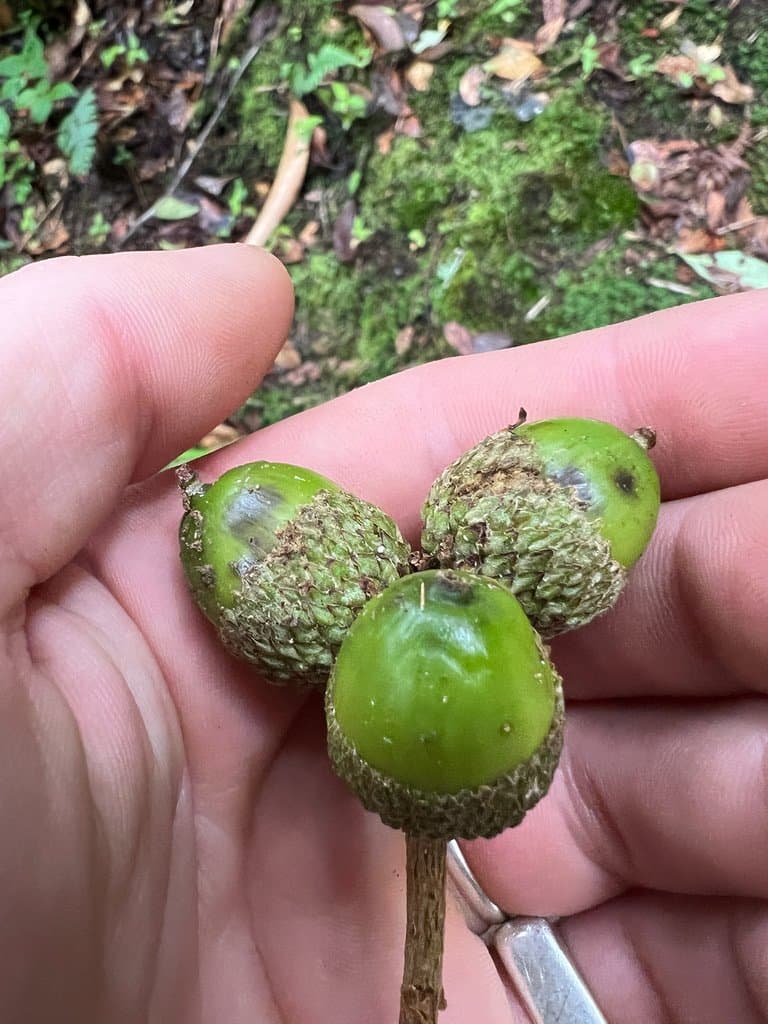
dedicated bark or ripe-fruit photograph at time of publication. Browse all
Chilillo observations in Costa Rica
→↗ (80
total). If you have additional quality images — bark texture or ripe
purple-black fruit in particular — please contribute through our photo
submission page.
Taxonomy
This atlas already documents a tree called Canelo (Ocotea tenera, family Lauraceae) — an unrelated cloud-forest laurel valued as a Resplendent Quetzal food source. Some regional and international sources call Drimys granadensis "Canelo de Páramo," a name well documented in Colombia and Ecuador. This atlas found no independent Costa Rican source using "Canelo" in any form for Drimys granadensis, and — precisely because this atlas has previously had to correct naming collisions of this kind — has deliberately chosen not to introduce one here. This page uses Chilillo, a name independently attested for Costa Rica in GBIF's own vernacular-name records (sourced via Catalogue of Life) and as iNaturalist's Costa Rica–preferred common name for this exact taxon.
Common Names by Region
No indigenous-language name for this species was identified in the sources consulted for this page (POWO, GBIF, IUCN, iNaturalist, academic literature, and general web research). If a Bribrí, Cabécar, or other indigenous name or traditional use for Chilillo exists, it has not yet been documented here and would require review under this atlas's indigenous knowledge governance policy before addition.
Etymology and Taxonomic Notes
- Genus Drimys: from the Greek drimys ("pungent" or "acrid"), referencing the sharp, peppery taste and smell of the bark and leaves shared across the genus.
- Species epithet granadensis: Latin, "of Nueva Granada" — the former Spanish colonial territory covering present-day Colombia, Ecuador, Panama, and Venezuela, where the species was first described.
- Authority: "L.fil." denotes Carl Linnaeus the Younger (Carl von Linné filius), son of the more famous Carl Linnaeus, who published the species name in 1781.
- Family placement: Winteraceae, order Canellales, within the magnoliid clade of flowering plants — a lineage that diverged early in angiosperm evolutionary history, though (see the Botanical Description section below) this is not the same thing as being biologically "primitive" in the outdated, informal sense that phrase is often used.
- Synonyms recognized by GBIF/POWO include Drimys winteri f. granadensis (L.fil.) Eichler, Drimys winteri var. granadensis (L.fil.) Pittier, Wintera granadensis (L.fil.) J.F.Gmel., and Drimys granatensis Mutis ex L.f. — reflecting the close historical taxonomic relationship between this species and the more southerly South American Drimys winteri (winter's bark), with which it was sometimes treated as a single variable species.
- Five recognized infraspecific varieties span its full range: var. granadensis (Peru/Ecuador/Colombia/Venezuela), var. chiriquiensis (Panama), var. mexicana (Mexico through Central America, including Costa Rica), var. peruviana (Peru), and var. uniflora (Venezuela), per Trees and Shrubs Online (Royal Botanic Garden Edinburgh).
Geographic Distribution
Geographic Distribution
Chilillo has one of the broadest latitudinal ranges of any species in this atlas: it occurs from southern Mexico, through every Central American country, into Colombia, Venezuela, Ecuador, and Peru — tracking the high-elevation "sky island" cloud-forest and páramo-edge habitat that runs almost continuously down the Mesoamerican and Andean mountain spine. Costa Rica sits roughly in the geographic middle of this range.
Where Chilillo Grows in Costa Rica
Confirmed habitat, based on 80 Costa Rican iNaturalist observations reviewed for this page:
Elevation: Species-wide, Chilillo is documented from 1,100 to 3,900 m across its full Mexico-to-Peru range. Costa Rican occurrence records reviewed for this page cluster well above 1,800 m, consistent with the upper montane oak forest and páramo-edge transition zone — the same under-covered ecoregion as this atlas's Roble de Altura and Chicalaba pages.
Chilillo is one of a small handful of named species profiled here from Costa Rica's montane oak forest and páramo-edge ecoregion — until recently the single most under-covered ecoregion in this atlas. Unlike the atlas's oak species (Fagaceae, a comparatively "modern" flowering-plant family), Chilillo belongs to Winteraceae, part of the magnoliid lineage that diverged near the base of the angiosperm family tree. It gives this atlas its first representative of that older evolutionary branch.
Habitat
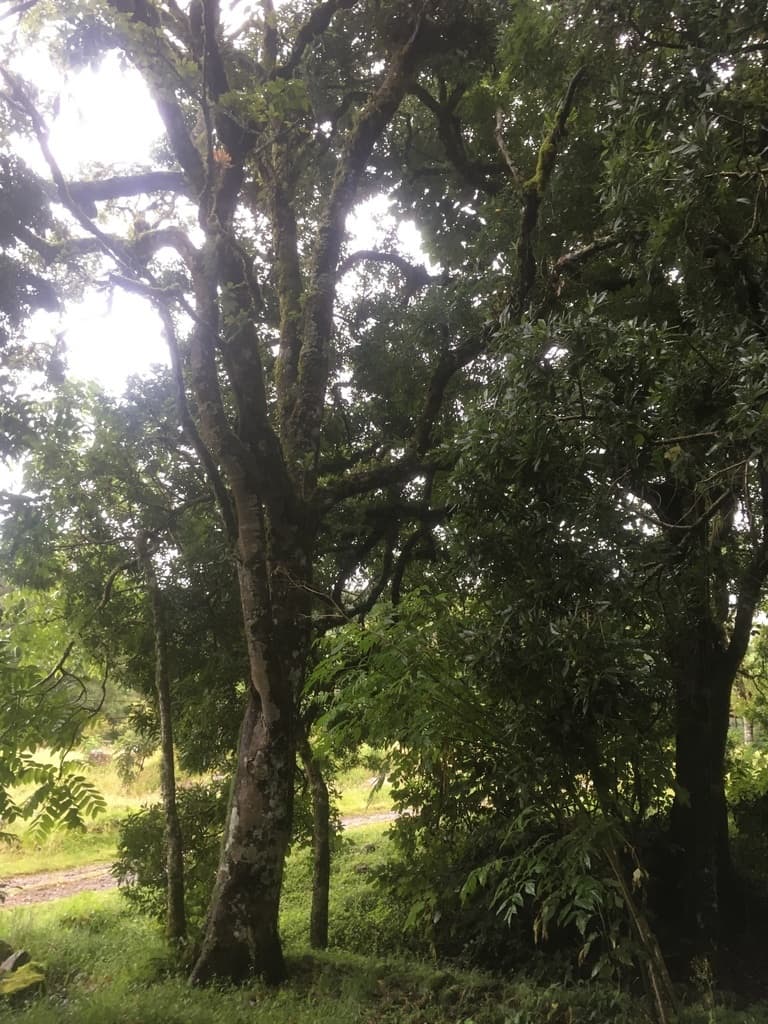
Chilillo occupies the same general high-elevation habitat band as this atlas's Roble de Altura and Chicalaba oak pages, but plays a different structural role in the forest: rather than forming the emergent canopy, Costa Rican sources consistently describe it as a shrub or small tree of the mid- and understory, growing alongside — not above — the dominant highland oaks (Quercus costaricensis, Q. copeyensis) and other montane specialists such as Hesperomeles obovata (per Cerro de la Muerte ecosystem descriptions). Its glossy, leathery, evergreen leaves and dense branching are consistent with the wind-exposed, frequently fog-immersed conditions typical of this zone.
Unlike many of this atlas's threatened highland species, Chilillo's very broad Mexico-to-Peru distribution and lack of documented major range-wide threats support its Least Concern status — this atlas found no evidence of the kind of concentrated, single-region vulnerability that affects range-restricted Talamanca endemics like Roble de Altura.
Botanical Description
How to Identify
Above roughly 1,800 m in Talamanca or the Central Volcanic highlands, look for a shrubby, multi-stemmed small tree with glossy, leathery, aromatic leaves that have a distinctly pale, whitish underside. Crushing a leaf releases a sharp, peppery smell — a quick, reliable field test given the species' name. Clusters of white, many-petaled flowers (in bloom roughly March-June) or dark purple-black berries confirm the identification.
Ecological Role
Chilillo occupies the mid- and understory of Costa Rica's upper montane oak forest and páramo-edge transition zone, growing alongside the dominant highland oaks and other cold-adapted specialists rather than forming the canopy itself. Its dense, evergreen, leathery foliage contributes to the layered structure of this forest type, and its aromatic chemistry — the same essential-oil-rich leaves and bark documented in the 2024 chemical-profiling study of an Ecuadorian population (Cartuche et al., 2024) — likely functions as a herbivory deterrent, a common role for concentrated plant essential oils, though this atlas found no dedicated herbivory study for this species specifically.
Fruit and Frugivory
Insect Associations
Uses and Applications
This atlas found no evidence of Chilillo as a current commercial timber or agricultural species in Costa Rica. The uses documented below are historical, small-scale, regional, or based on folk tradition rather than an active trade — consistent with a species this atlas found no significant harvest-pressure literature for.
Traditional Charcoal and Timber Use
General regional sources describe Chilillo as a secondary timber species whose wood has been used in local construction, interior carpentry, furniture, panels, and even pulp production, and Costa Rica–specific sources confirm a traditional local use for charcoal production. This atlas found no evidence that any of these uses represent an active commercial trade in Costa Rica today — the wood use appears to be small-scale, local, and traditional rather than industrial.
Folk Dental Remedy — An Honest Look
Costa Rican natural-history writing (documented in a non-academic but Costa Rica–specific source, El Mundo Forestal) describes long-standing campesino folklore of chewing Chilillo leaves to numb tooth or gum pain before extractions — the likely origin of the "Quiebra Muelas" (tooth-breaker) and "Chile Muelo" (tooth chili) names. This atlas treats this as a documented oral tradition, not a verified or recommended treatment: no clinical study of this specific practice was found, and the 2024 chemical analysis of a related population (Cartuche et al., 2024) found the leaf/bark essential oil contains safrole, a compound its own authors say needs toxicity evaluation before any therapeutic application. This section is deliberately short and cautious rather than extended with unverified home-remedy detail.
Essential Oil Chemistry — What the 2024 Research Actually Found
The most detailed chemical study of this species (Cartuche, Vallejo, Castillo, Cumbicus & Morocho, 2024, published in Plants) analyzed plant material collected in Ecuador, not Costa Rica, at 2,950 m elevation. This atlas cites it as the best available chemistry data for the species — Drimys granadensis is the same taxon regardless of country — but the findings below describe an Ecuadorian population's chemistry, not a Costa Rica–specific analysis.
The 2024 study identified 64 compounds in the leaf/fruit essential oil, accounting for 93.27% of the total oil composition, dominated by sesquiterpenes (65.43% of the total) — chiefly γ-muurolene (10.63%), spathulenol (10.13%), sabinene (5.52%), δ-cadinene (4.22%), and α-cadinol (3.58%). The oil showed antimicrobial activity against Listeria monocytogenes (MIC 250 µg/mL) and, more weakly, Staphylococcus aureus (MIC 500 µg/mL), with no activity against Gram-negative bacteria or Candida albicans. Antioxidant testing found a moderate ABTS radical-scavenging effect (SC₅₀ 210.48 µg/mL) but a negligible DPPH effect (SC₅₀ 4,181.74 µg/mL). The oil also showed moderate anticholinesterase inhibition (IC₅₀ 63.88 µg/mL relative to the donepezil control), leading the authors to flag possible future relevance to Alzheimer's disease research — while explicitly noting the safrole content (~2%) needs toxicological follow-up before any such application could be pursued.
Sources: El Mundo Forestal — Chilemuelo o quiebra muelas↗, Cartuche et al., 2024, Plants 13(13):1806↗
Cultural Significance
This atlas found modest, mostly informal documentation of Costa Rican cultural significance for Chilillo — chiefly the "tooth-breaker" folk dental tradition described above. Rather than pad this section with plausible-sounding but unverified ceremonial or historical claims, it is kept short and limited to what is source-backed.
Chilillo's clearest cultural footprint in Costa Rica is linguistic and folkloric: multiple of its common names — Quiebra Muelas, Chile Muelo, Muelo — independently encode the same campesino tradition of using its numbing, peppery leaves against tooth and gum pain. That the tradition shows up consistently across several differently-named regional accounts is itself modest evidence that the practice was real and reasonably widespread in Costa Rica's highland communities, even though this atlas found no formal ethnobotanical study documenting it directly.
Beyond that specific tradition, Chilillo shares indirectly in the broader cultural weight Costa Ricans attach to the high-elevation oak-cloud-forest and páramo landscapes it grows in — the same landscapes associated with Los Quetzales National Park, the Resplendent Quetzal, and destinations like San Gerardo de Dota that carry real ecotourism and national-identity significance, even though this atlas found no source naming Chilillo individually within that broader cultural narrative.
No indigenous name, use, or narrative for this species was identified during research for this page. Per this atlas's governance policy, any future indigenous-knowledge content about Chilillo would need to go through the consent and review process described in Indigenous Knowledge Governance before being added — it is intentionally absent here, not merely unresearched.
Safety
Chilillo carries an overall low safety risk: no documented serious poisoning, no confirmed skin-allergy cases, and low wind-pollination allergen exposure (it is insect-pollinated). The one point worth real caution is exactly the trait its own folk names describe — its leaves and bark contain concentrated, pungent essential oil that produces a genuine numbing and burning sensation, and that oil's chemistry (per the 2024 Ecuadorian-population study) includes a small proportion of safrole, a compound that warrants care rather than casual home use.
Toxicity and the Folk Dental Tradition
Chilillo's leaves and bark contain the same class of aromatic essential-oil compounds documented across the genus Drimys generally, confirmed compositionally (in an Ecuadorian population of this exact species) by Cartuche et al. (2024), including a small proportion of safrole. Costa Rican oral tradition describes deliberately chewing the leaves for their numbing, peppery effect on sore teeth and gums — the origin of names like Quiebra Muelas and Chile Muelo — but this atlas does not present that as a recommended or clinically verified remedy. No documented case of serious poisoning from this practice was found, but the study's own authors explicitly flag the safrole content as needing toxicological evaluation before any therapeutic use is considered safe.
Skin Contact
No documented allergic contact dermatitis cases were found for this species. The essential oil in crushed leaves can cause a mild, transient burning or tingling sensation on skin or mucous membranes — the same chemistry responsible for the plant's peppery "chile" names — which this atlas notes as a low-level caution rather than a documented injury risk.
Pet and Wildlife Safety
No veterinary case reports or dedicated wildlife-toxicity studies specific to Drimys granadensis were located during this review. Highland birds are documented consuming the ripe berries without reported ill effect, consistent with general frugivore use of fleshy-fruited cloud-forest trees.
Sources: Cartuche et al., 2024, Plants 13(13):1806↗, El Mundo Forestal — Chilemuelo o quiebra muelas↗
Conservation Status
Population trend: Not quantified; no population-decline evidence found
GBIF's authoritative IUCN Red List pass-through (IUCN Taxon ID 206263341) confirms Drimys granadensis is currently assessed globally as Least Concern (LC). This atlas was not able to independently retrieve the underlying IUCN Red List assessment page directly (it returned an access error during research for this page) to confirm the exact assessment year, assessors, or criteria narrative — unlike this atlas's fuller citation for, e.g., Roble de Altura's Vulnerable assessment. The LC category itself is corroborated independently by Trees and Shrubs Online (Royal Botanic Garden Edinburgh), which separately describes the species' conservation status as not currently a concern. This atlas presents the LC status with that sourcing transparency rather than fabricating assessment metadata it could not verify.
Drimys granadensis is not listed on any CITES Appendix. This atlas checked independently rather than defaulting to "none" — a search of the CITES Checklist and Species+ database for the genus Drimys and family Winteraceae returned no matches, and no secondary source reviewed for this page mentions any CITES status for this species. Costa Rica's internationally regulated timber genera (e.g., Cedrela, Swietenia) are in the unrelated family Meliaceae; Winteraceae is not a CITES-regulated plant family.
A direct check of Decreto Ejecutivo N°25700-MINAE (Costa Rica's national logging-ban/veda list for endangered timber species, an 18-species list) found no Drimys or Winteraceae species listed. No SINAC national conservation status is asserted for this species.
Why Least Concern, Despite a Habitat This Atlas Otherwise Treats as Sensitive
Chilillo shares its high-elevation Costa Rican habitat with genuinely threatened species profiled elsewhere in this atlas, such as the Vulnerable Roble de Altura. The difference is range: Roble de Altura is a Talamanca-and-Central-Volcanic endemic found nowhere else on Earth, while Chilillo's range spans from southern Mexico to Peru across a near-continuous chain of highland habitat in multiple countries. A species that broad and that widely distributed across so many protected and unprotected highland areas is much harder to drive to global extinction, even if any single local population faces the same pressures (deforestation, agricultural conversion, climate-driven habitat shift) that threaten narrower-range highland specialists. This atlas found no evidence contradicting that reasoning, but also did not find a dedicated population-trend study for this species to confirm it directly.
Sources: GBIF species record and IUCN Red List category pass-through↗, Trees and Shrubs Online — Drimys granadensis↗, Decreto Ejecutivo N°25700-MINAE (Costa Rica national veda/logging-ban list)↗
External Resources
Global occurrence and distribution data, including the IUCN Red List category pass-through
GBIF
Kew's authoritative taxonomic record, including synonymy and infraspecific varieties
Kew Science
80+ Costa Rica observations and community photos
iNaturalist
Detailed botanical description (Royal Botanic Garden Edinburgh / International Dendrology Society)
Trees and Shrubs Online
Peer-reviewed essential-oil chemistry, antimicrobial, antioxidant, and anticholinesterase study
Plants (MDPI)
Phylogenetic context for the vesselless-wood evolutionary story
Wikipedia
References
📚 Scientific References & Further Reading
Cartuche, L., Vallejo, C., Castillo, E., Cumbicus, N., and Morocho, V. (2024). Chemical Profiling of Drimys granadensis (Winteraceae) Essential Oil, and Their Antimicrobial, Antioxidant, and Anticholinesterase Properties. Plants 13(13): 1806. doi:10.3390/plants13131806
Feild, T.S., Brodribb, T., and Holbrook, N.M. (2002). Hardly a Relict: Freezing and the Evolution of Vesselless Wood in Winteraceae. Evolution 56(3): 464-478. doi:10.1111/j.0014-3820.2002.tb01359.x
Marquínez, X. (2014). Estructura, ontogenia y vascularización de las flores e inflorescencias de Drimys granadensis (Winteraceae). Revista de Biología Tropical 62(2)
Marquínez, X., Sarmiento, R., and Lara, K. (2009). Fenología floral y visitantes florales en Drimys granadensis L.f. (Winteraceae). Acta Biológica Colombiana 14(3): 47-60
Castañeda-Garzón, S.L., and Pérez-Martínez, B.A. (2017). Germinación de Drimys granadensis L.f. (Winteraceae) en condiciones de invernadero y laboratorio in vitro. Quebracho - Revista de Ciencias Forestales 25(1-2): 40-53
Royal Botanic Garden Edinburgh / International Dendrology Society (2026). Drimys granadensis — Trees and Shrubs Online. treesandshrubsonline.org
Universidad Nacional de Costa Rica (EUNA) (2026). Winteraceae: Drimys granadensis, 'Chile muelo' — Frutos y Semillas de Plantas (species seed-identification guide). euna.una.ac.cr
Chilillo doesn't dominate a canopy or headline a conservation crisis — it grows quietly in the understory of Costa Rica's highest oak forests, known by several different names for the same simple reason: chew its leaves and your mouth goes numb. But it carries something genuinely rare — membership in one of the oldest branches of the flowering-plant family tree, and a wood-anatomy story (vesselless wood, re-evolved for the cold rather than inherited from ancient ancestors) that is more scientifically interesting than the old "living fossil" label ever gave it credit for. This page is a starting point, not a finished one: a confirmed IUCN assessment year, a dedicated Costa Rican ethnobotanical study of its dental folklore, and a careful, consent-based check for any indigenous name or use are all still open work.
🌳 ¡Pura Vida!
Safety Information Disclaimer
Safety information is provided for educational purposes only. Individual reactions may vary significantly based on age, health status, amount of exposure, and individual sensitivity. Always supervise children around plants. Consult a medical professional or certified arborist for specific concerns. The Costa Rica Tree Atlas is not liable for injuries or damages resulting from interaction with trees described in this guide.
• Always supervise children around plants
• Consult medical professional if unsure
• Seek immediate medical attention if poisoning occurs
Information compiled from authoritative toxicology sources, scientific literature, and medical case reports.
Help improve this page
Know something about this tree? Share local knowledge, suggest a correction, or submit a photo to improve this guide for everyone.