Roble de Altura (Roble Negro / Costa Rican Oak)
Quercus costaricensis
Quick facts
Native Region
Costa Rica and western Panama (upper montane Talamanca and Central Volcanic cordilleras)
Max Height
20-40 m (isolated old-growth specimens reported to 50 m; dwarfed to under 25 m above 3,000 m)
Family
Fagaceae
Conservation
VU — Vulnerable
Uses
Safety Information
Toxicity Details
Like all oaks, roble de altura acorns and young leaves contain tannins (compounds that hydrolyze to gallic acid), which are mildly toxic if eaten raw in quantity. In humans, casual acorn tasting is not a medical emergency but can cause nausea, stomach upset, or constipation; the strong bitterness of raw tannins is itself a natural deterrent to overconsumption. Tannins can be reduced by soaking and prolonged cooking, a preparation method documented for acorns of other oak species used as human food. This atlas found no source-verified record of roble de altura acorns being prepared as a traditional Costa Rican food; this description is a general-oak safety note, not a claim of local culinary use.
Skin Contact Risks
No documented skin irritation from bark, wood, or leaf contact. Handling foliage and fallen acorns is considered safe.
Allergenic Properties
Moderate allergen risk. Oaks are wind-pollinated (anemophilous) and produce fine pollen that is a recognized seasonal allergen trigger for hay-fever-sensitive individuals in oak-forest regions; sensitivity varies by person and exposure level.
Wildlife & Pet Risks
Documented in veterinary literature for the genus Quercus broadly: acorn tannins can cause gastrointestinal upset (vomiting, diarrhea, abdominal pain) in dogs, and cattle or horses that graze heavily on acorns or wilted oak leaves have, in some studied oak species, developed tannin-related kidney and liver injury. No species-specific veterinary case reports for Quercus costaricensis were found in this review; the same general caution recommended for oaks applies. Wild animals adapted to this high-elevation ecosystem — including scatter-hoarding squirrels and acorn-dependent birds — rely on roble de altura's acorns as a normal, non-toxic food source, and the tree's cavities and canopy structure support cavity-nesting species including the Resplendent Quetzal.
Season
Flowering
Feb-Apr
Fruiting
Aug-Oct
How to identify
Roble de Altura (Roble Negro / Costa Rican Oak)
Roble de Altura (Quercus costaricensis), also known in Spanish as Roble Negro for its dark, almost blackish bark, is the highest-growing of all of Costa Rica's oak species — typically found between roughly 2,300 and 3,600 meters elevation (Good et al., 2024; Kappelle, 2006). It forms the dominant canopy of the country's upper montane oak-cloud forest and páramo-transition zone in the Talamanca and Central Volcanic cordilleras, and this habitat is core territory for the Resplendent Quetzal, including within Parque Nacional Los Quetzales. It is assessed Vulnerable on the IUCN Red List (Alvarez-Clare et al., 2020). Roble de Altura is a distinct, single named species — not the same as this atlas's generic "Roble Encino" highland-oak group, not the same as Chicalaba (Quercus insignis, a lower-elevation giant-acorn oak profiled separately), and unrelated to Roble de Sabana (Tabebuia rosea), which shares the word "roble" but is not an oak at all.
Quick Reference
iNaturalist Observations
Community-powered species data
📸 Photo Gallery
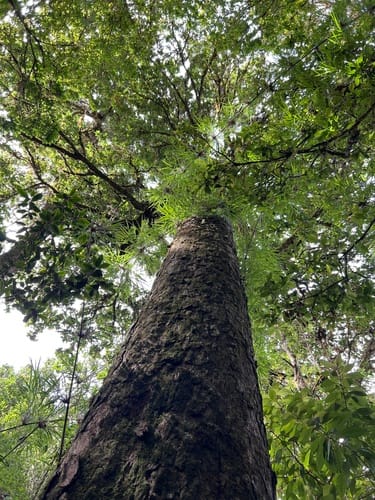
Whole tree and dark trunk
📷 (c) Rob Foster, some rights reserved (CC BY)(CC BY)
View source ↗Field ID sign (Roble Negro)
📷 (c) Rob Foster, some rights reserved (CC BY)(CC BY)
View source ↗Bark and leaves
📷 (c) Trevor Van Loon, some rights reserved (CC BY)(CC BY)
View source ↗Leaf underside and acorn
📷 (c) kiorone, some rights reserved (CC BY-NC)(CC BY-NC)
View source ↗Immature acorn with cupule
📷 (c) kiorone, some rights reserved (CC BY-NC)(CC BY-NC)
View source ↗Ripening acorn
📷 (c) Nate Hartley, some rights reserved (CC BY-NC)(CC BY-NC)
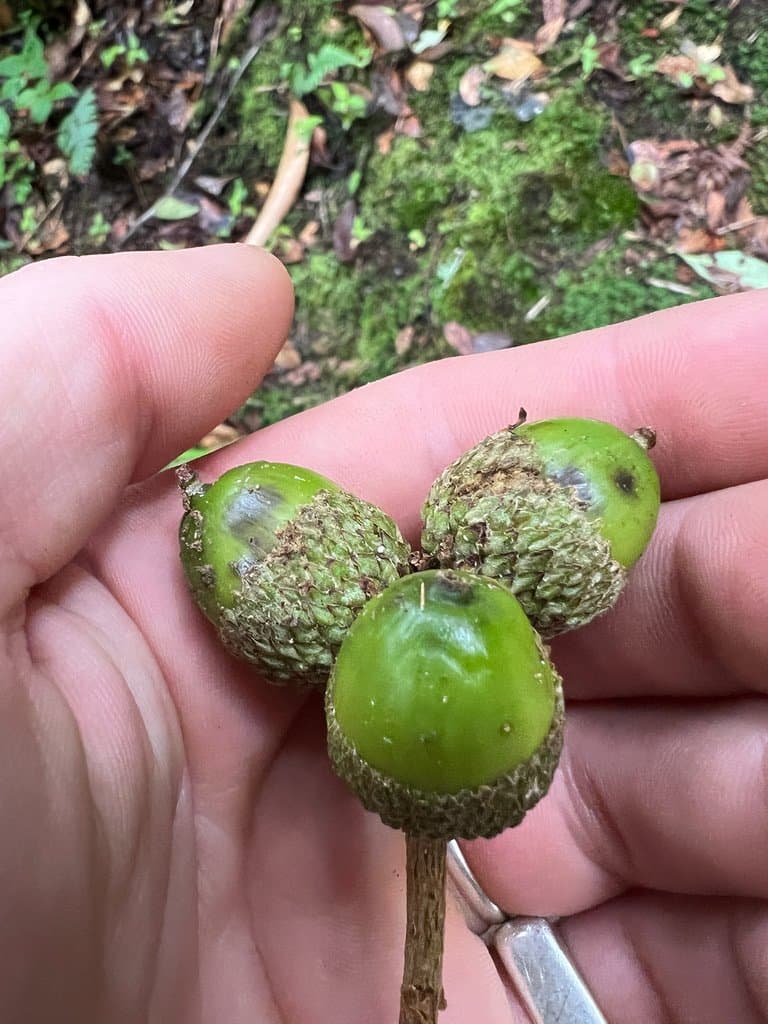
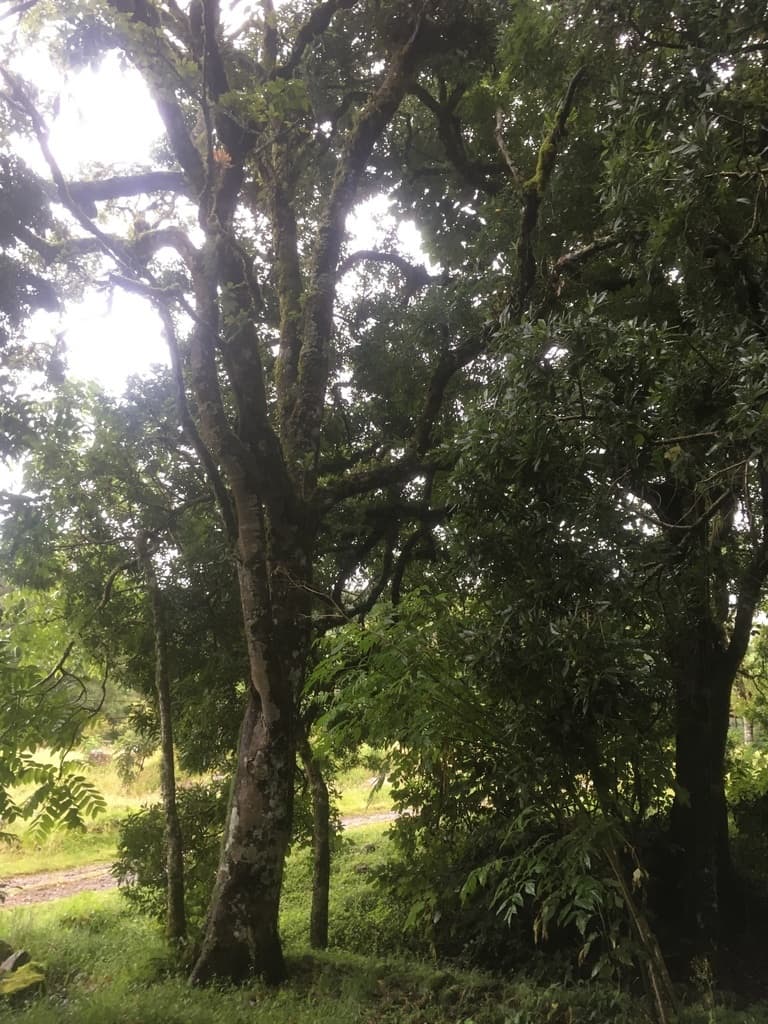
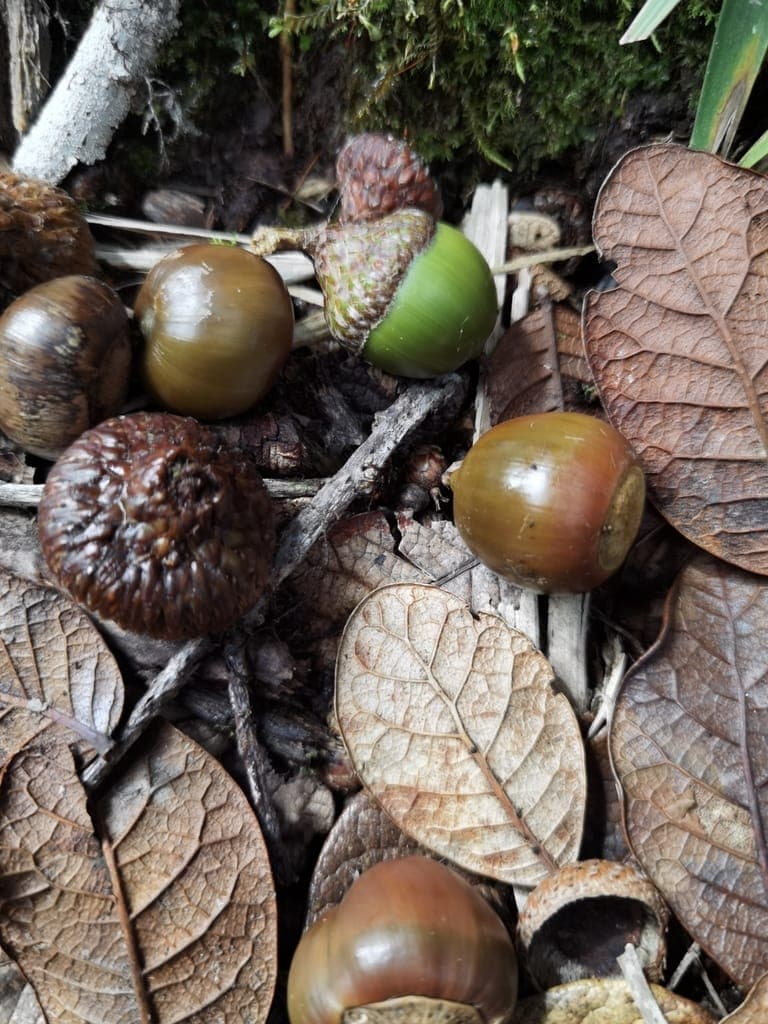
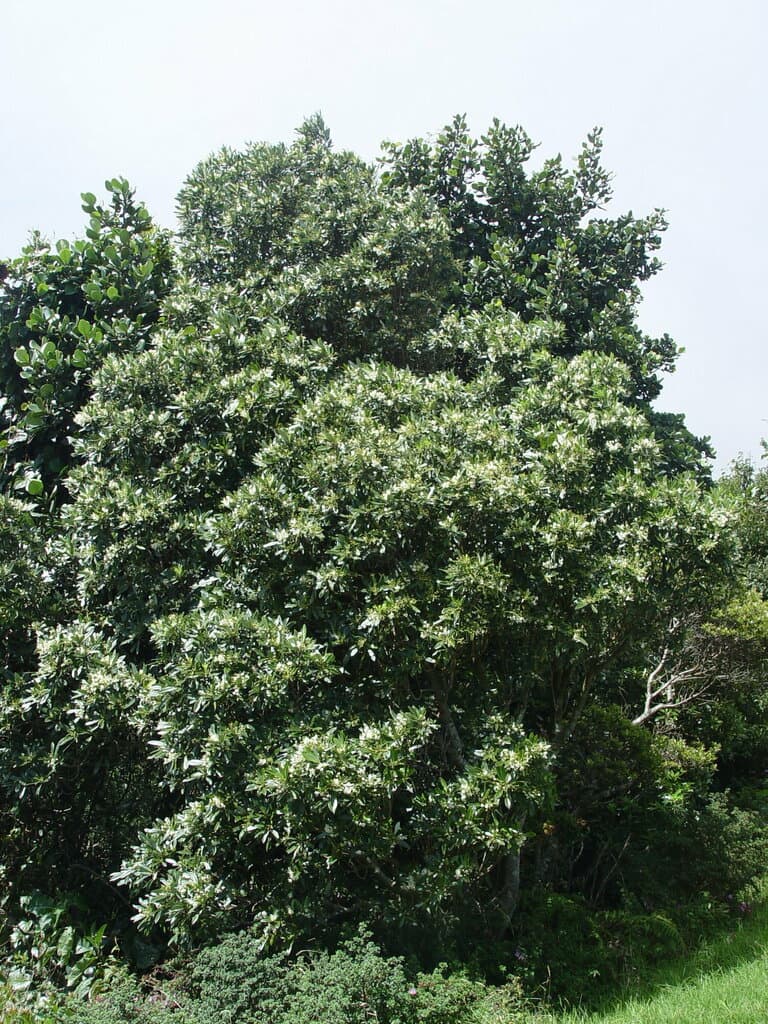
View source ↗Photos sourced from iNaturalist's community science database, all from Costa Rica observations (whole tree, trunk/bark, leaves, and acorns at different maturity stages). One image documents a physical field interpretive sign — found alongside a wild specimen — that independently confirms the species identity, the "Roble Negro" common name, and its status as the dominant tree of Costa Rica's high-montane cloud forest. This atlas was not able to source a dedicated flower/catkin photograph at time of publication. Browse all Roble de Altura observations in Costa Rica →↗ (82 total, research-grade). If you have additional quality images — flowering catkins in particular — please contribute through our photo submission page.
Taxonomy
This atlas documents four trees whose Spanish names include the word "roble" (oak). Keeping them straight matters for accuracy:
Roble de Altura and Chicalaba both occur in Talamanca's oak forests and can co-occur regionally, but they are ecologically distinct: Roble de Altura dominates the highest, coldest belt (often above 2,300 m, into páramo-edge habitat), while Chicalaba occupies a lower, broader band (roughly 1,000-2,400 m) and is best known for its record-setting acorn size — a feature Roble de Altura does not share.
Common Names by Region
No indigenous-language name for this species was identified in the sources consulted for this page (POWO, GBIF, IUCN, the Morton Arboretum's 2024 Mesoamerican oak conservation gap analysis, International Oak Society, Trees and Shrubs Online, academic literature). If a Bribrí, Cabécar, or other indigenous name for Roble de Altura exists, it has not yet been documented here and would require review under this atlas's indigenous knowledge governance policy before addition.
Etymology and Taxonomic Notes
- Genus Quercus: the classical Latin name for oak.
- Species epithet costaricensis: Latin, "of/from Costa Rica" — the species was described from a specimen collected on Volcán Irazú.
- Authority: Danish botanist Frederik Michael Liebmann, who published the species in Oversigt over det Kongelige Danske Videnskabernes Selskabs Forhandlinger 1854: 184 (1854).
- Placement: section Lobatae (the "red oak" group) within genus Quercus, per GBIF and Plants of the World Online (Kew).
- Synonyms recognized by GBIF/POWO include Quercus irazuensis Kuntze and Quercus endresii Trel. — both reflecting early collections from the same Costa Rican highland populations before consolidation under Q. costaricensis.
- Close relative in the same forest: Roble de Altura is frequently found growing alongside Quercus copeyensis (also called Q. bumelioides by some authorities — the two names are treated as synonymous by some sources and as distinct by others) in Costa Rica's upper montane oak forest, and the Morton Arboretum's 2024 gap analysis notes it is "often in association with Q. bumelioides" specifically in páramo-adjacent stands.
Geographic Distribution
Geographic Distribution
Roble de Altura's confirmed native range is Costa Rica and just across the border into western Panama — one of the most range-restricted oaks in Mesoamerica. Some older secondary sources (including a widely mirrored Wikipedia summary) list Honduras as part of the range, but this atlas found that authoritative primary sources on Central American oaks attribute Honduran occurrence records to historical misidentification; POWO's own distribution data includes Honduras, but the 2024 Morton Arboretum gap analysis — based on a direct occurrence-point mapping exercise — describes the species as "distributed in Costa Rica and just over the border into western Panama" only. This atlas follows the more conservative, occurrence-mapped range.
Where Roble de Altura Grows in Costa Rica
Confirmed habitat (Good et al., 2024; Kappelle, 2006; Morales, 2010):
Elevation: Sources converge closely on a high-elevation band. The Morton Arboretum's 2024 gap analysis (citing Kappelle, 2006 and Morales, 2010) gives 2,300-3,600 m; Trees and Shrubs Online (Royal Botanic Garden Edinburgh) gives 2,000-3,500 m. This atlas uses 2,000-3,600 m to reflect the full cited range — either figure confirms Roble de Altura as Costa Rica's highest-growing oak.
Costa Rica's montane oak forest ecoregion — the Talamanca and Central Volcanic highlands, roughly 2,000 m and above — was, prior to this session, the single most under-covered ecoregion in this atlas: none of the existing 175 species had a documented minimum elevation of 2,000 m or higher. Roble de Altura and its companion page, Chicalaba (Quercus insignis), are the first two pages in the atlas to profile named, species-level highland oaks reaching into this zone. Roble de Altura in particular reaches the highest elevation of any species yet documented here.
Habitat
Roble de Altura is the defining canopy tree of Costa Rica's upper montane forest — the country's coldest, mossiest, and most fog-immersed forest type, sitting directly below the true páramo zone. The Morton Arboretum's 2024 conservation gap analysis found that 63.7% of the species' wild occurrence points fall within the "cool temperate rain forest" Holdridge life zone, with most of the remainder in "warm temperate wet forest" (22.6%) — consistent with a species adapted to persistently cool, cloud-wrapped conditions. Individual trees above 3,000 m tend to be smaller (typically under 25 m) with twisted branches and denser, smaller leaves, an adaptation to the more exposed, wind-affected conditions near the forest's upper elevational limit (Kappelle, 2006).
Unusually for a threatened tropical tree, Roble de Altura's habitat is exceptionally well protected: the Morton Arboretum's spatial analysis found that 91% of its inferred native range falls within protected areas, including the Cordillera Volcánica Central (a UNESCO Man and the Biosphere Reserve) and the Talamanca peatlands (a Ramsar wetland site). This gives Roble de Altura the highest in-situ conservation score (94 out of 100) of any threatened Mesoamerican oak assessed in that study — a genuinely good-news data point that stands in contrast to many of this atlas's other Vulnerable and Endangered species.
Botanical Description
How to Identify
Elevation is the single best clue: if you are above roughly 2,300 m in Talamanca or the Central Volcanic highlands and looking at a large, dark-barked, canopy-dominant oak, it is very likely Roble de Altura. Look for very dark, almost black bark (the source of "Roble Negro"), leathery dark-green leaves with a woolly light-brown underside, and — where available — small, round acorns with a shallow, scaly cap.
Ecological Role
Roble de Altura is the dominant canopy species of Costa Rica's upper montane oak forest — a role confirmed directly in the field: the interpretive sign photographed for this page's gallery describes it as "el árbol dominante del bosque de neblina de alta montaña" (the dominant tree of the high-montane cloud forest). As with the country's other highland oaks, mature trees carry heavy epiphyte loads (mosses, ferns, and other plants that grow on the trunk and branches), and the canopy's fog-stripping capacity — physically capturing moisture from passing clouds — helps sustain the hydrology of the ecosystems below it.
Acorns, Squirrels, and an Unusual Seed Trait
Core Habitat for the Resplendent Quetzal
Uses and Applications
The Morton Arboretum's 2024 conservation gap analysis explicitly states that wild harvesting of Roble de Altura for timber, firewood, and charcoal is "not currently a major threat, since trees at lower elevations are primarily used instead." The uses documented below reflect this — largely historical, small-scale, or conservation-oriented rather than a current commercial trade.
Historic Timber Use
Trees and Shrubs Online describes the wood as "hard, heavy, dark cream-colored, somewhat pinkish when exposed," noting it "can present cracks and warps in the grain" and was historically used in carpentry for furniture and posts. The same source and the Morton Arboretum's 2024 gap analysis both note that in the Talamanca range, wood is still occasionally salvaged from old, already-cut stumps for local construction — but neither source describes this as an active commercial harvest of living trees, and the Morton Arboretum report explicitly names wild harvesting as a non-major threat today specifically because lower-elevation, more accessible oak species are used instead.
Conservation and Research Value
The clearest current "use" of Roble de Altura is conservation science itself. The Instituto Tecnológico de Costa Rica (TEC) operates a nursery within Parque Nacional Volcán Irazú that has collected and germinated Roble de Altura seed, with trees from that program planted back into the park; the Morton Arboretum's 2024 report describes this program as active, though with low plant production. The species has also been the subject of dedicated academic research on genetic diversity (Rodríguez-Correa et al., 2018), acorn germination and seedling morphology (Gutiérrez-Soto et al., 2021), and mycorrhizal fungal-tree-soil interactions (Holste et al., 2016) — a notably deeper research base than many of this atlas's other highland species.
Sources: Trees and Shrubs Online — Quercus costaricensis↗, Morton Arboretum — Conservation Gap Analysis of Native Mesoamerican Oaks, Quercus costaricensis species profile (2024)↗
Cultural Significance
This atlas found little independently sourced material specifically documenting Costa Rican cultural or ceremonial significance for Roble de Altura as distinct from Costa Rica's other highland oaks. Rather than extend this section with plausible-sounding but unverified claims, it is kept short and limited to what is source-backed.
Costa Rica's high-elevation oak-cloud forests carry substantial cultural and national-identity weight as a habitat type: they are the setting most associated with the Resplendent Quetzal, a bird of deep significance across Mesoamerica, and with destinations like San Gerardo de Dota and Los Quetzales National Park that are genuine points of pride in Costa Rican ecotourism and conservation identity. As the dominant tree of this forest type — confirmed in the field by the interpretive signage photographed for this page — Roble de Altura shares directly in that broader cultural association, even though this atlas did not find species-specific ceremonial, culinary, or folkloric documentation naming Quercus costaricensis individually in the Costa Rican literature consulted.
No indigenous name, use, or narrative for this species was identified during research for this page. Per this atlas's governance policy, any future indigenous-knowledge content about Roble de Altura would need to go through the consent and review process described in Indigenous Knowledge Governance before being added — it is intentionally absent here, not merely unresearched.
Safety
Roble de Altura carries the same general safety profile as oaks generally: low-level tannin content in acorns and leaves, no skin-contact hazard, and a moderate wind-pollinated allergen risk. Its remote, high-elevation habitat further limits everyday human exposure compared to lowland or urban-planted oaks.
Toxicity
Roble de Altura's acorns and foliage, like those of oaks generally, contain tannins that hydrolyze into compounds such as gallic acid. In humans, casual contact or accidental tasting is not a medical emergency; the strong bitterness of raw tannins discourages overconsumption, and acorns are inedible raw in any quantity without processing (soaking and cooking) to leach tannins out — a preparation method documented for other oak species' acorns used as human food, though not confirmed here as a specific Costa Rican practice for this species.
Allergen Risk
Oaks are wind-pollinated, and their fine pollen is a well-documented seasonal allergy trigger in oak-forest regions generally. Because Roble de Altura grows in remote, high-elevation cloud forest and páramo-edge habitat rather than near population centers, everyday pollen exposure for most Costa Ricans is low; the risk is more relevant to field researchers, park staff, and visitors spending extended time in oak-cloud-forest habitat during the February-April flowering window.
Pet and Wildlife Safety
Veterinary sources document that acorns from oak species generally can cause gastrointestinal upset in dogs (vomiting, diarrhea, abdominal pain) if eaten in quantity, and that cattle and horses grazing heavily on acorns or wilted oak leaves have, in some studied oak species, developed tannin-related kidney and liver injury. No case reports specific to Quercus costaricensis were located during this review — the above reflects general oak-family veterinary literature, applied here as a precaution rather than a species-specific finding. Wild animals adapted to high-elevation oak-cloud forest, including squirrels and acorn-dependent birds, safely rely on acorns as a normal food source.
Sources: PMC — Suspected acorn (Quercus petraea) toxicity in a dog↗, Trees and Shrubs Online — Quercus costaricensis↗
Conservation Status
Population trend: Stable to unknown (regeneration not directly monitored)
Quercus costaricensis was assessed globally as Vulnerable by the IUCN Red List in 2020 (assessors: S. Alvarez-Clare, M. Westwood, and N.A. Zamora; assessment ID 30661; DOI: 10.2305/IUCN.UK.2020-3.RLTS.T30661A148503182.en), under criteria A2cd; B1ab(ii,iii)+2ab(ii,iii) — reflecting an inferred population decline combined with a restricted geographic range and continuing habitat decline. This supersedes an earlier 2018 assessment sometimes cited elsewhere as "Near Threatened"; this atlas follows the most recent official assessment. GBIF's own live IUCN-status lookup for this species independently confirms the current category as Vulnerable (VU). This atlas did not find a Costa Rica-specific national (SINAC) conservation listing for this species — a direct check of the text of Decreto N°25700-MINAE (Costa Rica's national logging-ban/veda list for endangered timber species) found no Quercus species listed at all (the only conifer-family relative listed is Podocarpus); no SINAC national status is asserted here.
Quercus costaricensis is not listed on any CITES Appendix. This atlas checked independently rather than assuming CITES status transfers within the genus: the only Quercus species with any CITES listing found in current or historical Appendices is Quercus mongolica (Mongolian oak), listed on Appendix III by the Russian Federation only, and covering only that species' Russian population — entirely unrelated to this Costa Rican species. No Mesoamerican or Neotropical oak, including Q. costaricensis, appears on any CITES Appendix.
Documented Threats
- Wildfire. The Morton Arboretum's 2024 gap analysis identifies anthropogenic wildfire — set mainly to manage livestock grazing in páramo ecosystems — as "one of the greatest threats" to this species (Alvarez-Clare et al., 2020). More than 4,000 hectares of oak forest burned in the Chirripó area of La Amistad International Park between 1975 and 2005 (Esquivel-Garrote, 2010); a 1992 fire at Cerro Asunción affected roughly 40 hectares, and several fires have been reported in Irazú Volcano National Park within the past six years.
- Climate change. As a high-elevation specialist, Roble de Altura is described as "especially vulnerable to a changing climate." Modeling by Good et al. (2024) projects the species' cool temperate rainforest habitat will shrink by an average of 67% by 2061-2080 relative to current conditions. Independent ecological niche modeling by Quesada-Quirós et al. (2016), a study published in Costa Rica's own Kurú (Revista Forestal Mesoamericana), found habitat-area declines ranging from -5.5% to -55.5% by 2050-2070 depending on the climate scenario used.
- Invasive pest pressure. Ongoing research is investigating an invasive weevil (family Curculionidae) affecting oaks across the region, including this species — described as an active area of study rather than a fully quantified threat.
- Population isolation. Natural barriers (the Cartago valley) combined with historical deforestation have isolated the Poás/Irazú volcano populations from the Cerro de la Muerte/Chirripó populations, though the Morton Arboretum's report notes this is not currently considered a major threat since individual populations tend to be large.
- Legacy infrastructure impact. Construction of the Inter-American Highway (completed 1943), which crosses the Talamanca range at elevations up to 3,300 m, caused considerable deforestation at the time; this impact has substantially decreased since and is not considered an ongoing threat.
Conservation Strengths
Unusually among this atlas's threatened species, Roble de Altura's conservation picture includes genuinely strong points:
- Exceptional habitat protection. 91% of the species' inferred native range falls within protected areas, including the Cordillera Volcánica Central (a UNESCO Man and the Biosphere Reserve) and the Turberas de Talamanca (a Ramsar wetland site) — giving it the highest in-situ conservation score (94/100) of any threatened Mesoamerican oak evaluated in the Morton Arboretum's 2024 study.
- Active nursery and reintroduction program. The Instituto Tecnológico de Costa Rica operates a seed-collection and germination nursery within Parque Nacional Volcán Irazú, with propagated trees already planted back into the park.
- A real research base. Dedicated academic studies exist on this species' population genetics (Rodríguez-Correa et al., 2018), germination biology (Gutiérrez-Soto et al., 2021), and mycorrhizal ecology (Holste et al., 2016) — deeper species-specific research than many other Costa Rican highland trees.
- Priority gaps that remain. The same 2024 report identifies population monitoring (to determine whether natural regeneration is occurring), expanded propagation, and — given the species' climate vulnerability — assisted migration as the highest-priority unmet conservation actions.
Sources: IUCN Red List assessment (Alvarez-Clare, Westwood & Zamora, 2020)↗, GBIF species distribution record↗, Morton Arboretum — Conservation Gap Analysis of Native Mesoamerican Oaks, Quercus costaricensis species profile (2024)↗, Decreto Ejecutivo N°25700-MINAE (Costa Rica national veda/logging-ban list)↗
External Resources
Global occurrence and distribution data, including the IUCN-sourced Vulnerable status
GBIF
Kew's authoritative taxonomic record, including synonymy
Kew Science
Official 2020 conservation assessment (Alvarez-Clare, Westwood & Zamora)
IUCN
82+ Costa Rica observations and community photos
iNaturalist
Detailed botanical description (Royal Botanic Garden Edinburgh / International Dendrology Society)
Trees and Shrubs Online
2024 species profile within the Conservation Gap Analysis of Native Mesoamerican Oaks
The Morton Arboretum / Global Conservation Consortium for Oak
References
📚 Scientific References & Further Reading
Alvarez-Clare, S., Westwood, M. and Zamora, N.A. (2020). Quercus costaricensis. The IUCN Red List of Threatened Species 2020: e.T30661A148503182. IUCN Red List of Threatened Species. doi:10.2305/IUCN.UK.2020-3.RLTS.T30661A148503182.en
Good, K., Acosta-Vargas, L.G., and Alvarez-Clare, S. (2024). Quercus costaricensis Liebm. In Good, K., Coombes, A.J., Valencia-A, S., Rodríguez-Acosta, M., Beckman Bruns, E., and Alvarez-Clare, S., Conservation Gap Analysis of Native Mesoamerican Oaks (pp. 109-116). Lisle, IL: The Morton Arboretum
Liebmann, F.M. (1854). Quercus costaricensis. Oversigt over det Kongelige Danske Videnskabernes Selskabs Forhandlinger 1854: 184
Royal Botanic Garden Edinburgh / International Dendrology Society (2026). Quercus costaricensis — Trees and Shrubs Online. treesandshrubsonline.org
Stevens, G.C. and Matthew, K.K. (1989). Quercus costaricensis Liebm. and the problem of multi-seeded acorns. Revista de Biología Tropical 37(1): 63-67
Rodríguez-Correa, H., Oyama, K., Quesada, M., Fuchs, E.J., and González-Rodríguez, A. (2018). Contrasting Patterns of Population History and Seed-mediated Gene Flow in Two Endemic Costa Rican Oak Species. Journal of Heredity 109(5): 530-542. doi:10.1093/jhered/esy011
Quesada-Quirós, M., Acosta-Vargas, L.G., Arias-Aguilar, D., and Rodríguez-González, A. (2016). Modelación de nichos ecológicos basado en tres escenarios de cambio climático para cinco especies de plantas en zonas altas de Costa Rica. Revista Forestal Mesoamericana Kurú 14(34): 01-12. doi:10.18845/rfmk.v14i34.2991
Roble de Altura grows higher than any other oak in Costa Rica, forming the dark-barked, fog-wrapped canopy of the country's coldest forests — the same forests that shelter the Resplendent Quetzal at Los Quetzales National Park. It is Vulnerable, mainly to wildfire and a warming climate, but it is also unusually well protected: 91% of its range sits inside conservation areas, and Costa Rican researchers and a national nursery program are actively working on its future. This page is a starting point, not a finished one: real field photography of its flowers, a confirmed Costa Rican national conservation listing, and a careful, consent-based check for any indigenous name or use are all still open work.
🌳 ¡Pura Vida!
Safety Information Disclaimer
Safety information is provided for educational purposes only. Individual reactions may vary significantly based on age, health status, amount of exposure, and individual sensitivity. Always supervise children around plants. Consult a medical professional or certified arborist for specific concerns. The Costa Rica Tree Atlas is not liable for injuries or damages resulting from interaction with trees described in this guide.
• Always supervise children around plants
• Consult medical professional if unsure
• Seek immediate medical attention if poisoning occurs
Information compiled from authoritative toxicology sources, scientific literature, and medical case reports.
Help improve this page
Know something about this tree? Share local knowledge, suggest a correction, or submit a photo to improve this guide for everyone.