Espavel
Anacardium excelsum
Quick facts
Native Region
Honduras to Ecuador and Brazil
Max Height
40-50 meters (130-165 feet)
Family
Anacardiaceae
Conservation
LC — Least Concern
Uses
Safety Information
Toxicity Details
Member of Anacardiaceae family (cashew, mango, poison ivy). Nuts must be roasted before consumption to destroy urushiol compounds and other irritants. Raw nuts can cause mouth irritation and gastrointestinal upset. When properly roasted, nuts are safe and nutritious. Not as dangerous as commercial cashew shells but should be treated with caution.
Skin Contact Risks
Contains urushiol compounds in bark, sap, and raw nut shells - the same irritant found in poison ivy, cashews, and mangoes. Can cause contact dermatitis (red, itchy rash) in sensitive individuals. Most people can handle the tree without reaction. Those allergic to cashews, mangoes, or poison ivy should be cautious. Latex/sap may cause skin irritation. Wash skin if contact occurs. Serious reactions are rare but possible in highly sensitive individuals.
Allergenic Properties
Individuals with cashew or mango allergies may react to Espavel due to shared family compounds. Cross-reactivity possible with other Anacardiaceae. Urushiol in sap can cause allergic contact dermatitis. Most people tolerate casual contact without issue.
Structural Hazards
Large emergent tree up to 50 meters tall. Branches can fall from great height, especially during storms. Massive buttress roots create trip hazards near base. Consider placement carefully in public areas.
Wildlife & Pet Risks
Safe for wildlife - important food source for many species. Roasted nuts safe for humans. Raw nuts may cause mild stomach upset in pets if consumed in quantity but not seriously toxic.
Season
Flowering
Jan, Nov-Dec
Fruiting
Jan-Mar, Dec
How to identify
Espavel
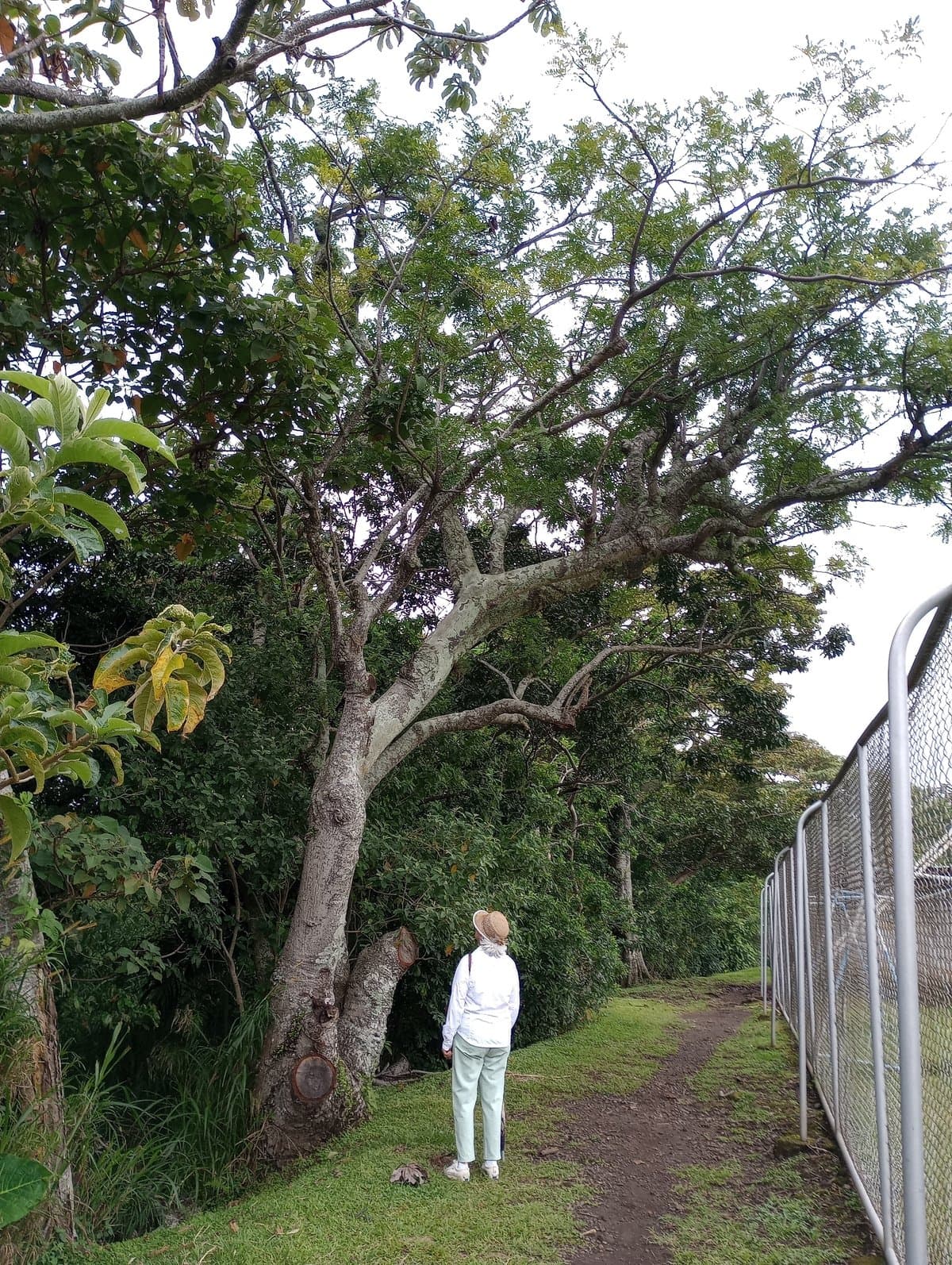
The Espavel (Anacardium excelsum), also known as Wild Cashew or Caracolí, is one of Costa Rica's most impressive riparian trees. Towering up to 50 meters with massive buttress roots, this close relative of the commercial cashew produces edible nuts that are a crucial food source for wildlife throughout the tropical lowlands. Its preference for riverbanks makes it a keystone species for watershed health.
Quick Reference
iNaturalist Observations
Community-powered species data
📸 Photo Gallery
Whole tree
📷 (c) Randall Jiménez, some rights reserved (CC BY-NC)(CC BY-NC)
View source ↗Leaves
📷 (c) Randall Jiménez, some rights reserved (CC BY-NC)(CC BY-NC)
View source ↗Whole tree
📷 no rights reserved(CC0)
View source ↗Leaves
📷 no rights reserved(CC0)
View source ↗Whole tree
📷 (c) Alli, some rights reserved (CC BY-NC)(CC BY-NC)
View source ↗Photos sourced from iNaturalist's community science database. Browse all observations →↗
Taxonomy & Classification
The Espavel belongs to the same genus as the commercial cashew (Anacardium occidentale). Both species share the distinctive fruit structure with the "cashew apple" (swollen fruit stalk) and the kidney-shaped nut. While the commercial cashew originated in northeastern Brazil, the Espavel evolved as a forest giant of Central American riparian zones.
Common Names
Physical Description
Overall Form
The Espavel is one of the largest deciduous trees in neotropical riparian forests. It is characterized by its immense size, dramatic buttress roots, and spreading crown that can shade enormous areas.
Distinctive Features
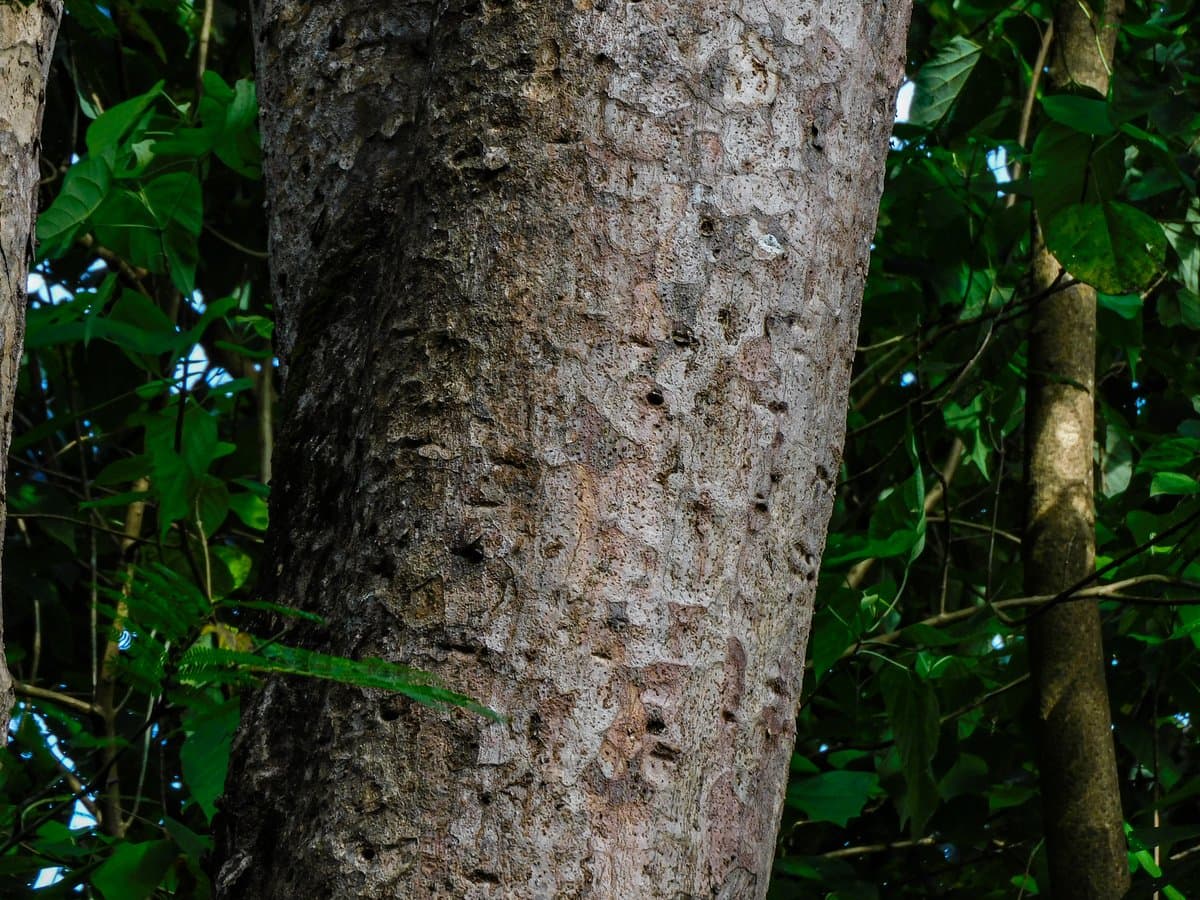
Trunk & Bark
- Bark: Gray to brown, smooth becoming slightly fissured
- Wood: Light, soft, not durable for construction
- Form: Single straight trunk to massive buttresses
- Buttresses: Spectacular, extending 3-5 m up trunk
- Latex: Contains irritating compounds (related to poison ivy)
Leaves
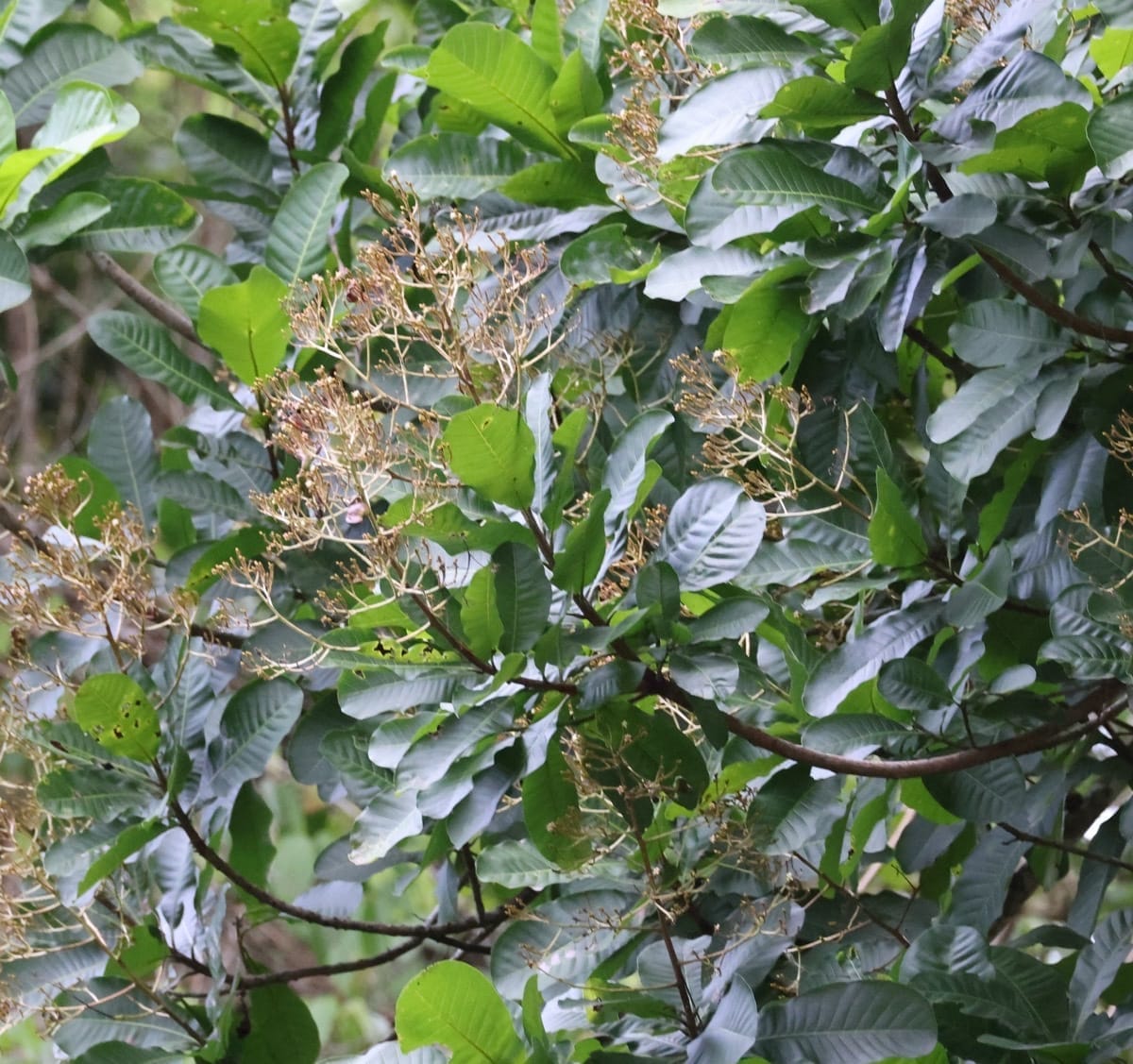
- Type: Simple, alternate
- Shape: Obovate to elliptic
- Size: 15-30 cm long, 8-15 cm wide
- Texture: Leathery, glossy above
- Margin: Entire (smooth edges)
- Timing: Briefly deciduous in dry season
Flowers
- Color: Greenish-white to pink
- Size: Small (5-8 mm)
- Arrangement: Large terminal panicles
- Season: November to January
- Fragrance: Sweet, attracts many pollinators
- Type: Both male and bisexual on same tree
Fruits & Seeds
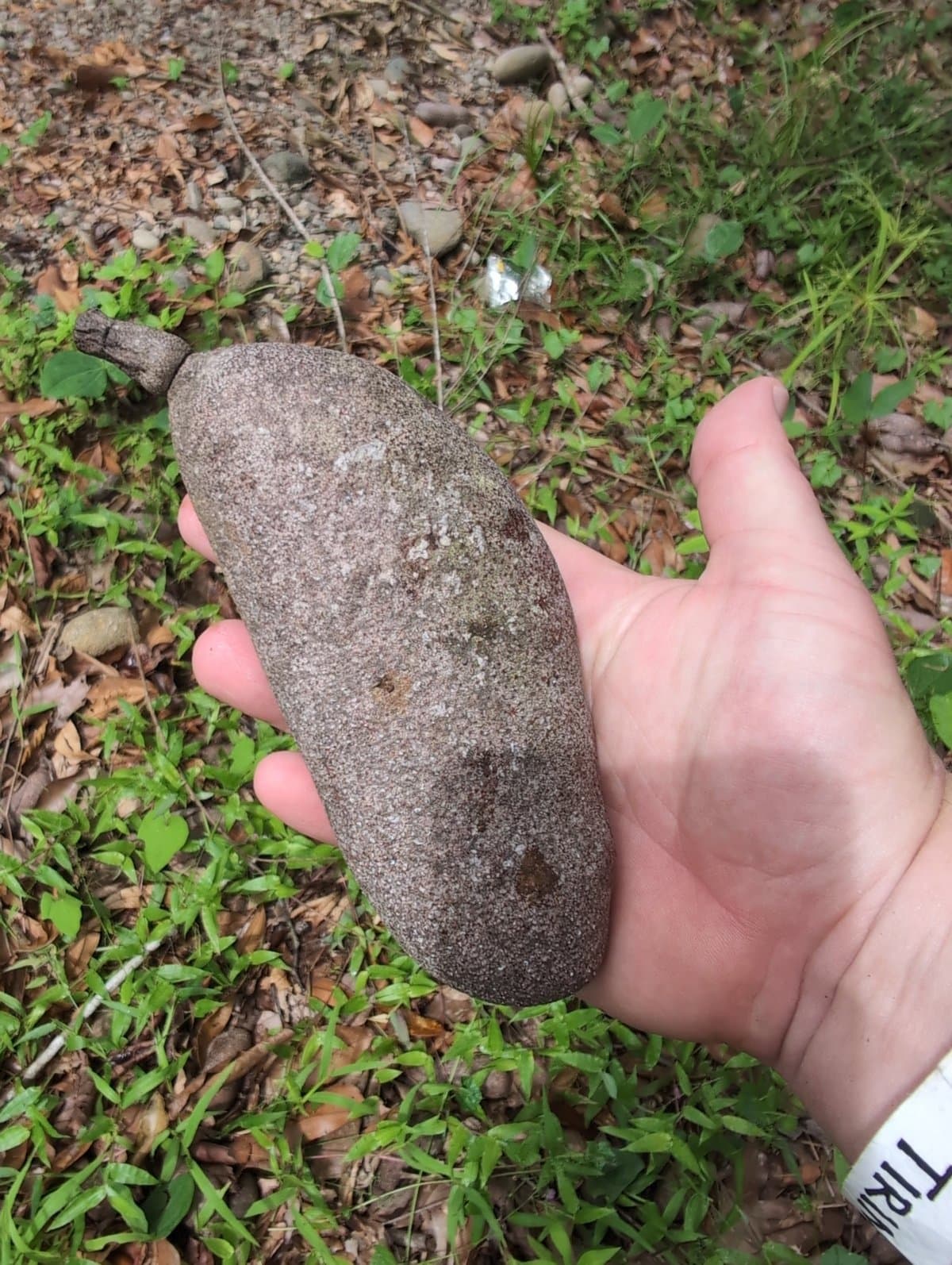
- Structure: Two-part (like cashew)
- Cashew Apple: Fleshy, yellow-orange, 5-8 cm
- Nut: Kidney-shaped, 2-3 cm, attached at base
- Edibility: Nut edible when roasted (raw contains urushiol)
- Season: December to March
- Dispersal: Mammals, especially agoutis and squirrels
Like all Anacardiaceae family members (cashew, mango, poison ivy), the Espavel contains urushiol compounds in its bark, leaves, and raw nuts. These can cause skin irritation in sensitive individuals. The nuts must be properly roasted to destroy these compounds before consumption.
Distribution & Habitat
Native Range
Geographic Distribution
Distribution in Costa Rica
The Espavel is found primarily in the lowland wet forests of both Pacific and Caribbean slopes, with a strong preference for areas near water. It is most abundant along rivers, streams, and in seasonally flooded forests.
Preferred Habitat
Ecological Significance
Riparian Keystone Species
The Espavel is a keystone species in riparian ecosystems. Its massive buttress roots stabilize riverbanks, preventing erosion. Its abundant fruit production during the dry season provides critical food for wildlife when other resources are scarce. The deep shade it casts helps keep streams cool for aquatic life.
Wildlife Interactions
Primary Seed Dispersers
- Agoutis: Cache nuts, primary dispersers
- Pacas: Major consumers and dispersers
- Squirrels: Eat and cache nuts
- White-faced Capuchins: Consume fruits and nuts
- Spider Monkeys: Major fruit consumers
- Scarlet Macaws: Consume unripe nuts
Other Wildlife
- Bats: Consume cashew apple portion
- Parrots: Feed on nuts
- Fish: Consume fallen fruits in flooded areas
- Coatis: Forage for fallen fruits
- Peccaries: Major consumers of fallen fruits
- Many birds: Utilize massive canopy for nesting
Ecosystem Services
Cultural & Economic Importance
Traditional Uses
The Wild Cashew Nut
While smaller than commercial cashews, Espavel nuts have been harvested by indigenous peoples and rural communities for millennia. The nuts must be carefully roasted to destroy the urushiol compounds in the shell. Properly prepared, they have a rich, slightly smoky flavor prized in traditional cuisine. The "cashew apple" is also edible and can be made into beverages.
Uses Table
Indigenous Knowledge
Conservation Status
Current Assessment
Conservation Status
Conservation Concerns
While globally Least Concern, Espavel populations have declined significantly in Costa Rica due to: - Riparian deforestation for agriculture - River channelization and development - Dam construction flooding habitat - Overharvest of large specimens for timber The species is increasingly protected through watershed conservation programs, but historical losses have been substantial.
How You Can Help
Cultivation & Propagation
Growing Espavel
Propagation Methods
From Seeds (Recommended)
- Collect fresh fruits (December-March)
- Remove fleshy covering immediately
- Plant within 2 weeks (short viability)
- Light soil coverage
- Keep moist; germination in 2-4 weeks
- Protect seedlings from direct sun initially
- Requires consistent moisture
Note on Handling
- Wear gloves when handling fresh fruits
- Urushiol present in covering
- Wash tools after use
Growing Conditions
Best Planting Locations
- Riverbanks and stream edges
- Floodplain restoration projects
- Large-scale watershed protection
- Not suitable for small gardens
- Requires room for buttress development
Identification Guide
How to Identify Espavel
Where to See Espavel in Costa Rica
External Resources
Community observations and photos
Taxonomic information and records
Agroforestry and conservation research
Global biodiversity occurrence data and distribution maps
Conservation status and species assessment
References
📚 Scientific References & Further Reading
Holdridge, L.R. & Poveda, L.J. (1975). Árboles de Costa Rica Vol. 1
Pennington, T.D. & Sarukhán, J. (2005). Árboles tropicales de México
Gentry, A.H. (1993). A Field Guide to the Families and Genera of Woody Plants of Northwest South America
Visit Costa Rica's lowland wet forests between December and March to see Espavel trees in their fruiting glory. The yellow-orange "cashew apples" are highly visible, and wildlife activity around fruiting trees is exceptional. Look for troops of capuchin monkeys, agoutis below the trees, and scarlet macaws feeding in the canopy. Tortuguero and Corcovado offer the best opportunities to see these magnificent giants in pristine riparian habitat.
Safety Information Disclaimer
Safety information is provided for educational purposes only. Individual reactions may vary significantly based on age, health status, amount of exposure, and individual sensitivity. Always supervise children around plants. Consult a medical professional or certified arborist for specific concerns. The Costa Rica Tree Atlas is not liable for injuries or damages resulting from interaction with trees described in this guide.
• Always supervise children around plants
• Consult medical professional if unsure
• Seek immediate medical attention if poisoning occurs
Information compiled from authoritative toxicology sources, scientific literature, and medical case reports.
Help improve this page
Know something about this tree? Share local knowledge, suggest a correction, or submit a photo to improve this guide for everyone.