Sotacaballo
Zygia longifolia
Quick facts
Native Region
Mexico to South America
Max Height
10-20 meters (33-65 feet)
Family
Fabaceae
Conservation
LC — Least Concern
Uses
Safety Information
Toxicity Details
No toxic parts. The tree is completely safe. The pulp around seeds is described as edible. Used in traditional medicine (anti-dandruff soaps, beverages), indicating general safety. No documented toxicity to humans or livestock. A safe member of the Fabaceae (legume) family.
Skin Contact Risks
No skin contact risk. Safe to touch and handle all parts of the tree.
Allergenic Properties
No significant allergen risk. Not a known pollen or contact allergen. Generally safe for sensitive individuals.
Season
Flowering
Mar-May
Fruiting
May-Jul
How to identify
Sotacaballo (Riverside Mimosa)
The Sotacaballo (Zygia longifolia) is one of the most recognizable trees in the Costa Rican landscape — a leaning sentinel along every river, stream, and creek from the Caribbean lowlands to the Central Valley. Its growth habit is unmistakable: trunks curving dramatically toward water at angles that seem to defy gravity, branches sweeping over the current like outstretched arms, and powder-puff flowers attracting clouds of bees and hummingbirds. As a nitrogen-fixing legume that stabilizes banks, shades streams, and feeds aquatic food webs with its leaf litter, the Sotacaballo is arguably the single most important tree species for the health of Costa Rica's freshwater ecosystems.
Quick Reference
iNaturalist Observations
Community-powered species data
📸 Photo Gallery
Whole tree
📷 (c) Randall Jiménez, some rights reserved (CC BY-NC)(CC BY-NC)
View source ↗Leaves
📷 (c) Randall Jiménez, some rights reserved (CC BY-NC)(CC BY-NC)
View source ↗Flowers
📷 (c) tanhar, some rights reserved (CC BY-NC)(CC BY-NC)
View source ↗Whole tree
📷 (c) kaibodhi, some rights reserved (CC BY-NC)(CC BY-NC)
View source ↗Leaves
📷 (c) Pablo Alejandro Montero Herrera, some rights reserved (CC BY-NC)(CC BY-NC)
View source ↗Photos sourced from iNaturalist community science database. View all observations →↗
Taxonomy and Classification
Taxonomic Context
Zygia longifolia belongs to the mimosoid clade of the legume family — the group that includes iconic tropical trees like Inga (guaba), Albizia, and Enterolobium (guanacaste). The genus Zygia was established by Patrick Browne in 1756, and the name derives from the Greek zygón ("yoke"), referring to the paired arrangement of leaflets. Recent molecular phylogenetic studies have shown that Zygia is closely related to Inga and sometimes embedded within it, raising the possibility that future revisions may merge these genera. However, for now Zygia is maintained as distinct based on its characteristic fruit dehiscence and stamen tube morphology [1].
The species epithet longifolia (Latin: "long-leaved") is somewhat misleading — the individual leaflets are not unusually long compared to related species, but the overall compound leaf can reach considerable length. The species was first formally described by Augustin Pyramus de Candolle.
The common name "Sotacaballo" has debated etymology. The most widely accepted explanation is that sota derives from "debajo de" (underneath) and caballo ("horse"), meaning "under the horse" — possibly because livestock traditionally sheltered beneath the tree's shade along river crossings. Alternative explanations suggest the name refers to the tree's habit of growing "below" other, taller trees, or that the arching branches resemble a horse's neck. It is also called "Suribio" in some regions of Costa Rica.
Common Names
Physical Description
Overall Form
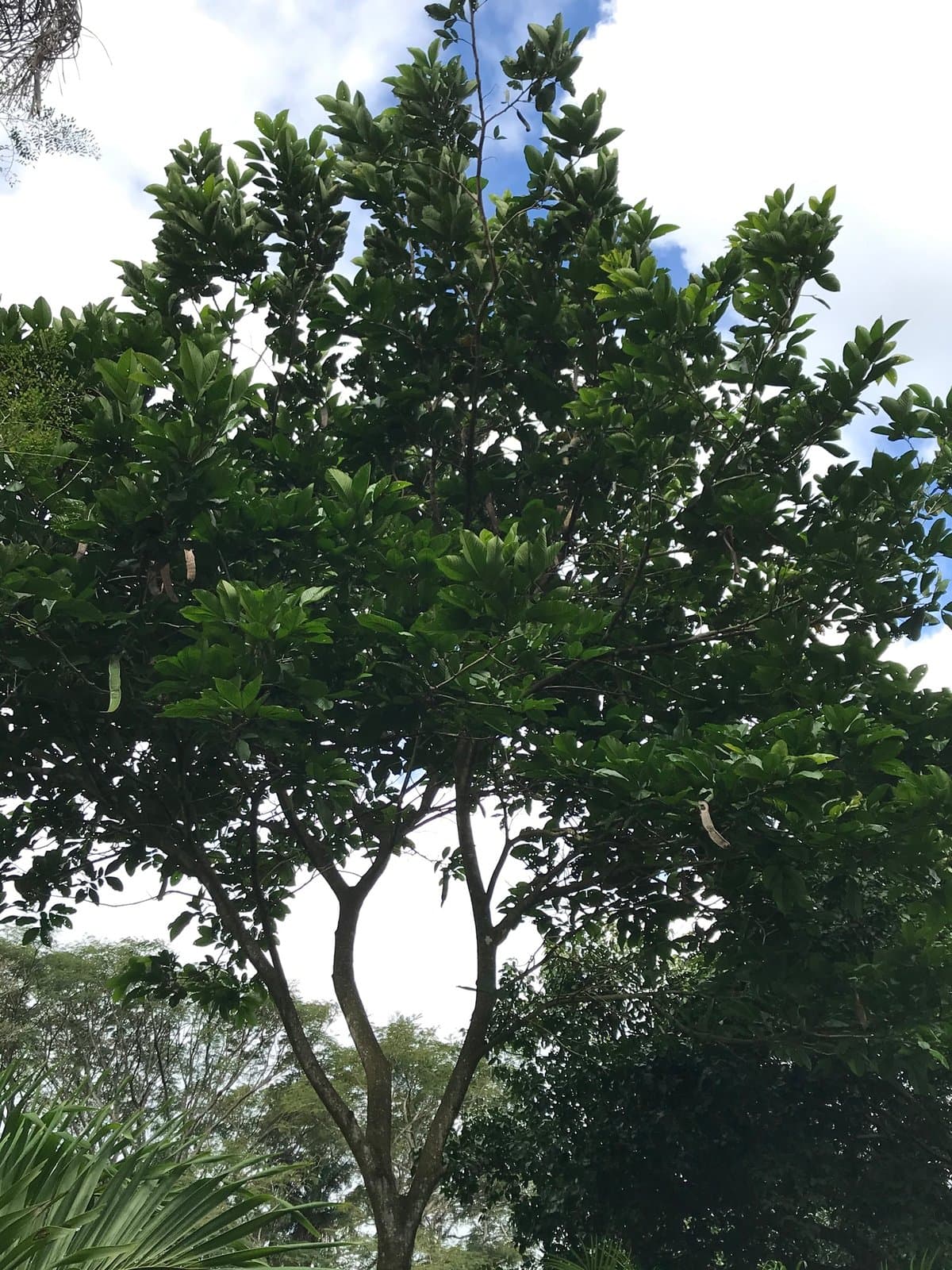
The Sotacaballo is a small to medium-sized evergreen tree with one of the most distinctive growth habits in the Neotropical flora. It leans — almost invariably — toward water, its trunk curving from the bank at angles of 30–60° and its branches sweeping horizontally over the river surface. Multiple-stemmed specimens are common, with 2–4 trunks forking near the base and arching independently over the stream, creating a natural archway. The crown is broad, irregularly spreading, and extends primarily in one direction — toward the open space over the water course.
This phototropic lean is not a defect or random occurrence: it is a consistent, species-level growth strategy. Zygia longifolia is an obligate heliophyte (sun-requiring) that exploits the guaranteed light gap provided by rivers and streams. By leaning over water, it accesses unobstructed sunlight that would otherwise be monopolized by taller canopy trees on the bank [2].
Distinctive Features
Leaves
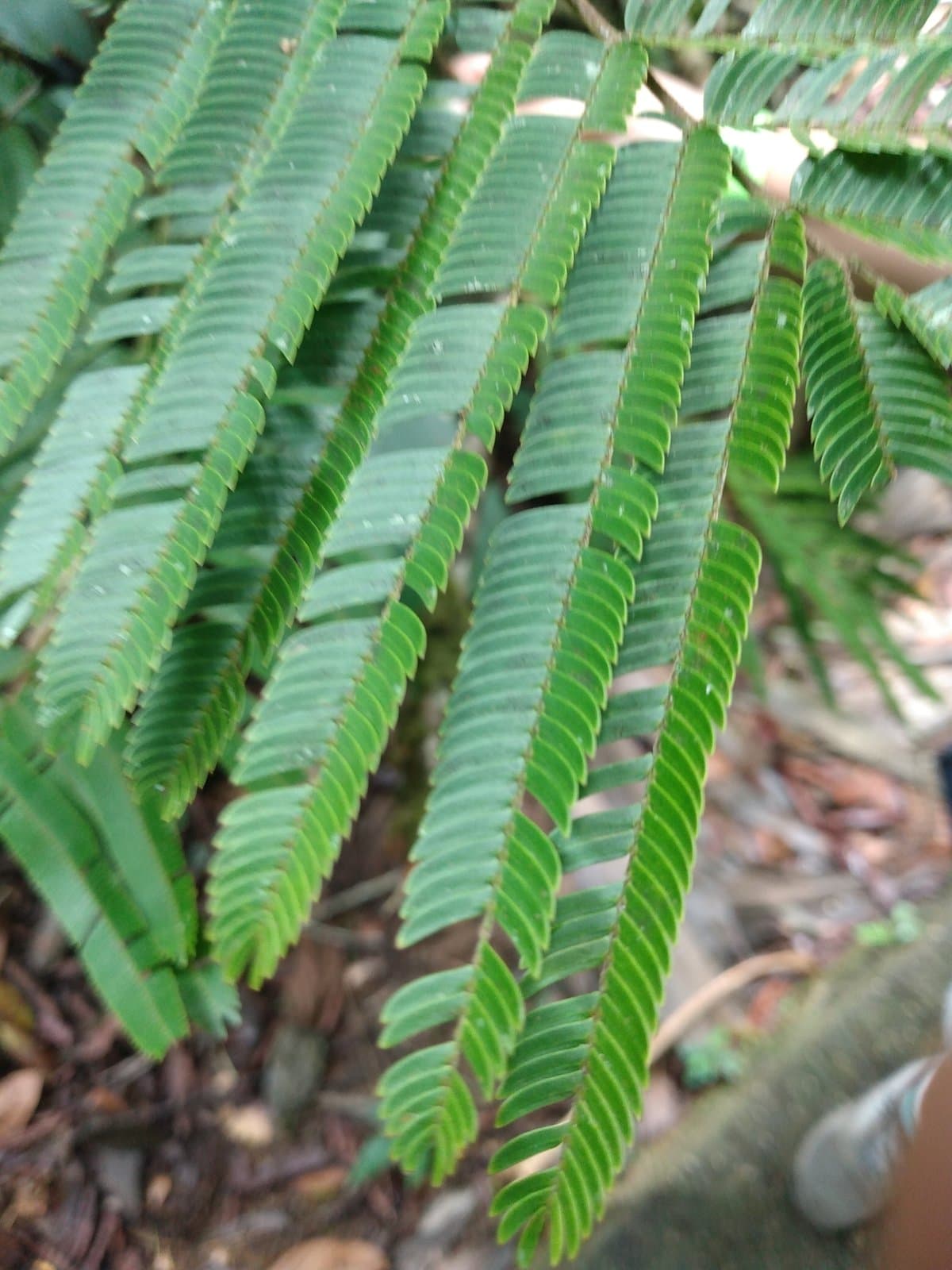
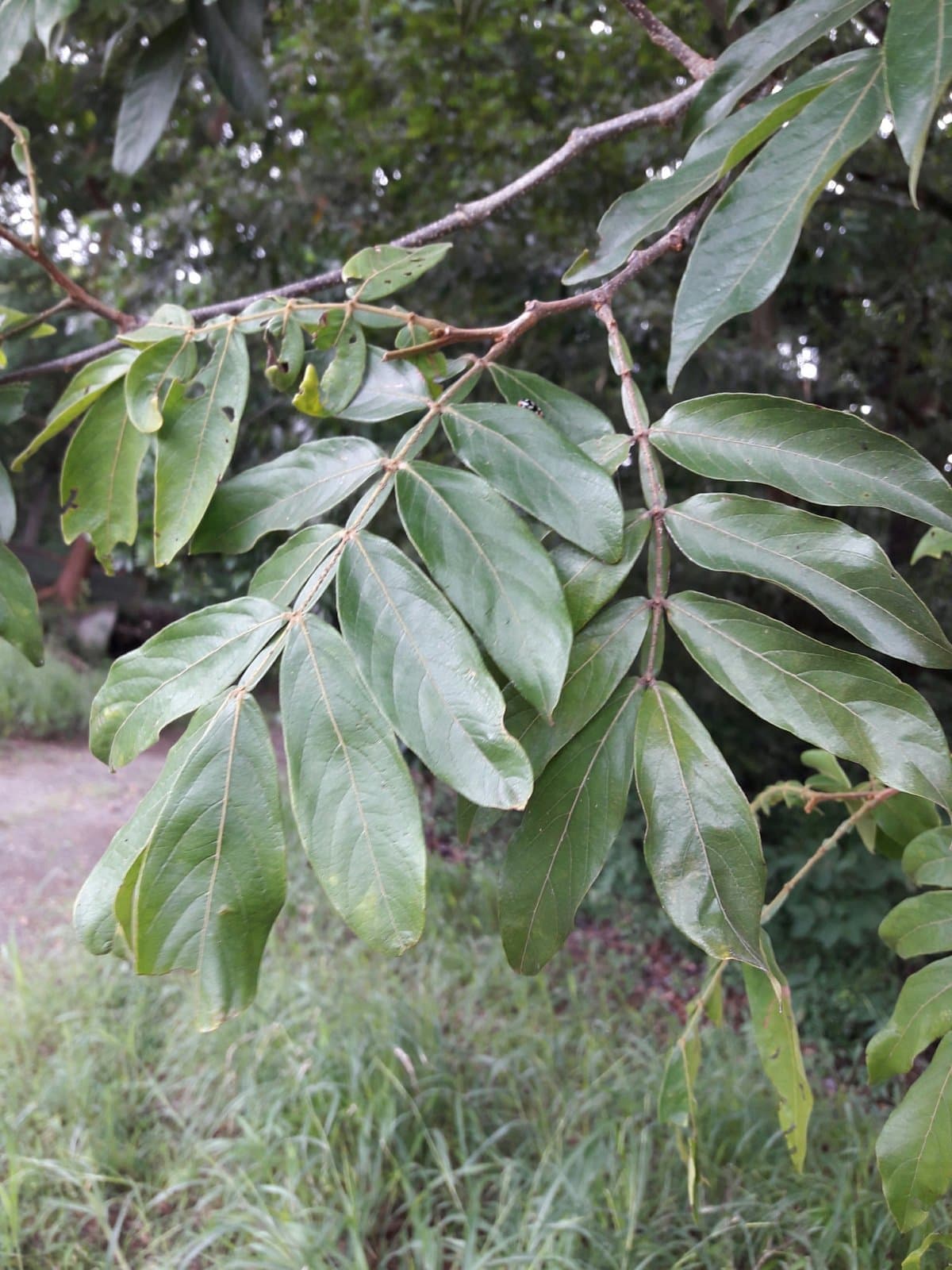
- Type: Bipinnately compound (twice-divided)
- Pinnae: 2–4 pairs per leaf
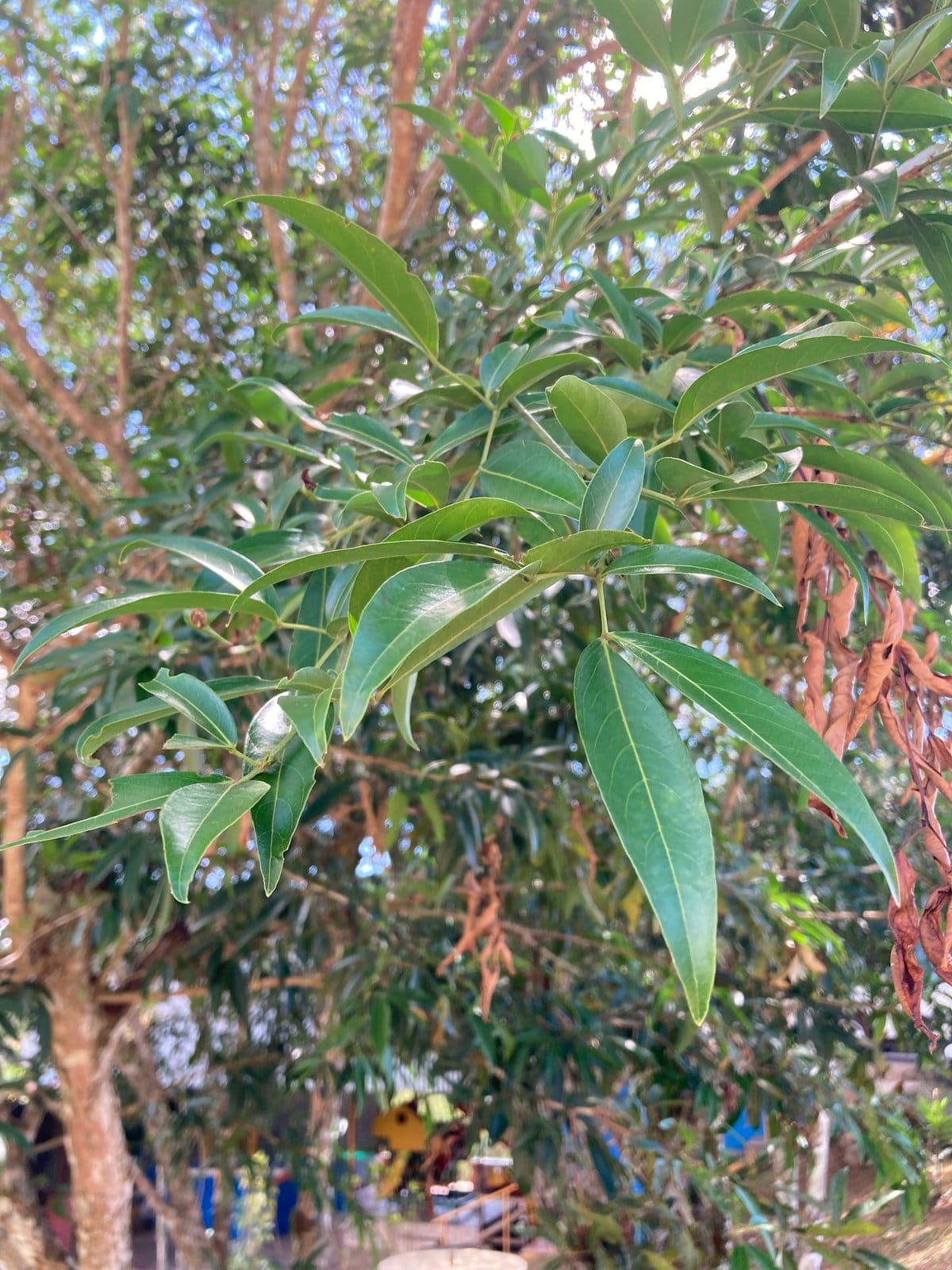
- Leaflets: 2–6 pairs per pinna, each 4–12 cm long
- Shape: Oblong, asymmetrical at base; acuminate tip
- Color: Dark glossy green above, paler beneath
- Texture: Papery to slightly coriaceous
- Nyctinastic movement: Leaves fold downward at dusk and reopen at dawn — a circadian response controlled by turgor pressure changes in the pulvinus (leaf joint)
- Nectaries: Extrafloral nectaries on petiole and rachis attract protective ants
Bark and Trunk
- Color: Grayish-brown to tan
- Texture: Smooth when young, becoming slightly fissured with age
- Lenticels: Numerous, small, visible on younger bark
- Branching: Often multi-stemmed; forks low near base
- Root system: Extensive, lateral; dense fine-root mat stabilizes alluvial soils
Flowers — The Powder-Puffs
- Type: Capitate heads of mimosoid flowers
- Size: 3–5 cm diameter (including stamens)
- Color: White to cream; occasionally pinkish
- Stamens: 20–30+ per flower; far exserted beyond petals; these give the "powder-puff" appearance
- Petals: Tiny, fused, nearly invisible beneath the stamen display
- Fragrance: Sweet, honey-like; strongest at dawn when pollinators are most active
- Timing: Dry to early wet season (March–May)
- Pollinators: Native bees (Trigona, Apis, Euglossa), hummingbirds, hawk moths (nocturnal visits)
Fruits
- Type: Flattened legume pod (dehiscent or tardily indehiscent)
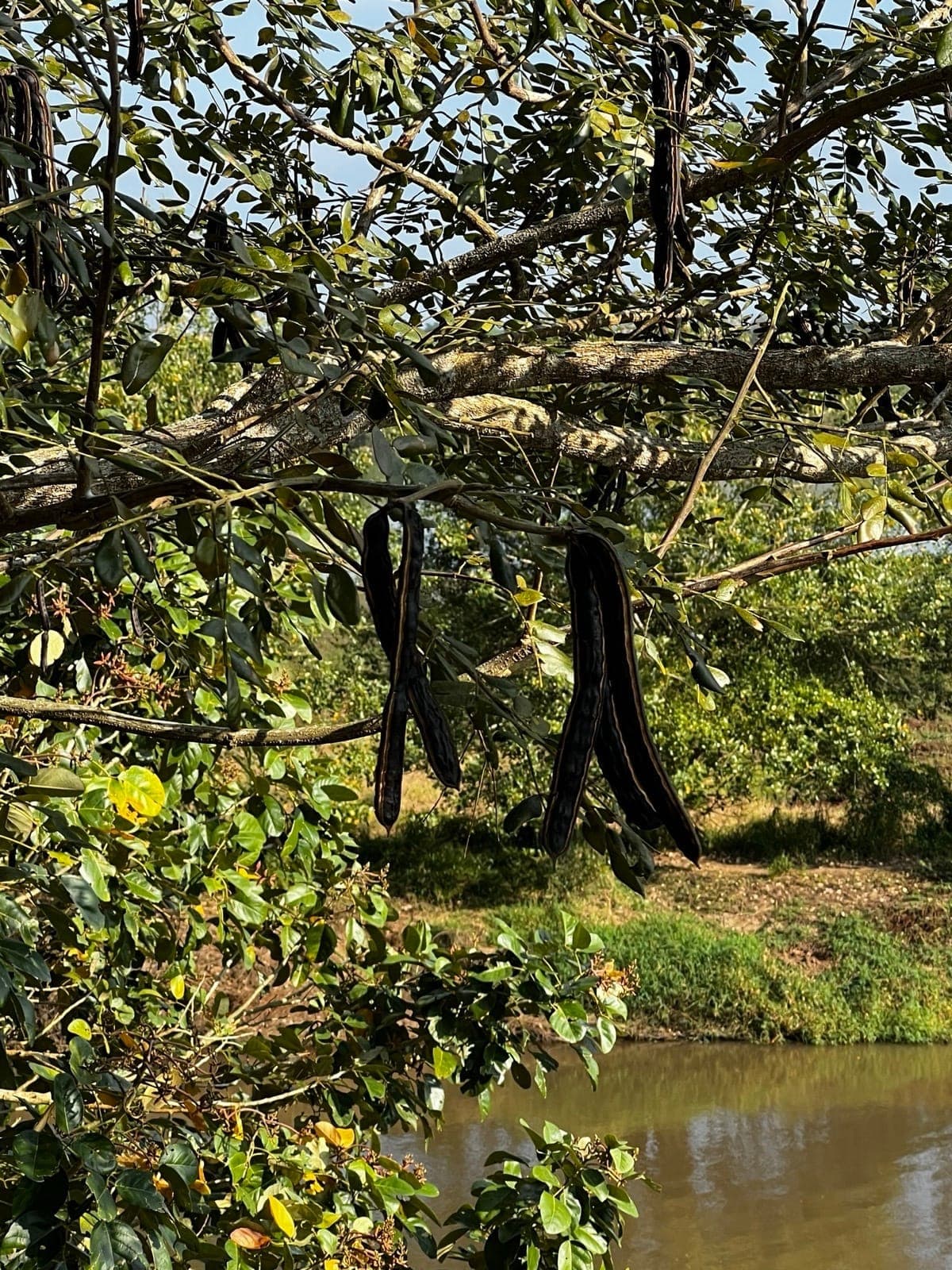
- Size: 8–15 cm long, 1.5–2 cm wide
- Color: Green maturing to brown; often twisted or curved
- Seeds: 4–8 per pod; dark brown, hard-coated
- Aril: Seeds surrounded by thin, sweet, edible pulp (arillate)
- Dispersal: Water (hydrochory — pods float downstream); also birds and bats attracted to aril
Ecological Importance
The Riparian Keystone
Why Riverbanks Need Sotacaballo
Riparian ecologists consider Zygia longifolia among the most ecologically important riparian tree species in Central America. A single Sotacaballo standing over a stream simultaneously provides six critical ecosystem services: bank stabilization through root networks, water temperature regulation through shade, organic matter input through leaf litter, nitrogen enrichment through biological fixation, habitat structure for aquatic organisms, and corridor connectivity for terrestrial wildlife. The loss of riparian Sotacaballo along deforested stream reaches triggers a cascade of ecological degradation that affects everything from water temperature to fish populations to downstream water quality [3].
Stream Ecosystem Services
Nitrogen Fixation
As a member of the Fabaceae (subfamily Caesalpinioideae, mimosoid clade), Sotacaballo forms symbiotic associations with nitrogen-fixing bacteria (Rhizobium and Bradyrhizobium species) in specialized root nodules. These bacteria convert atmospheric nitrogen (N₂) into ammonia (NH₃), which the tree assimilates into amino acids. In return, the bacteria receive photosynthetic carbon from the tree.
In riparian habitats, this nitrogen fixation has outsized ecological importance. The enriched nitrogen leaches from root zones into stream water during rain events, fertilizing aquatic algae and periphyton that form the base of stream food webs. Studies in Costa Rican streams have shown that reaches dominated by nitrogen-fixing riparian trees have 20–40% higher aquatic primary productivity than reaches lined with non-fixing species [4].
Wildlife Relationships
Distribution in Costa Rica
Geographic Distribution
Elevation: 0-1200m
Range and Habitat
Zygia longifolia has one of the widest distributions of any riparian tree species in Costa Rica — it occurs in every province, along both Caribbean and Pacific drainages, from sea level to approximately 1,200 m elevation. It is absent only from high-altitude páramo and strongly seasonal ecosystems where permanent water is scarce. This ubiquity makes it one of the defining elements of Costa Rican freshwater landscapes.
Key Observation Sites
Conservation and Threats
While Zygia longifolia itself is listed as Least Concern (LC) by the IUCN, the riparian habitats it depends on are among the most degraded ecosystems in Costa Rica. Stream channelization, cattle access to waterways, pesticide runoff from agriculture, and urban development have eliminated riparian forest from significant portions of the country's watersheds. When Sotacaballo disappears from a stream reach, the ecological consequences are immediate and severe — water temperatures rise, banks erode, leaf litter input ceases, and fish populations decline [5].
Conservation Value
Costa Rica's environmental legislation mandates riparian buffer zones (typically 10–15 m from each bank) where vegetation clearing is prohibited. Zygia longifolia is one of the most commonly planted species in riparian restoration projects nationwide, valued for its fast establishment, flood tolerance, nitrogen fixation, and proven erosion control capacity. The national Payment for Environmental Services (PSA) program provides financial incentives to landowners who protect or restore riparian forest, with Sotacaballo among the recommended planting species [6].
Sources: IUCN Red List search↗, GBIF species profile↗, Chazdon (2008)↗, SINAC↗
Traditional Uses
Cultural and Practical Applications
Medicinal Uses
- Bark decoction: Traditional remedy for digestive complaints, diarrhea, and intestinal parasites
- Leaf infusion: Applied topically for skin conditions, rashes, and minor wounds
- Anti-dandruff preparation: Bark extract used in traditional hair-washing formulas
- Fever remedy: Tea prepared from bark and leaves for reducing fever
- Anti-inflammatory: Poultices applied to swollen joints and sprains
Practical Uses
- Living fences: Cut branches planted as fence posts sprout and grow; combined with barbed wire for livestock management
- Firewood: Moderate quality; burns steadily but not particularly hot; easily available along waterways
- Shade for livestock: Trees along river crossings provide shade for cattle during watering — possibly the origin of the name "Sotacaballo" (under-the-horse)
- Bee forage: Valued by beekeepers for reliable nectar production during the critical dry-to-wet season transition
- Natural dye: Bark produces tan and brown dyes used in traditional textiles
Growing Information
Cultivation for Riparian Restoration
The Ideal Restoration Species
Sotacaballo is one of the easiest native trees to establish for riparian restoration. It germinates readily, grows fast (1–2 m/year in good conditions), tolerates flooding, fixes nitrogen, and begins providing ecosystem services within 2–3 years of planting. For stream restoration projects, it is often planted at 3–5 m spacing along both banks, mixed with other riparian species like Inga (guaba), Salix (sauce), and Ficus (higuerón).
Planting Protocol for Stream Restoration
From Seed
- Collect mature brown pods from riverbank trees (May–July)
- Extract seeds and remove aril; scarify lightly with sandpaper
- Sow immediately in nursery bags with well-drained soil
- Germination in 10–20 days; maintain under 50% shade
- Grow seedlings for 3–6 months to 30–50 cm height
- Transplant to riverbank at start of wet season (May–June)
- Plant at 3–5 m spacing along both banks
From Stem Cuttings
- Cut 50–80 cm branches (3–5 cm diameter) from healthy trees
- Plant directly into moist alluvial bank soil during wet season
- Bury 20–30 cm of cutting; angle slightly toward water
- Rooting success: 60–80% in moist conditions
- Faster establishment than seed: shade provision within 1–2 years
- Often combined with live stakes of other riparian species
Related Species in Costa Rica
Interesting Facts
References and Resources
Taxonomic revision of Zygia and related mimosoid genera; morphological and molecular delimitation
Comprehensive review of riparian ecology; tree architecture strategies and light competition along waterways
Effects of riparian deforestation on stream fish assemblages in Costa Rica; temperature and habitat impacts
Quantification of nitrogen fixation by tropical legumes; riparian enrichment effects on stream ecosystems
Forest conservation in Costa Rica; riparian buffer legislation and PSA program effectiveness
Comprehensive reference on Costa Rican trees; Zygia longifolia ecology and traditional uses
Pioneer study of nyctinastic leaf movements in legumes; circadian rhythms in plant biology
Community science observations, photos, and distribution data
Global occurrence records and distribution mapping
Conservation status and species assessment
Safety Information Disclaimer
Safety information is provided for educational purposes only. Individual reactions may vary significantly based on age, health status, amount of exposure, and individual sensitivity. Always supervise children around plants. Consult a medical professional or certified arborist for specific concerns. The Costa Rica Tree Atlas is not liable for injuries or damages resulting from interaction with trees described in this guide.
• Always supervise children around plants
• Consult medical professional if unsure
• Seek immediate medical attention if poisoning occurs
Information compiled from authoritative toxicology sources, scientific literature, and medical case reports.
Help improve this page
Know something about this tree? Share local knowledge, suggest a correction, or submit a photo to improve this guide for everyone.