Guanacaste
Enterolobium cyclocarpum
Quick facts
Native Region
Central America and Mexico
Max Height
25-40 meters (80-130 feet)
Family
Fabaceae
Conservation
LC — Least Concern
Indigenous Names
Names used by the indigenous peoples of Costa Rica, preserving traditional ecological knowledge.
Nahuatl
- Quauhnacastl— Ear tree, referring to the ear-shaped seed pods(Source: Pittier, 1908)
Chorotega
- Nacascolo— Ear tree(Source: Ferrero, 2000)
Uses
Safety Information
Toxicity Details
The Guanacaste tree is generally safe for humans. Seeds inside the ear-shaped pods are sometimes roasted and consumed as food in Central America with no reported toxicity. However, the seeds are moderately toxic to dogs and cats and can cause symptoms requiring veterinary attention if ingested. Livestock (cattle, horses, goats) regularly consume the pods and foliage without issues and the sweet pods are a favored food source.
Skin Contact Risks
No known skin contact risks. The tree is safe to touch and work around.
Allergenic Properties
Wood dust from cutting or sanding can be a mild respiratory irritant to mucous membranes and eyes. Use dust mask when working with the wood.
Wildlife & Pet Risks
Toxic to dogs and cats if seeds are consumed. Safe for livestock (cattle, horses, goats) and wildlife. Keep seed pods away from curious pets.
Season
Flowering
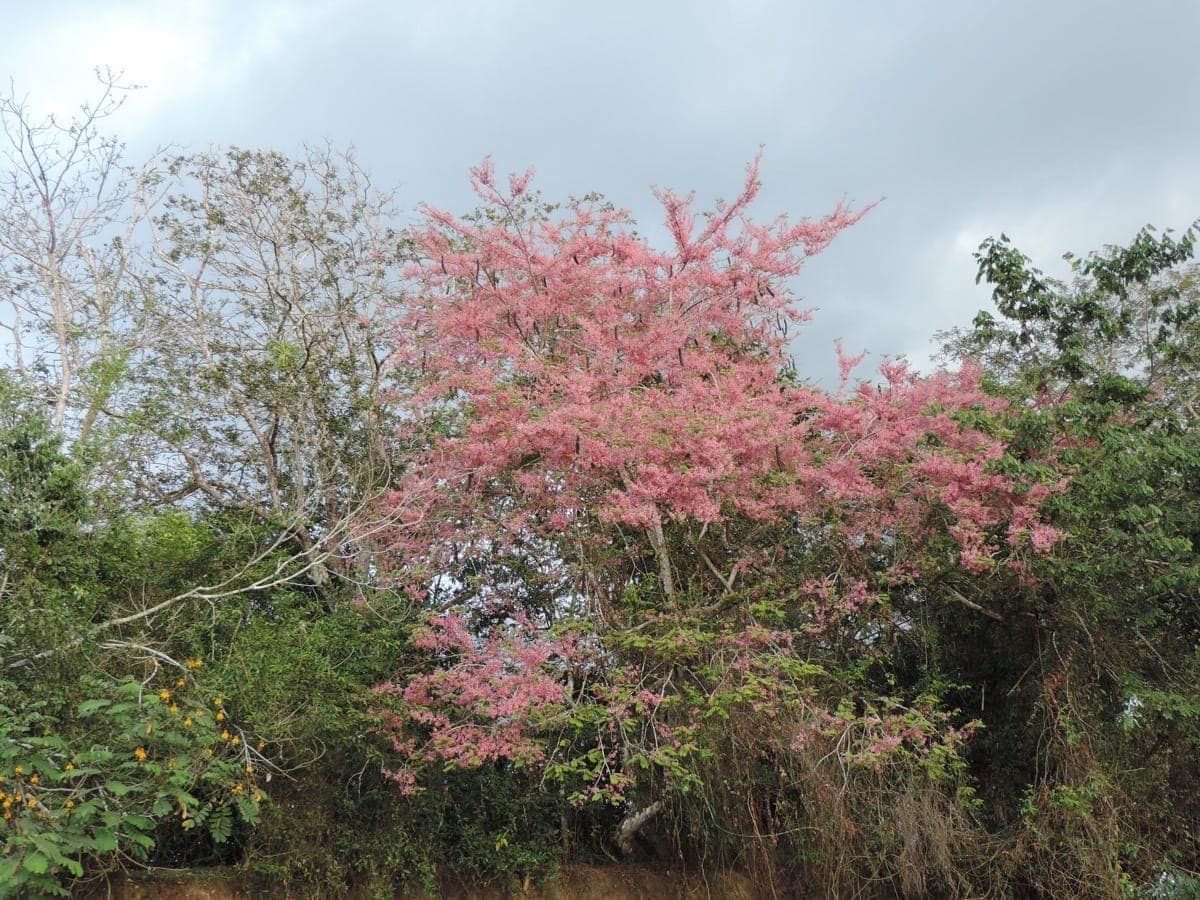
Mar-May
Fruiting
Jan-Mar
How to identify
Guanacaste
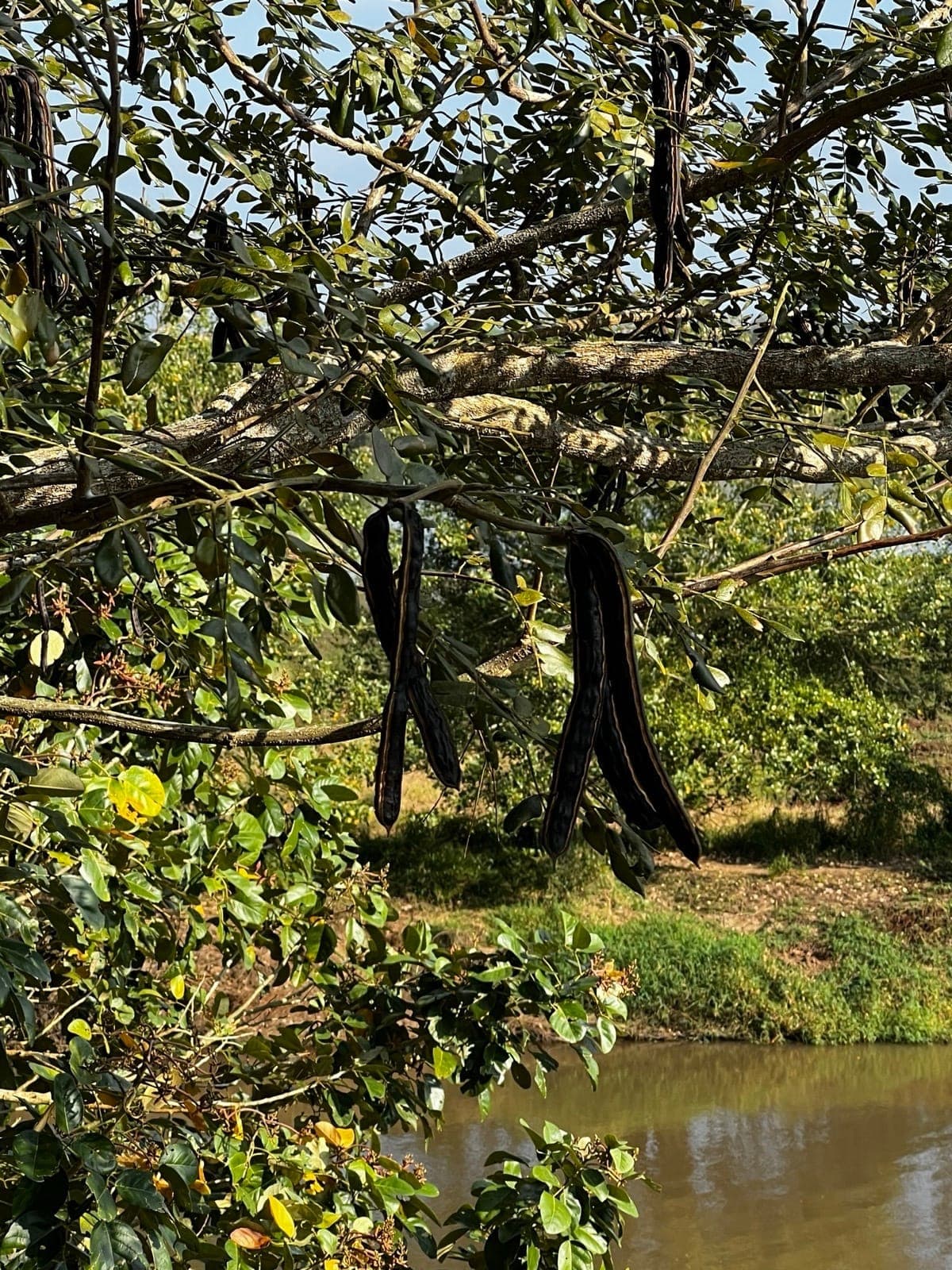
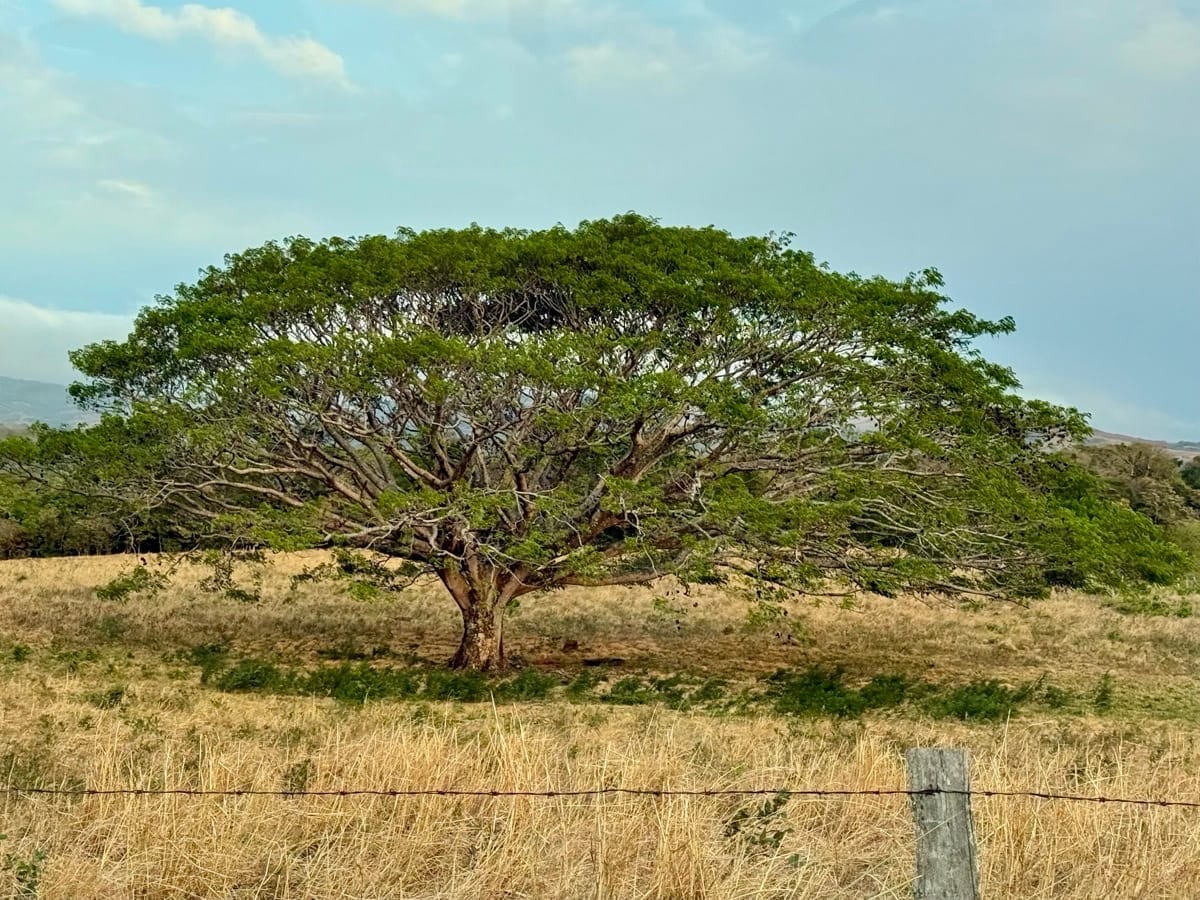
Guanacaste (Enterolobium cyclocarpum) was declared the national tree of Costa Rica on August 31, 1959. Known as the "Elephant Ear Tree" for its distinctive seed pods, it symbolizes the country's commitment to environmental conservation and national identity.
Quick Reference
iNaturalist Observations
Community-powered species data
📸 Photo Gallery
Whole tree
📷 (c) Cy Stavros, some rights reserved (CC BY)(CC BY)
View source ↗Leaves
📷 no rights reserved(CC0)
View source ↗Whole tree
📷 (c) jimdaniels, some rights reserved (CC BY-NC)(CC BY-NC)
View source ↗Leaves
📷 (c) Cy Stavros, some rights reserved (CC BY)(CC BY)
View source ↗Whole tree
📷 (c) Hugo Santa Cruz, some rights reserved (CC BY-NC)(CC BY-NC)
View source ↗Photos sourced from iNaturalist's community science database. Browse all 2,800+ observations →↗
Taxonomy & Classification
Geographic Distribution
Geographic Distribution
Where to Find Guanacaste in Costa Rica
Primary Habitats:
Elevation: Sea level to ~1,200 m (most common below 800 m)
Habitat & Ecology
Ecological Role
Guanacaste is a keystone species in dry tropical forests:
Wildlife Associations
Animals dependent on Guanacaste:
The Guanacaste's ear-shaped pods contain seeds coated in sweet, sticky pulp that attracts horses and cattle. The seeds pass through their digestive systems intact, scarified by stomach acids, and are deposited far from the parent tree in nutrient-rich manure — a perfect germination package!
Botanical Description
Wood Properties
Appearance
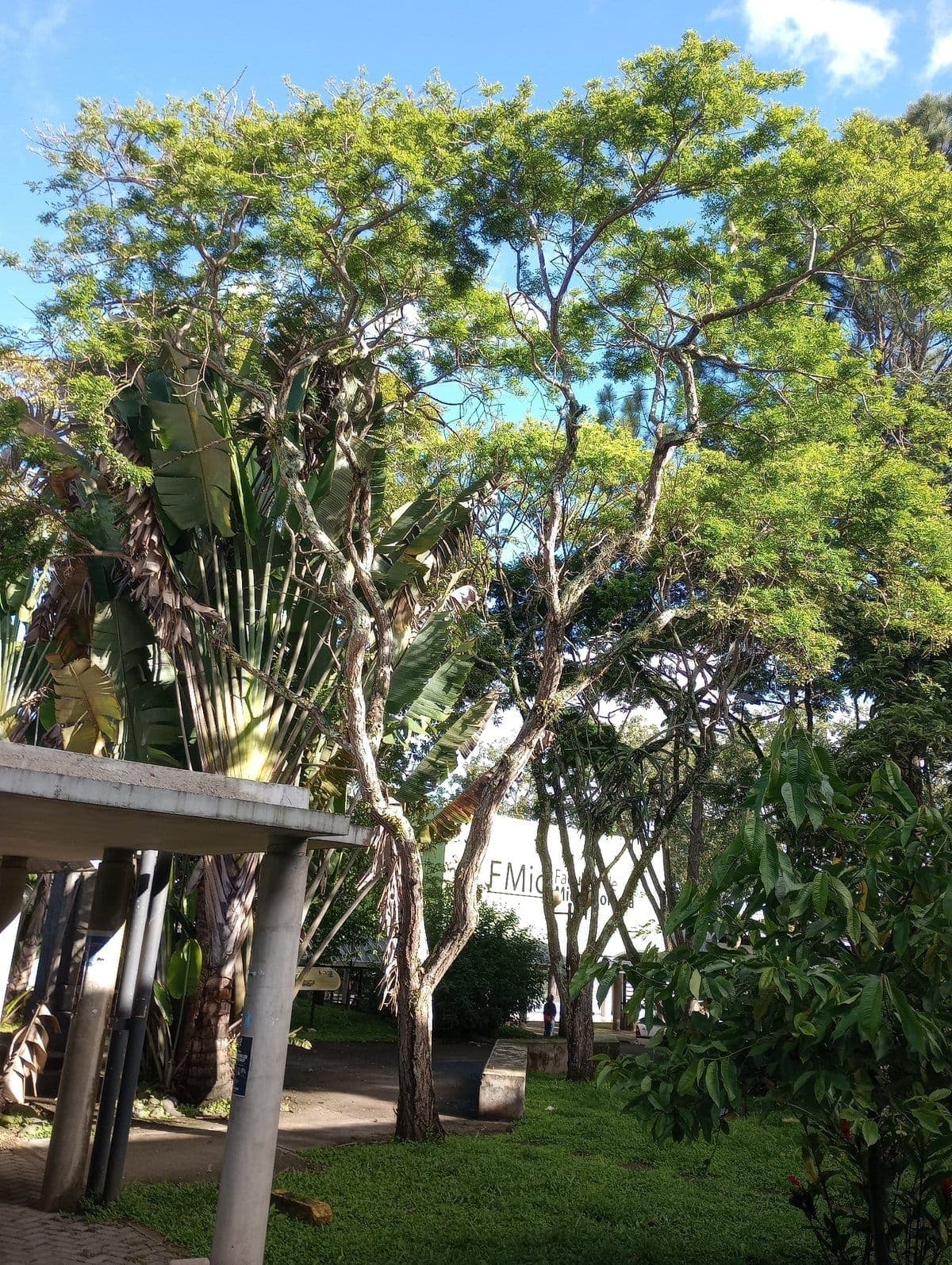
Guanacaste wood (marketed as "Parota") features a warm golden-brown color with attractive figure, often showing interlocked or wavy grain. It's prized for large slabs due to the tree's massive trunk size.
Physical Properties
Working with Guanacaste
✅ Strengths
⚠️ Considerations
Applications
Due to the Guanacaste's massive trunk diameter (up to 3 meters), it's one of the few trees capable of producing truly enormous live-edge slabs. These are highly prized for conference tables, dining tables, and statement furniture pieces worldwide — often marketed as "Parota" in the furniture trade.
Cultural & Historical Significance
On August 31, 1959, the Guanacaste tree was officially declared Costa Rica's national tree during the centenary celebration of the Annexation of Guanacaste — the 1824 decision by the people of Guanacaste Province to join Costa Rica rather than Nicaragua.
The tree was chosen because it:
Historical Uses
Indigenous and Traditional Uses:
Sustainability & Conservation
While listed as "Least Concern" by the IUCN, local populations face pressure from land-use change and agricultural expansion. Mature specimens are often protected, but regeneration can be limited in converted landscapes.
Current Status
Conservation & Restoration
Why Guanacaste matters for conservation:
Growing Guanacaste
Where to See Guanacaste Trees
Recommended Locations in Costa Rica
National Parks & Reserves:
Urban & Accessible:
External Resources
Community observations, photos, and distribution data
2,800+ observations worldwide
Global biodiversity records and specimen data
Global Biodiversity Information Facility
Authoritative taxonomic information from Kew
Royal Botanic Gardens, Kew
Detailed wood properties and working characteristics
Comprehensive wood identification resource
Conservation status and species assessment
References
📚 Scientific References & Further Reading
Janzen, D.H. (1982). Enterolobium cyclocarpum seed passage rate and survival in horses. Ecology 63(5):1407-1413
Francis, J.K. (1988). Enterolobium cyclocarpum (Jacq.) Griseb. Guanacaste, Earpodtree. USDA Forest Service SO-ITF-SM-15[Link ↗]
Pennington, T.D. & Sarukhán, J. (2005). Árboles tropicales de México. UNAM/Fondo de Cultura Económica, Mexico City
SINAC (Costa Rica) (Various). National System of Conservation Areas - Species Information[Link ↗]
The Guanacaste tree (Enterolobium cyclocarpum) stands as a living monument to Costa Rica's natural and cultural heritage. With its massive umbrella crown providing shade across the hot lowlands, its distinctive ear-shaped pods inspiring generations of common names, and its role as a keystone species in dry forest ecosystems — the Guanacaste truly deserves its place as the national tree of Costa Rica.
🌳 Pura Vida!
Safety Information Disclaimer
Safety information is provided for educational purposes only. Individual reactions may vary significantly based on age, health status, amount of exposure, and individual sensitivity. Always supervise children around plants. Consult a medical professional or certified arborist for specific concerns. The Costa Rica Tree Atlas is not liable for injuries or damages resulting from interaction with trees described in this guide.
• Always supervise children around plants
• Consult medical professional if unsure
• Seek immediate medical attention if poisoning occurs
Information compiled from authoritative toxicology sources, scientific literature, and medical case reports.
Help improve this page
Know something about this tree? Share local knowledge, suggest a correction, or submit a photo to improve this guide for everyone.